Desire existed before patriarchy.
Before there were nations, churches, and corrupt governments deciding who deserved dignity, there was simply the human body — admired, studied, sculpted, painted, and loved. What we now call homoeroticism has always existed: desire between people of the same sex, not as identity politics but as lived reality.
Homoerotic Art is a Liberation Technology – by Maxwell Alexander, MA(FIT)/BFA(SVA), Artist/Activist – Presented by HARD NEW YORK – Homoerotic Art Gallery

History did not invent queer people. History invented shame.
Across ancient civilizations — Greek athletics, Roman poetry, temple carvings across Asia — affection between men appeared openly, integrated into culture long before modern categories of sexuality hardened. Modern scholarship confirms that the story of humanity includes same-sex love from its earliest records in LGBTQ history.
Colonial modernity did something radical: it reframed intimacy as deviance. And once desire became illegal, art became resistance.

The moment the body became political.
The modern category of queer art emerges precisely where repression intensifies. It thrives on unauthorized desires and alternative ways of relating.
That is why homoerotic art has never been decoration — it has always been a political act.

Every time a male nude was painted after criminalization of homosexuality, the artist wasn’t merely depicting anatomy. He was documenting forbidden existence.
Photography pushed that confrontation further. When Robert Mapplethorpe’s explicit male nudes circulated in galleries and courts, society wasn’t reacting to aesthetics — it was reacting to visibility. The male body, no longer coded as heroic soldier or religious martyr, appeared as an object of male desire. That broke the hierarchy patriarchy relies on: man as subject, never object.
The body stopped being a symbol of authority. It became a site of truth.

Stonewall was not just a riot — it was an aesthetic revolution.
The LGBTQ movements sought legal equality, but the cultural revolution happened through images. After the 1969 uprising commemorated by the Gay Liberation Monument, artists began documenting queer life unapologetically — clubs, lovers, grief, pleasure, survival.
During the AIDS crisis, art did what governments refused to do: it humanized us.
Posters, photography, performance, and erotic imagery functioned as testimony. The public saw not sinners or criminals but bodies capable of tenderness. The political fight shifted from tolerance to empathy — and empathy has always been triggered by imagery, not legislation.
Rights followed visibility. Visibility followed erotic art.

The rebirth of masculinity — returning to Greece.
Long before Victorian morality, masculinity held a different meaning. In Ancient Greece, the male body symbolized harmony between intellect, athletics, and beauty. The athletic nude was philosophical — not pornographic. Sculptures of gods and athletes in kouroi statues showed men as balanced beings: strong yet contemplative, erotic yet noble.
Male-male intimacy existed within social structures now erased by later religious and colonial regimes, discussed within the context of pederasty in ancient Greece. The point is not imitation of ancient customs — it is understanding that masculinity once included emotional intimacy, mentorship, aesthetic admiration, and vulnerability.

Modern patriarchy severed those qualities. Modern queer culture restores them.
Today’s resurgence of homoerotic imagery signals not decadence but restoration — a return to pre-colonial masculinity where strength and softness coexisted. The gym bodybuilder admiring another physique is closer to Greek philosophy than to industrial masculinity. Admiration becomes dialogue, not competition.
Masculinity is evolving from domination toward presence.

Modern masculinity as rejection of patriarchy.
Modern masculinity is no longer a uniform. It is a refusal. It rejects the patriarchal script that says men must be emotionally starved, sexually entitled, and socially armored. It rejects the idea that tenderness makes you weak, that desire makes you guilty, that beauty is something you consume instead of something you become.

Homoerotic art accelerates that shift because it makes masculinity legible as a spectrum: playful, reverent, messy, sacred, sensual, and deeply human. It unlearns domination by practicing consent on the level of the gaze. It turns “looking” from ownership into acknowledgment.
The patriarchal gaze demands hierarchy: who is allowed to desire, who is allowed to be desired, who is allowed to be soft, who is allowed to be seen. Homoerotic art breaks that ladder. It puts men back into the human family instead of above it.

Why the male nude terrifies patriarchy.
The colonial patriarchal order rests on one central myth: masculinity equals power, not vulnerability.
Homoerotic art collapses that myth instantly.

When a man is looked at — desired — he exits the role of ruler and becomes human. That destabilizes systems built on dominance hierarchies: empire, conquest, rigid gender roles.
The revolutionary force of homoerotic art lies here: it doesn’t attack power. It dissolves it.
No empire survives when bodies stop performing obedience.

My own work in that lineage.
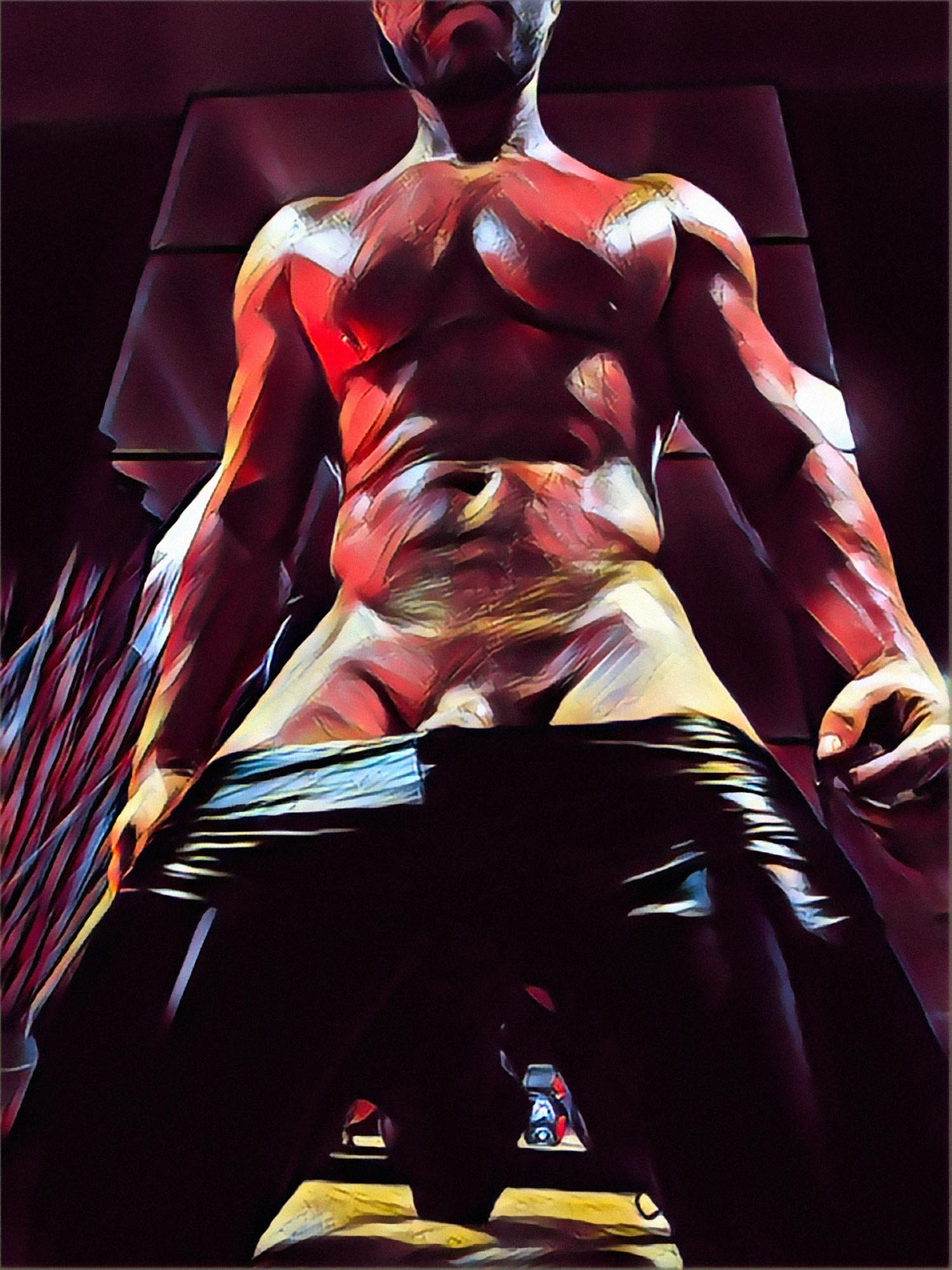
My practice continues this tradition deliberately. In The Fine Art of Homoeroticism, I merge photography and digital painting to present the male body as mythology — not pornography, not fitness documentation, but a philosophical object.
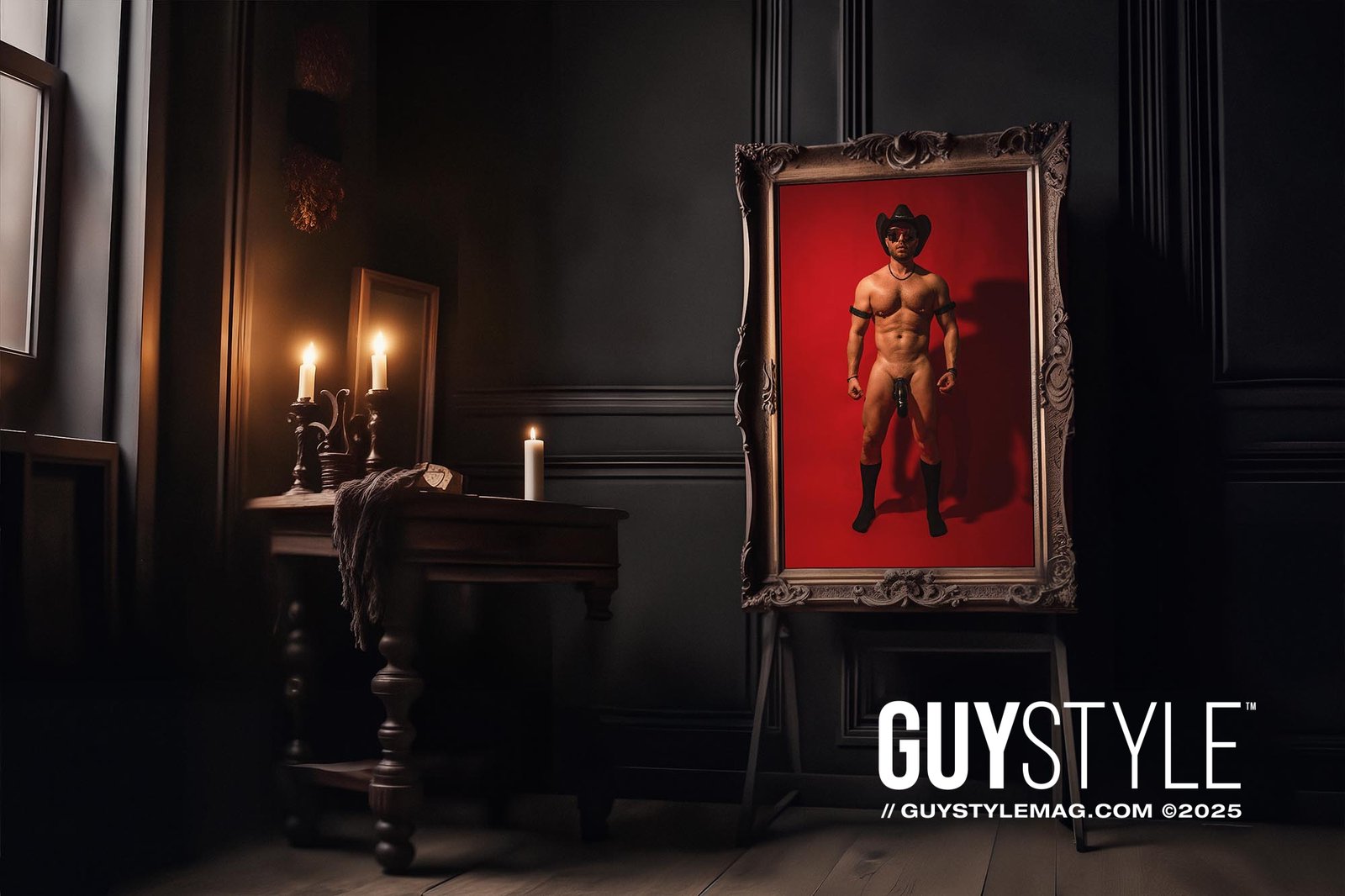
Male boudoir matters because it reclaims intimacy. Boudoir historically feminized vulnerability; placing men inside that language destabilizes centuries of emotional prohibition placed on masculinity. My editorial work in Guy Style Magazine treats the male body as narrative — a character experiencing tenderness, humor, ego, insecurity, and pride simultaneously.
The result is not scandal. It is psychological decolonization.
When viewers confront tenderness in masculinity, something breaks: the inherited rule that men must dominate or disappear.

Homoerotic art as anti-colonial practice.
Colonial systems survive by categorizing bodies: civilized and primitive, masculine and feminine, pure and deviant.
Homoerotic art refuses categorization.
It presents the body as pleasure, softness, strength, beauty — simultaneously. The erotic image becomes anthropology: proof that human intimacy precedes law.
This is why attempts to censor queer erotic imagery persist. Not because of sexuality — because of power.
Once the hierarchy of acceptable desire collapses, all hierarchies become negotiable.

The last nail in the coffin.
Political revolutions change laws. Erotic revolutions change consciousness.
You can repeal a statute and prejudice remains. You cannot unsee humanity once desire is recognized as universal.
Homoerotic art completes the unfinished project of liberation: it frees men from domination, women from subordination, and queer people from invisibility simultaneously. It replaces authority with reciprocity.
The body becomes equal territory.
That is why homoerotic art is not a niche genre. It is a civilizational shift. Not rebellion — evolution.
And every time a viewer recognizes themselves inside an image they were taught to fear, another piece of inherited control quietly disappears.