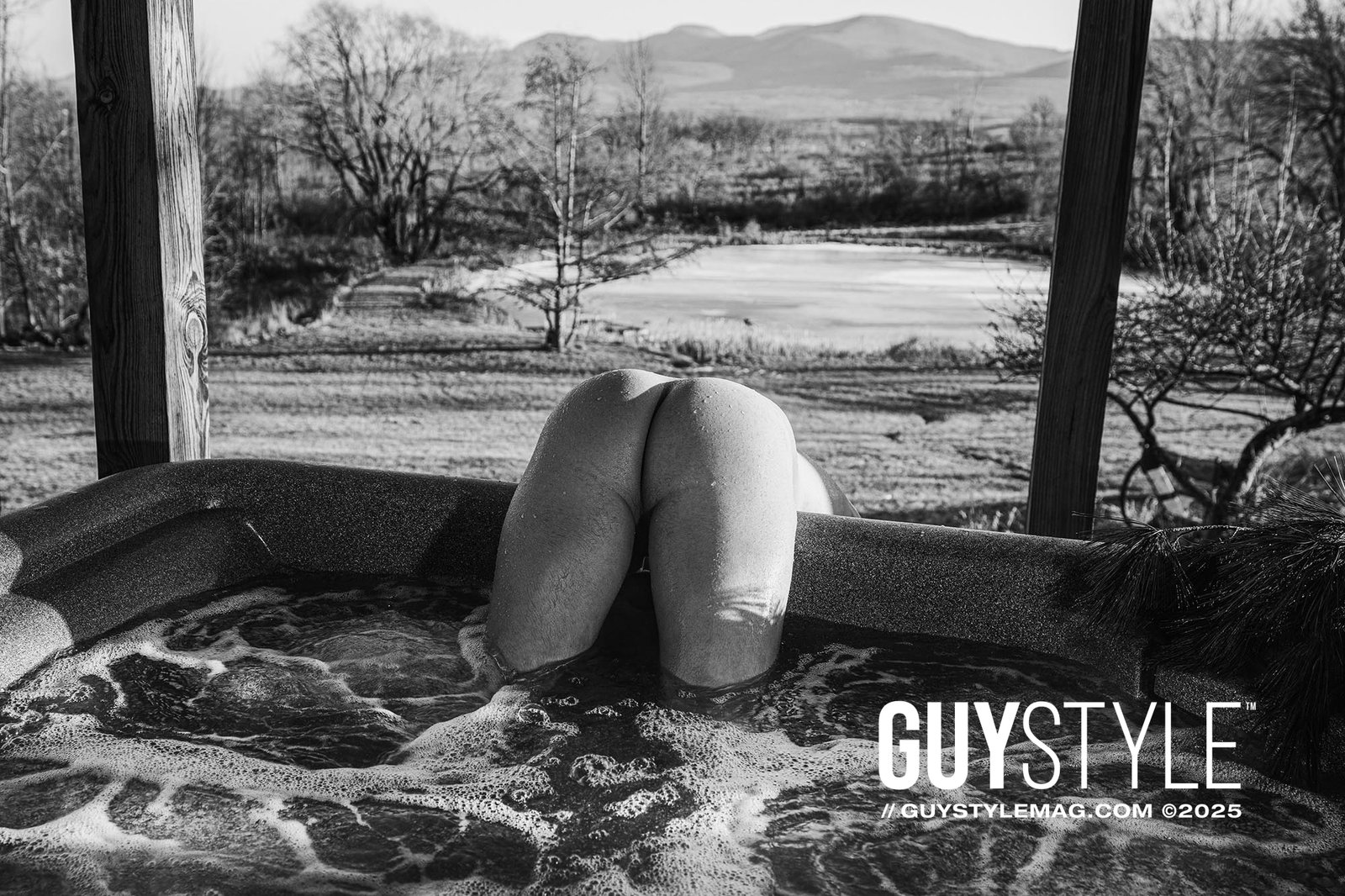
The history of homoerotic art is a defiant narrative — a chronicle of artists who risked censure, ostracization, and legal reprisal to affirm the beauty and vitality of gay desire. This essential lineage, anchored by the stylized, mythic figures of Tom of Finland and the formal, elegant intensity of Robert Mapplethorpe, finds its provocative modern continuation in my work. My self-portraiture is a daring act of artistic inheritance — one that leverages a body sculpted over 20 years of dedicated natural bodybuilding to speak to identity, masculinity, and the continuing role of homoeroticism in human civilization. In an age dominated by vast digital gatekeepers, I step into the frame and refuse to step back out.
The Daring Lineage: Maxwell Alexander and the Resistance of Erotic Self-Portraiture – Homoerotic Art – Presented by HARD NEW YORK
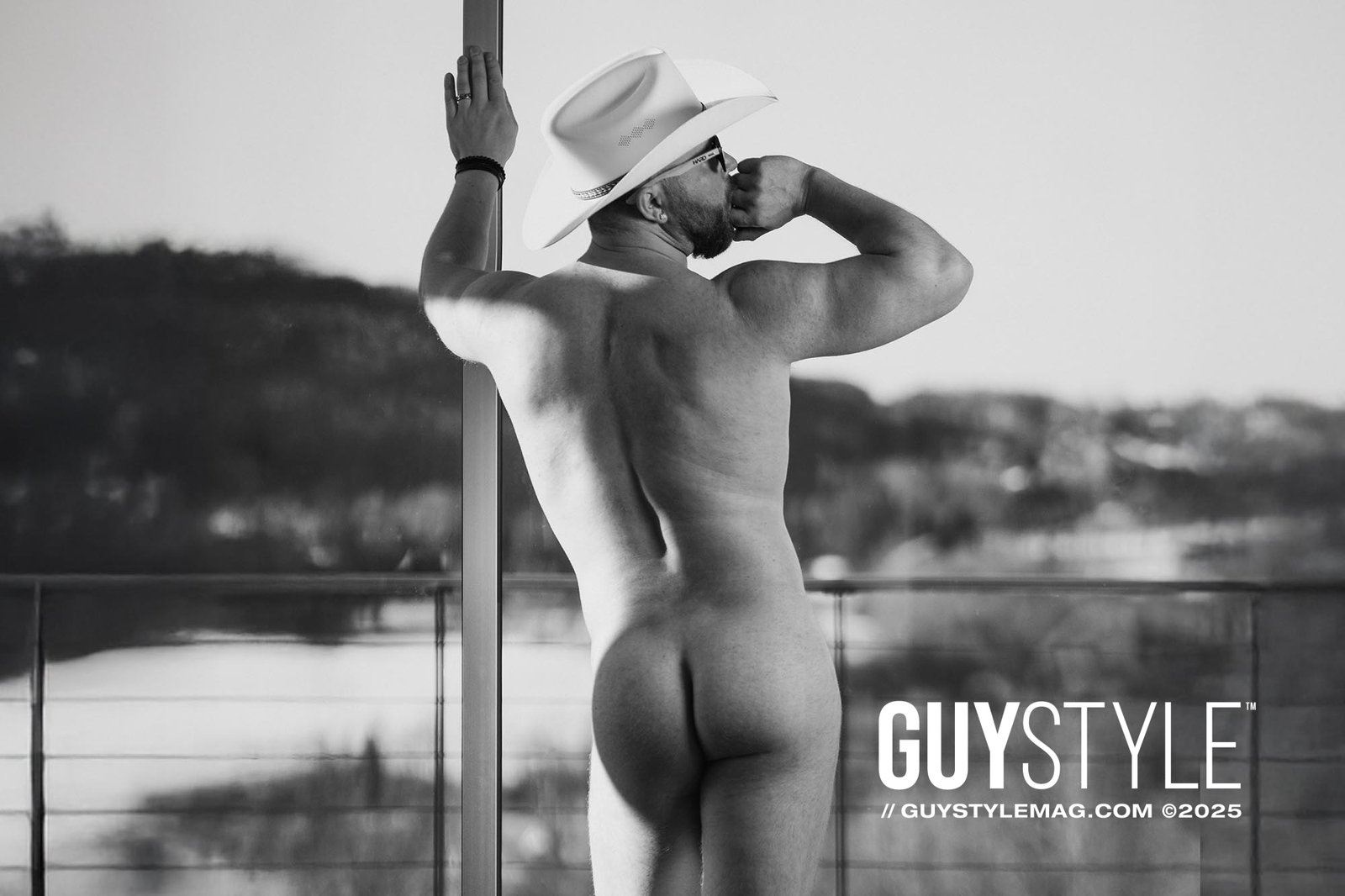
The Body Is the Canvas, and I Built It Myself
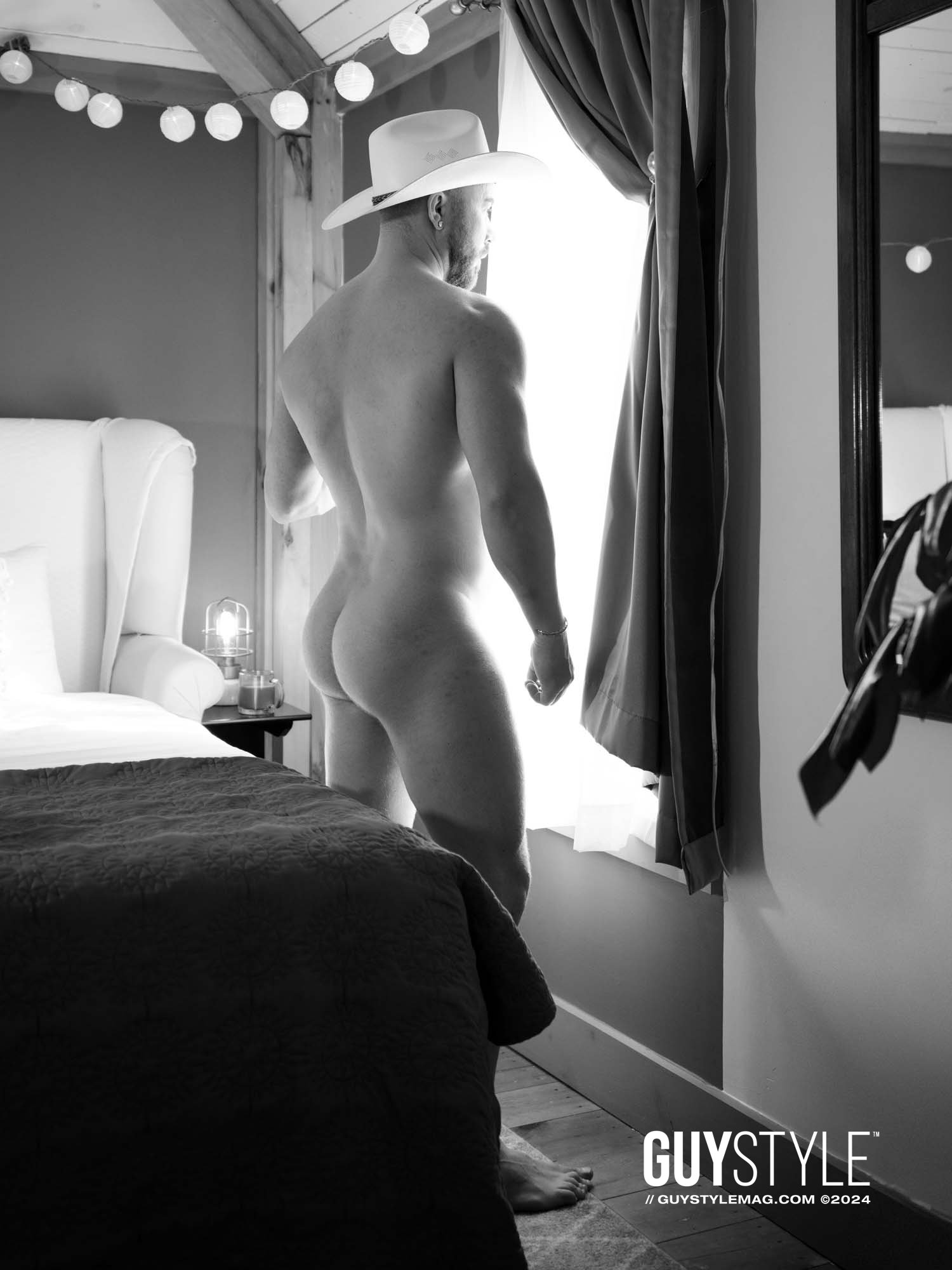
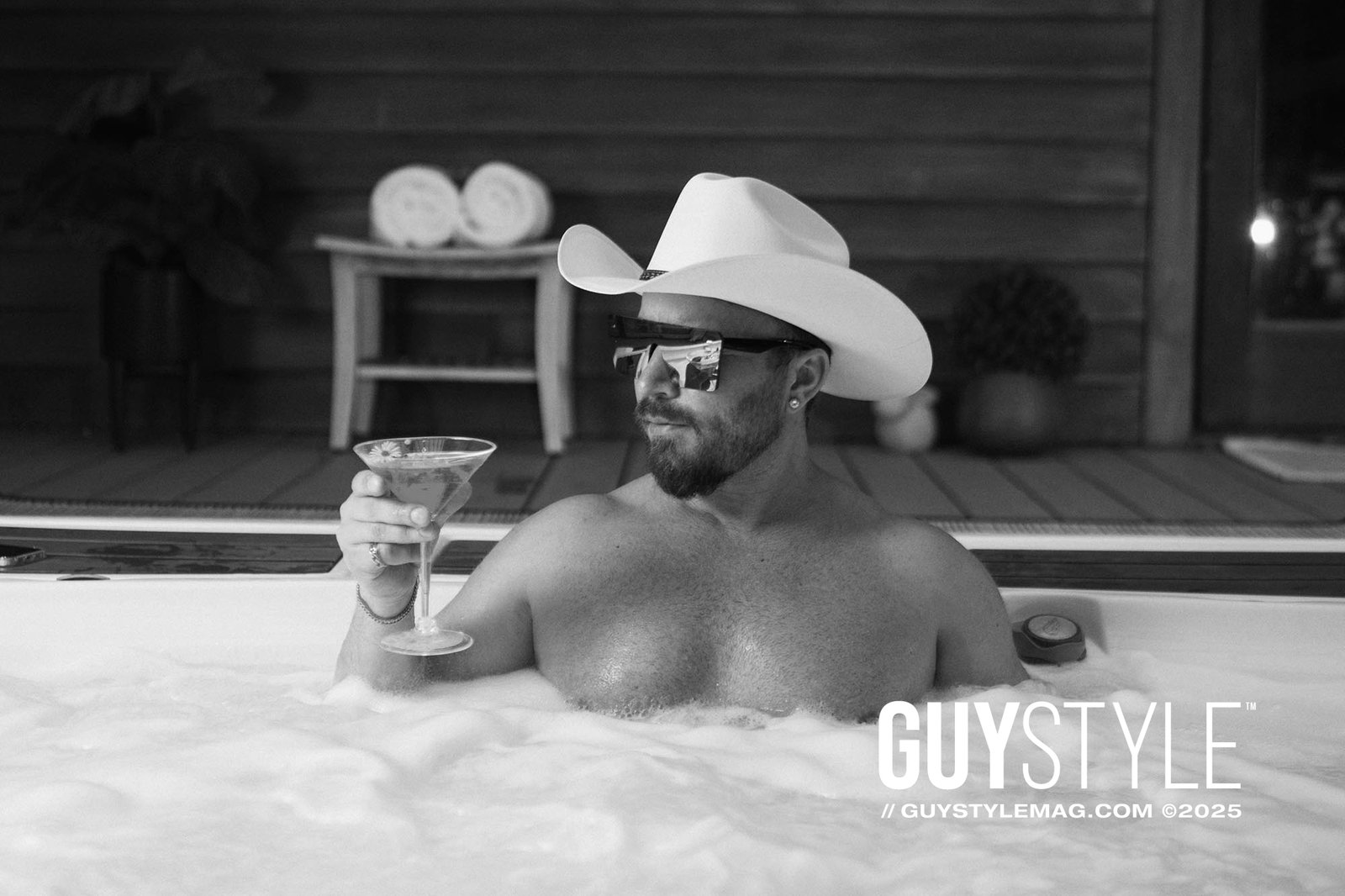
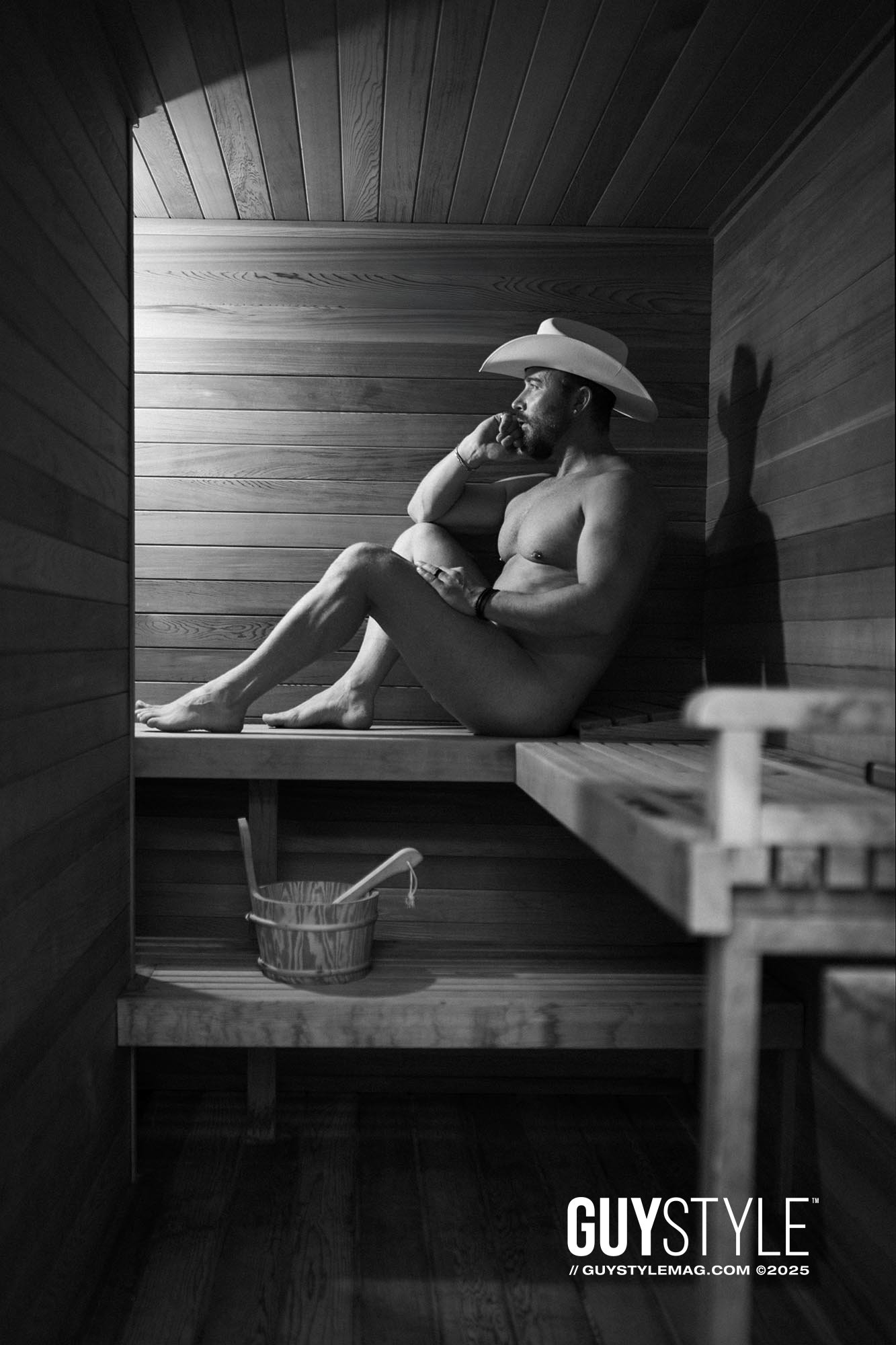
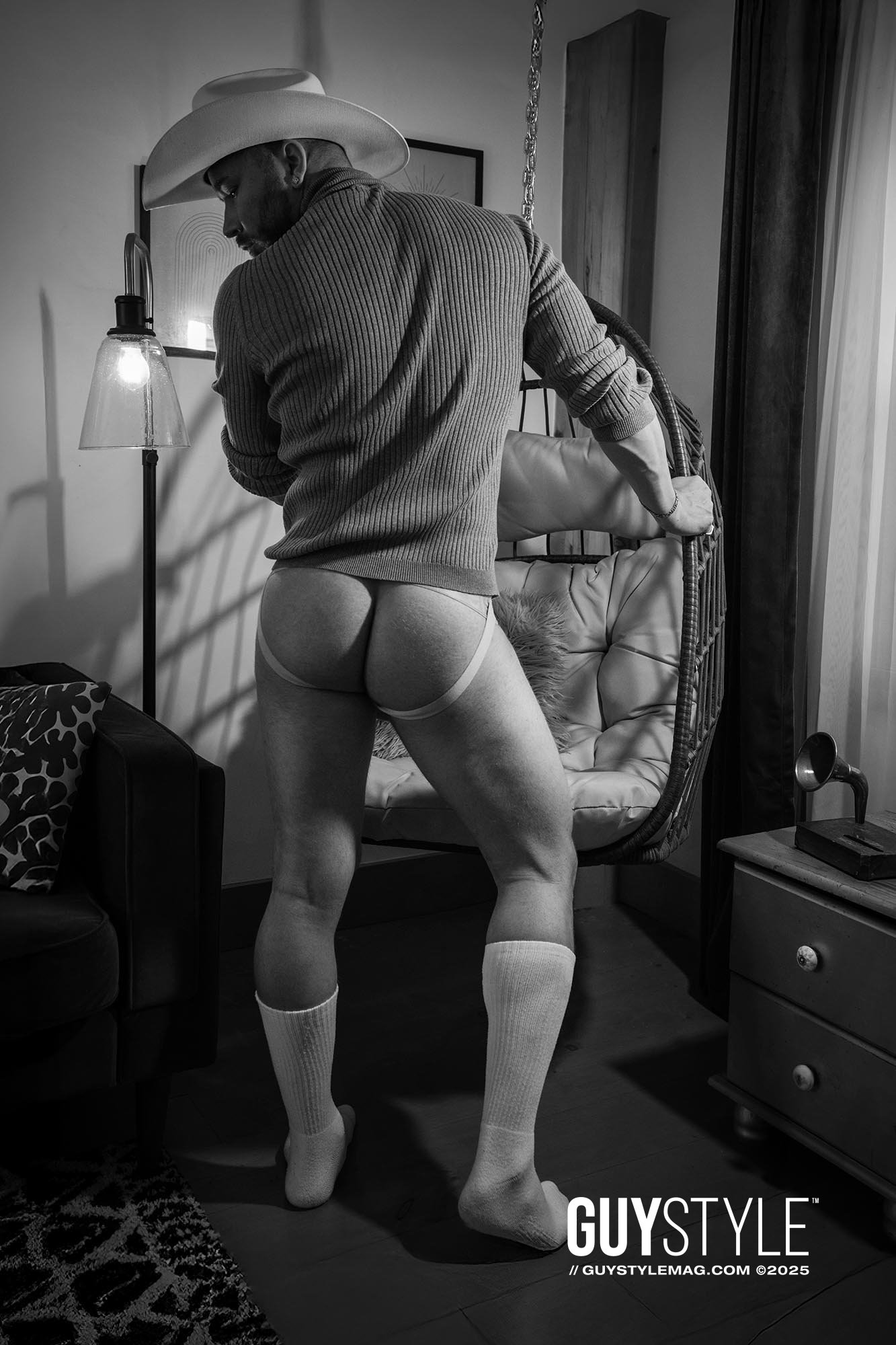
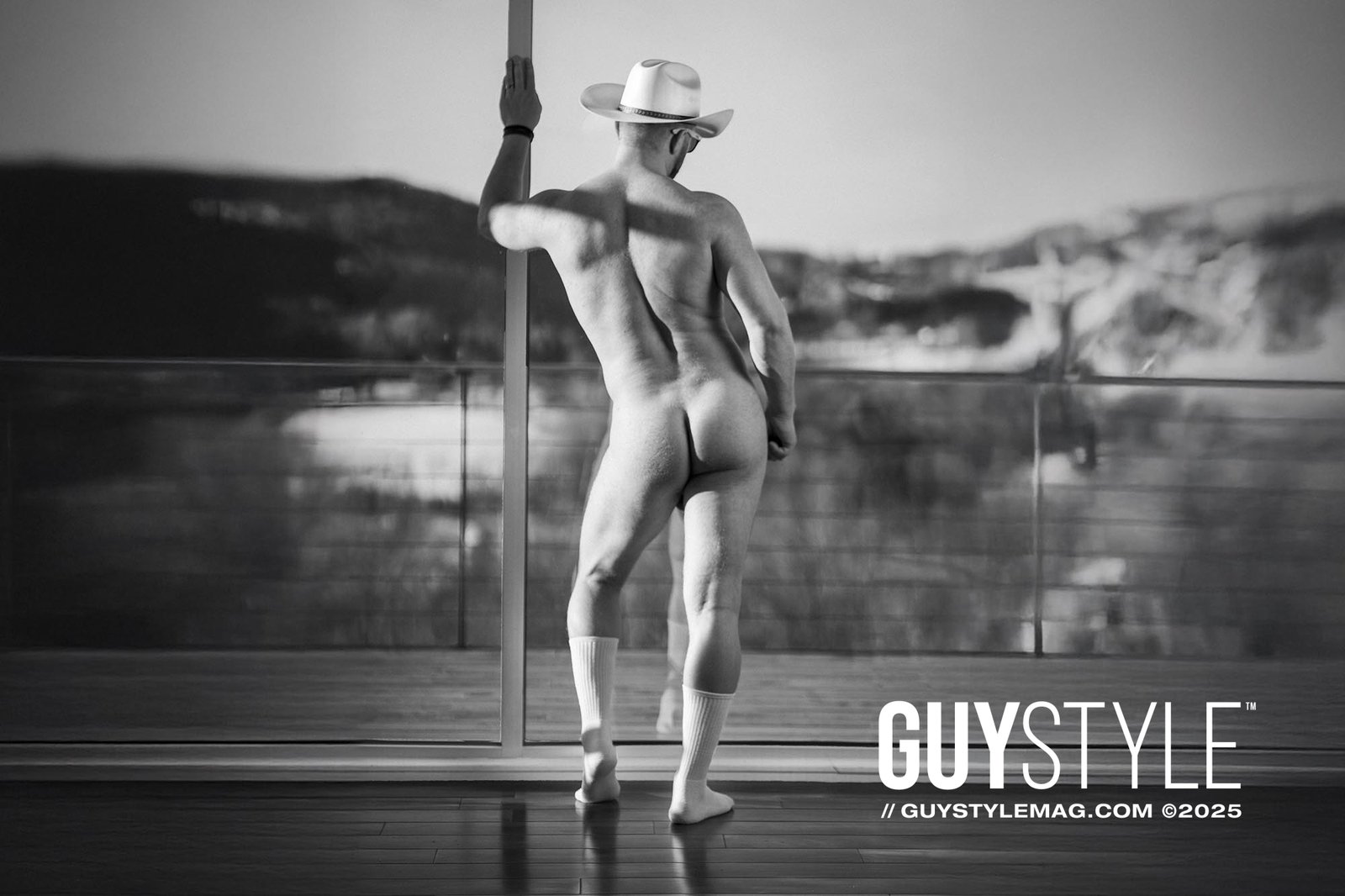
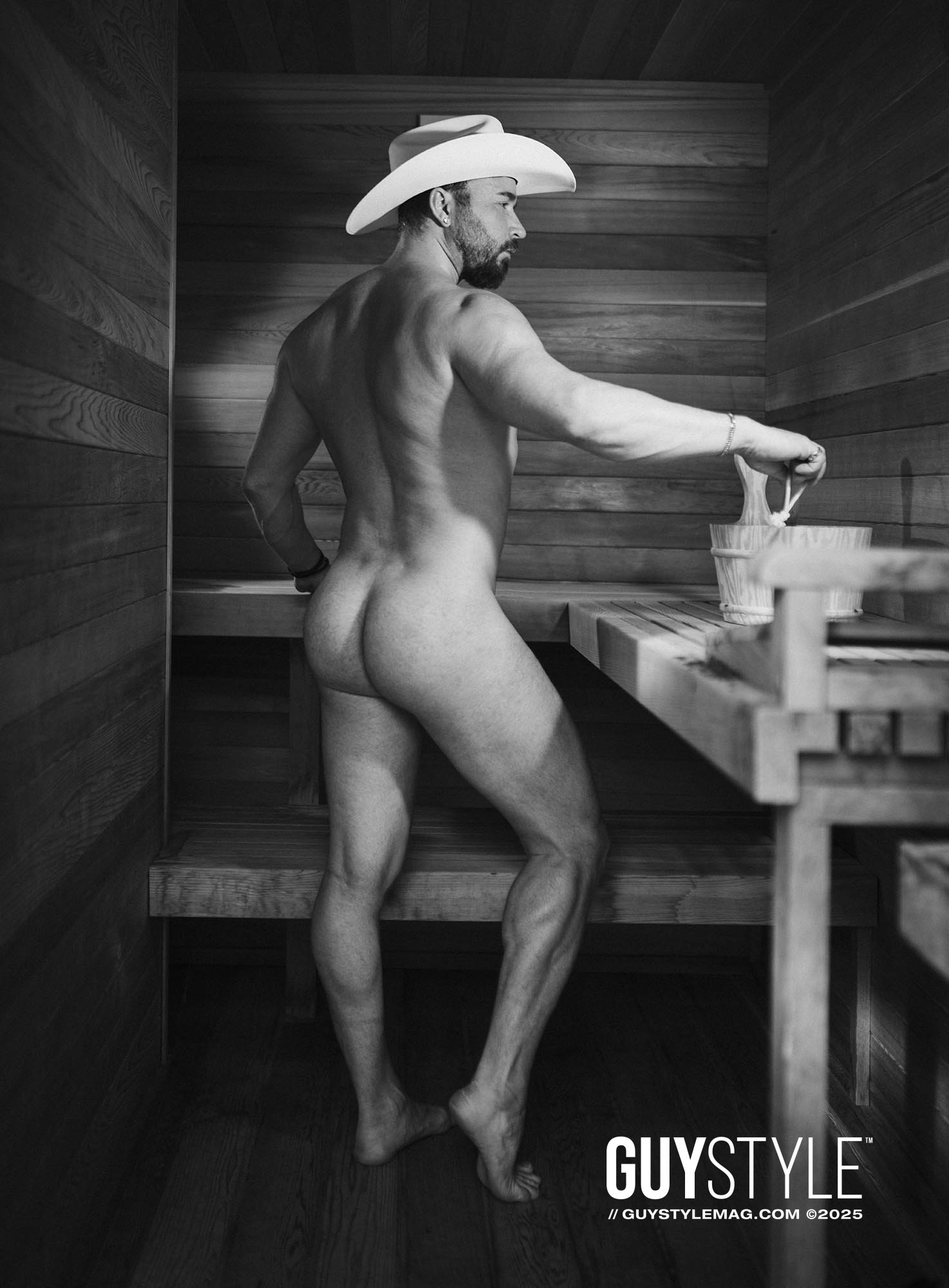
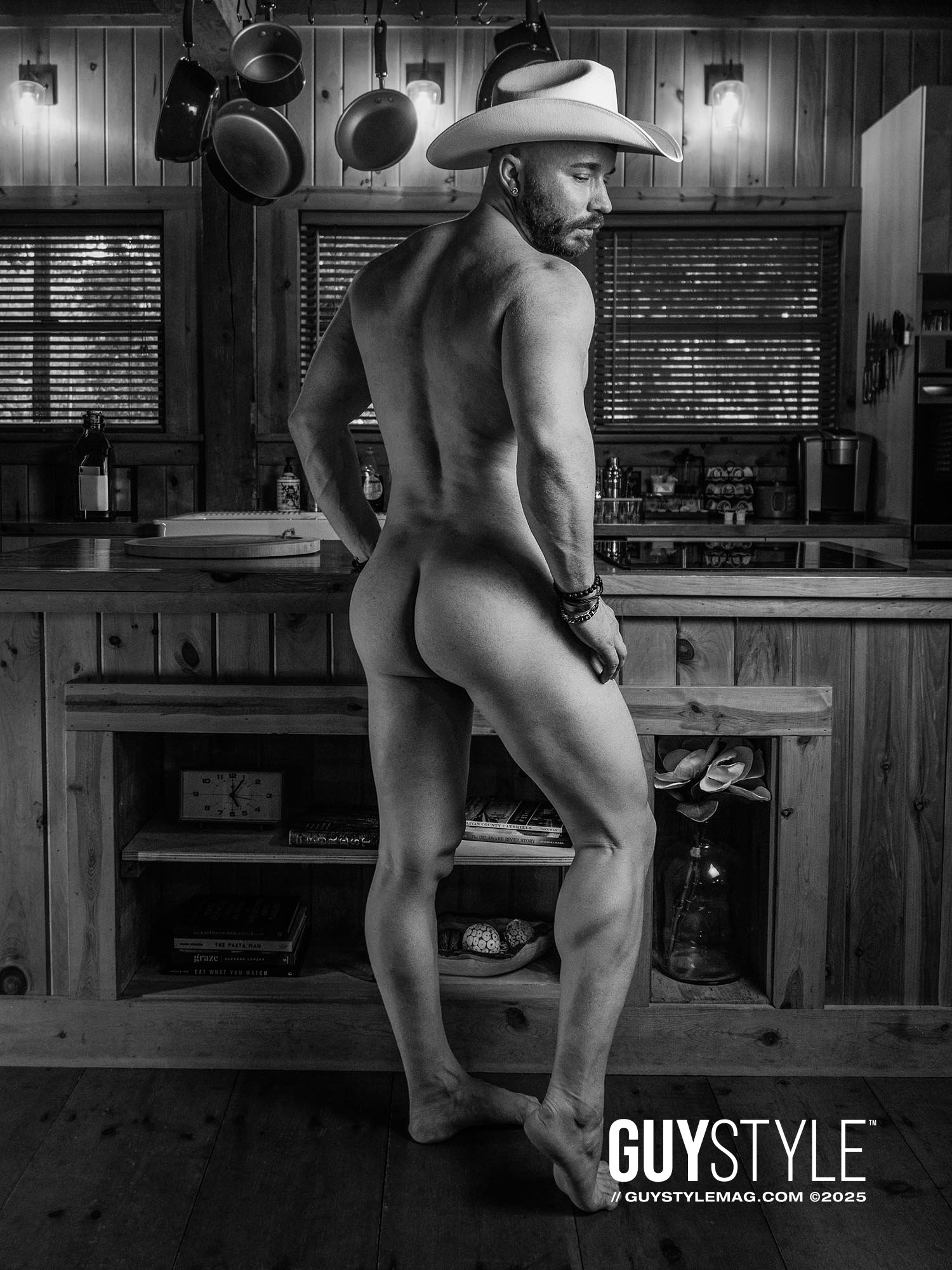
There is no model. There is no hired body standing in for an idea I had about beauty or desire. The subject of this work is the artist — which means the vulnerability is total and the authority is absolute, simultaneously, in the same frame.
I have been building this body for over twenty years through natural bodybuilding. No shortcuts, no chemistry, no proxy. That matters aesthetically and politically. When I photograph myself, I am not representing an ideal — I am documenting an achieved reality. The form you see is the result of discipline so sustained it has become identity. It is the canvas I made before I ever picked up a camera.
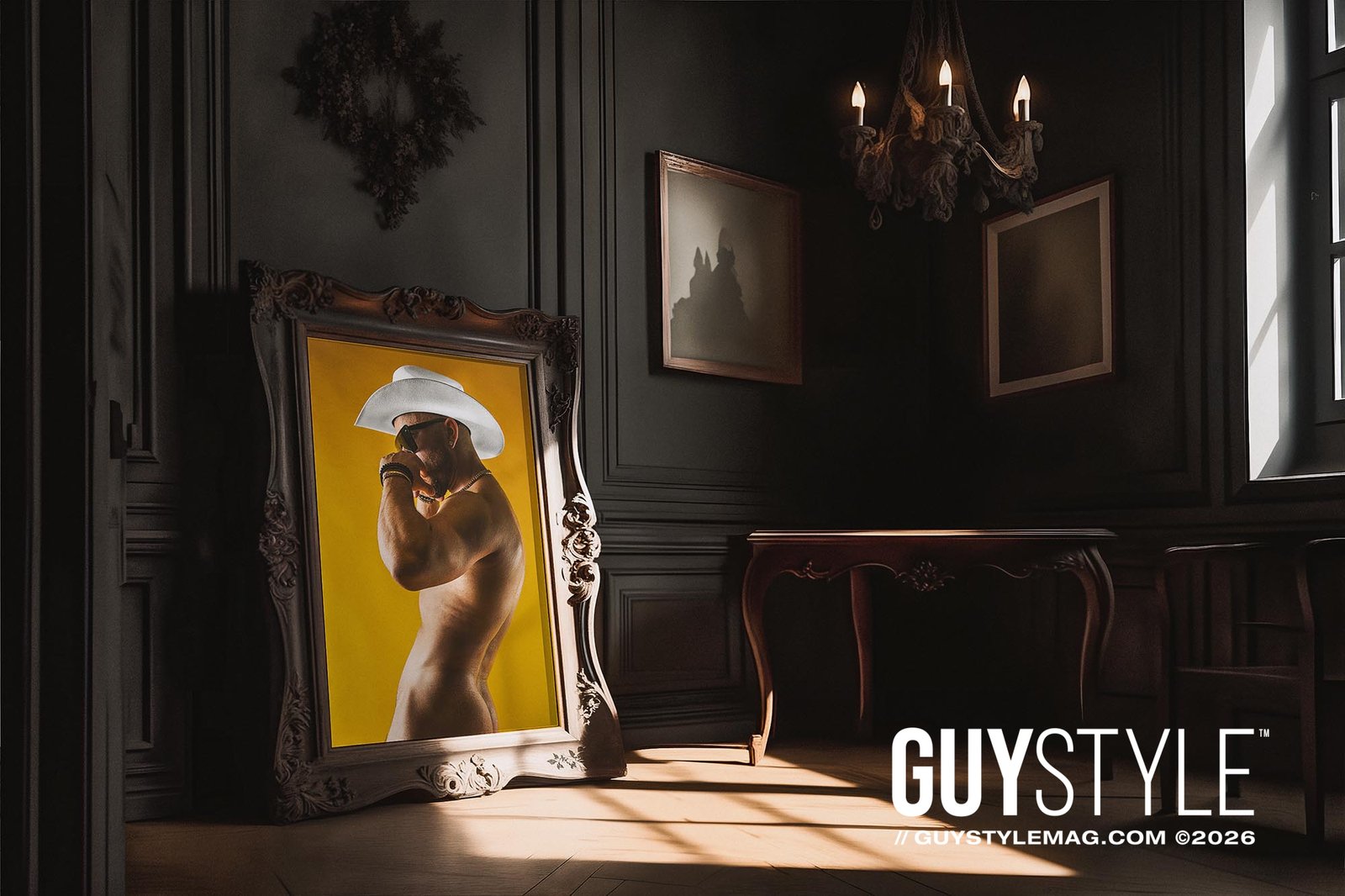
This collapses the traditional power dynamic of art-making. Mapplethorpe’s subjects gave him their bodies. Tom of Finland’s figures lived in his imagination. My body is mine, and I have put it into the light on my own terms. The vulnerability of self-exposure amplified by physical power creates a confrontation the viewer cannot resolve into comfortable categories. That irresolution is the work.
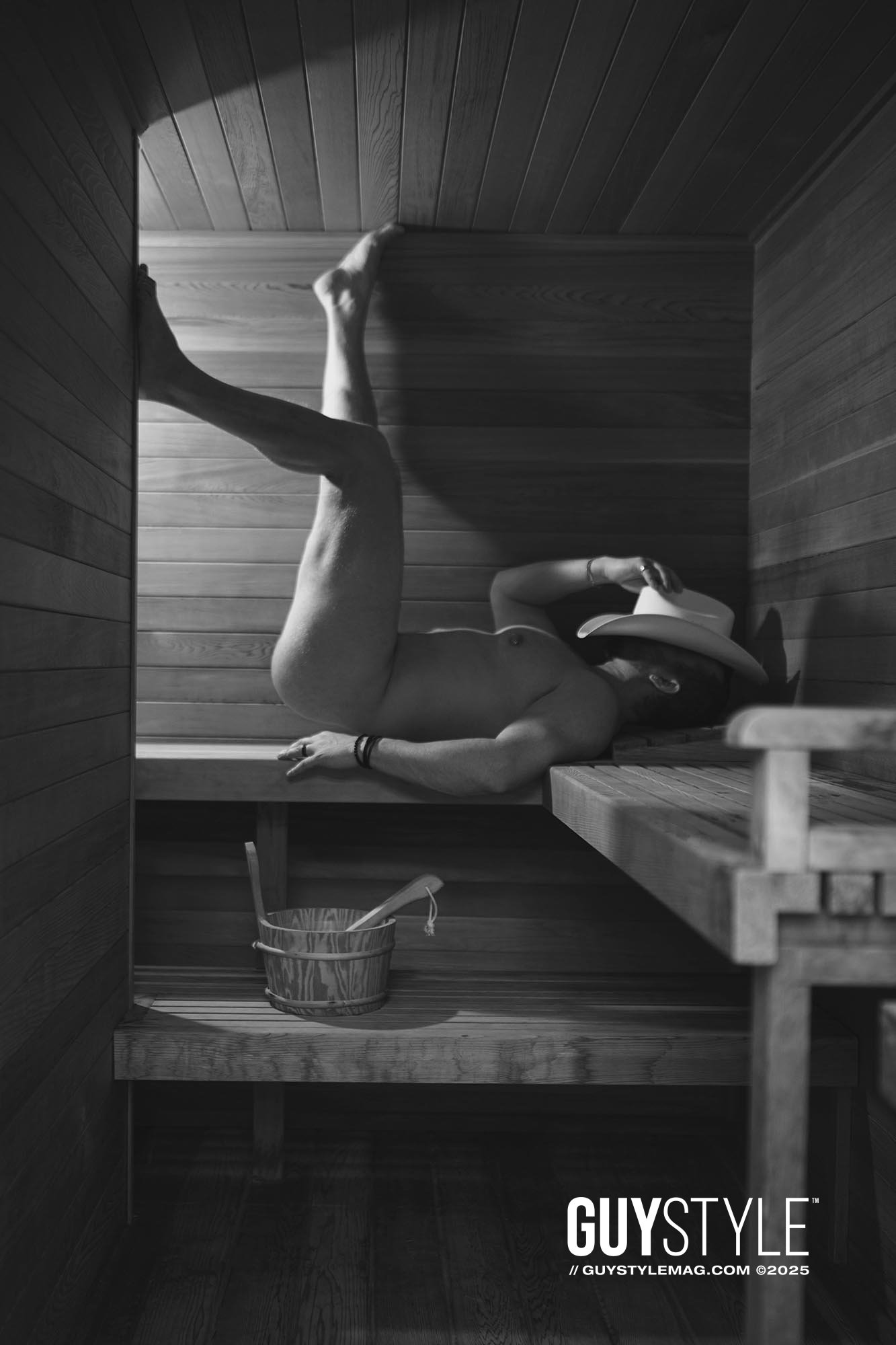
Honoring and Expanding the Masters
Mapplethorpe taught me that classical light is not decorative. It is a moral position. When you illuminate the male form with the same formal rigor applied to a calla lily or a Greek torso, you are making a claim about what deserves to exist in the world. I shoot with that intention. The light in my photographs is architectural — it sculpts, it asserts. But where Mapplethorpe maintained the cool distance of formal observation, his subjects rendered as beautiful specimens, I am inside the frame. This is memoir, not portraiture. The aesthetic language of High Art turned inward, toward queer subjectivity rather than queer objecthood.
Tom of Finland gave me something different: permission for the unapologetic erotic charge, the heroic masculine body claimed without apology as a site of gay desire. His figures were mythological. Mine are documentary. What I carry forward from him is the refusal to soften, to apologize, to dress the body in irony so that straight culture can feel comfortable looking at it. The power is real. The desire is real. I will not translate either into something more palatable.
The Historic Precedent: The Indecency Wars Against Mapplethorpe
The battle I wage against modern censorship is a continuation of the same cultural and political wars fought a generation ago. In 1989, conservative congressmen pressured the Corcoran Gallery of Art in Washington, D.C. to cancel Mapplethorpe’s retrospective, The Perfect Moment. The following year, the Contemporary Arts Center in Cincinnati went to trial — its director indicted on obscenity charges simply for showing the work. Both were ultimately acquitted. But the message had already been sent to every curator, every gallery director, every artist working in explicit territory: we can make this expensive, we can make this painful, we can make you afraid.
The machinery is different now. The robes are gone. What replaced them is more efficient and harder to fight.
Mapplethorpe’s work became a flashpoint demonstrating how political forces leverage obscenity laws to suppress queer and challenging art — a historical reality that did not end with his acquittal. It went underground, rewrote itself in the language of terms of service, and emerged thirty years later wearing a corporate logo.
The New Frontline: Art Versus Algorithmic and Cultural Censorship
The new censorship apparatus often arrives without a censor in the traditional sense. It arrives through algorithms, moderation systems, recommendation engines, automated classifiers, payment filters, and AI models trained on enormous archives of human culture. Those archives carry the values of the societies that produced them, and much of that data was created within a heteronormative, religiously influenced social order that historically treated heterosexuality as default, queerness as deviation, and the erotic male body as a source of suspicion whenever desire moved outside approved cultural scripts.
That history matters when machines are asked to determine what is acceptable, artistic, sexual, dangerous, explicit, tasteful, commercial, or worthy of visibility. Artificial intelligence absorbs patterns long before it understands context. A photograph can carry decades of queer art history, formal composition, symbolism, autobiography, and cultural memory while an automated system encounters skin, anatomy, desire, and statistical associations inherited from its training data. The resulting censorship can feel neutral because it arrives through software, yet the cultural assumptions embedded inside that software are deeply human.
This creates a strange contemporary condition for artists. Visibility now passes through systems built to classify before they interpret. Queer erotic art enters a digital infrastructure shaped by historical moral codes, commercial risk models, platform policy, machine learning, and datasets filled with the assumptions of previous generations. The bias becomes diffuse. There may be no single person making the decision, yet the result can still reproduce the same cultural hierarchy that once appeared through museums, churches, publishers, broadcasters, and other gatekeeping institutions.
The deeper question now reaches beyond any single platform or technology. Who built the cultural archive that trained the machine? Whose morality became metadata? Whose bodies appeared often enough to become normal, and whose appeared mainly inside categories of danger, obscenity, pathology, or controversy? AI censorship makes these inherited hierarchies newly visible because the machine reflects the civilization that taught it. For queer artists, that makes the digital image another frontier in the long history of representation, visibility, and cultural power.
Identity, Masculinity, and the Wild Frontier
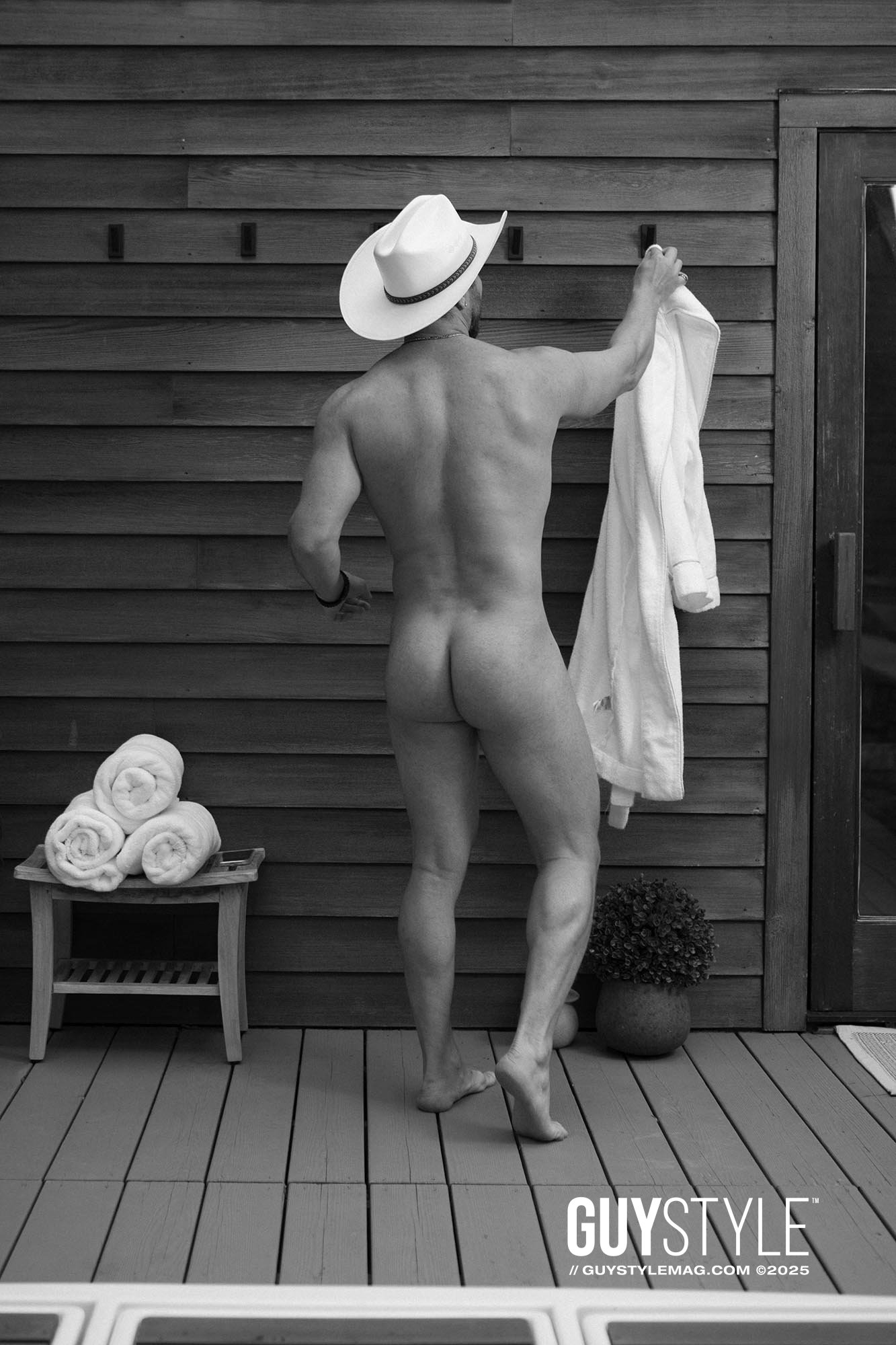
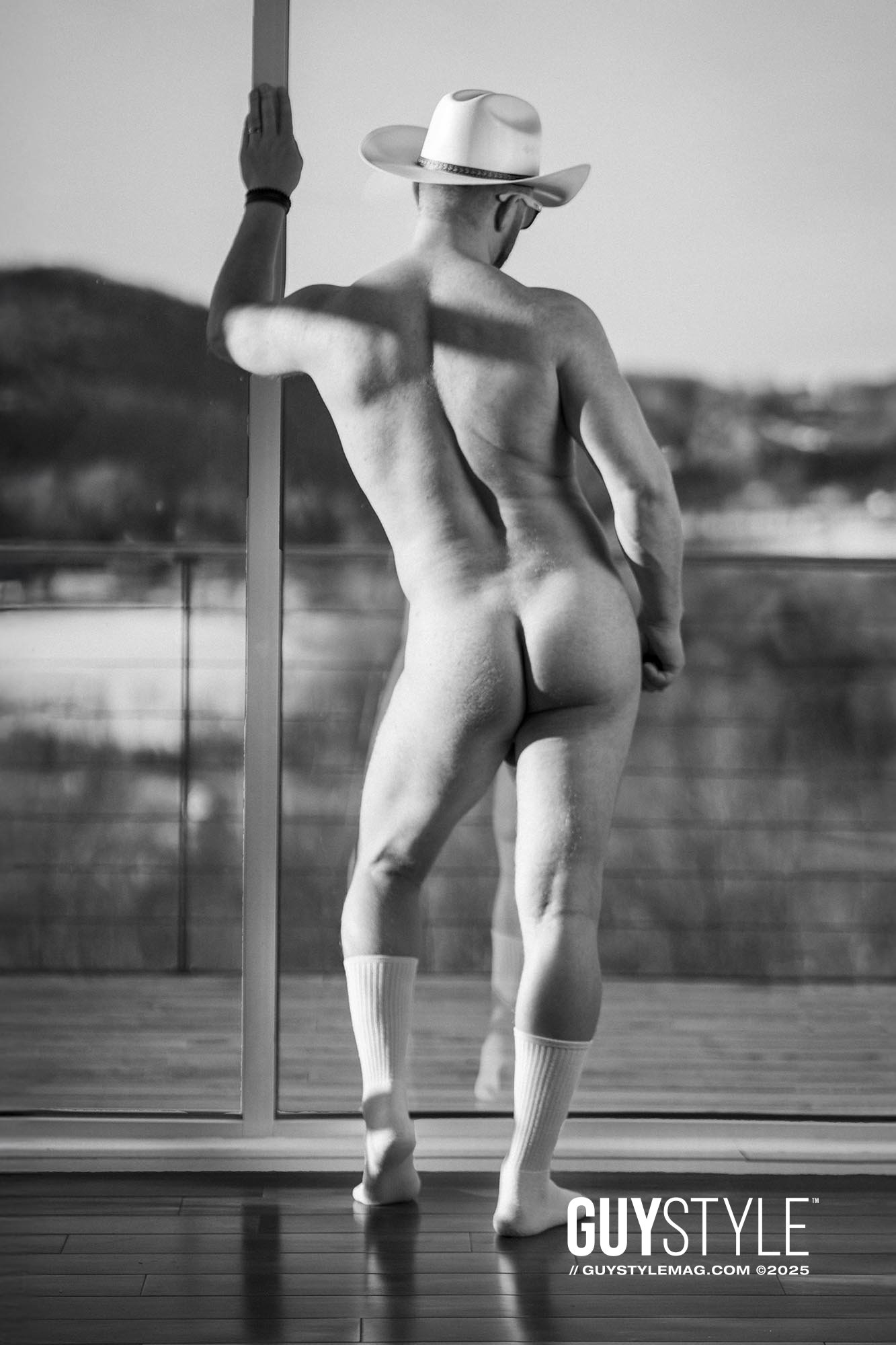
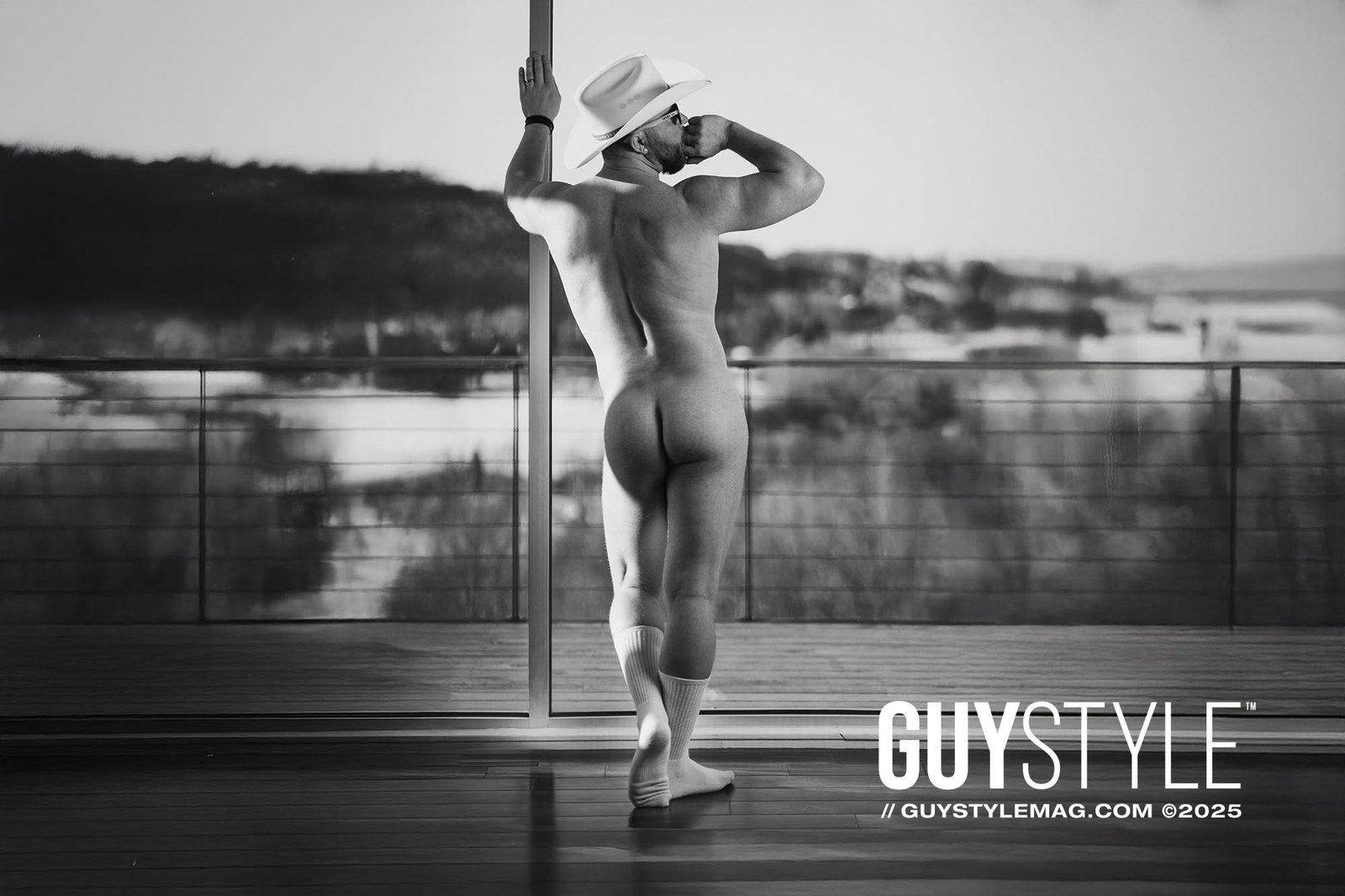
My work does not live only in the studio. Some of my most essential images were made in the Hudson Valley and the Catskills — the American sublime as backdrop for the Cocky Cowboy series, the queer male body placed against rock face and ridge line and open sky. I did this because queer masculinity has always been characterized as a fragile urban phenomenon, something that exists in apartments and bars and carefully lit galleries, something that requires the city as its life support system.
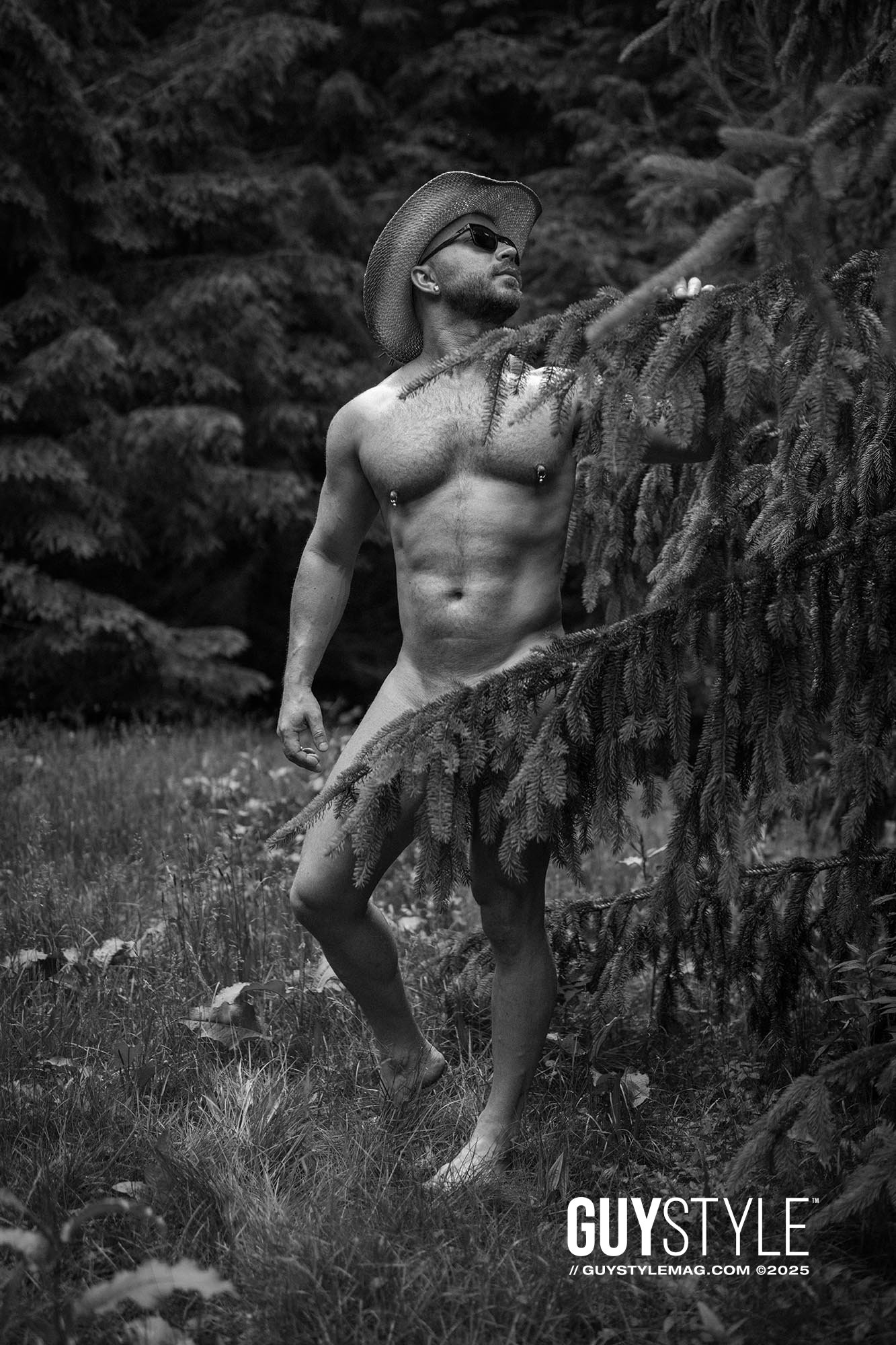
I wanted to put it somewhere it could not be contained. The peaks do not care about your politics. The light falling across the Catskills in late afternoon does not discriminate. When my body — built over twenty years, explicitly queer, explicitly erotic — stands in that landscape, it claims the same monumental permanence the landscape has. It says: we were always here. We were always this large. The wilderness was always also ours.
I have come to understand that the line between the sacred and the erotic was invented recently, and by people with something to gain from the separation. Ancient civilizations did not make that distinction — the phallus was sacred geometry, desire was cosmological, Eros was the force that animates matter itself. When I photograph the male body in full arousal against open sky or in the precision of studio light, I am not working against nature. I am working with it. A dew-beaded petal and an erect phallus are kin. I take my instructions from that kinship.
To make homoerotic art in 2026 is to accept that you are in a fight you did not start and cannot finish alone. The lineage I carry — Tom of Finland, Mapplethorpe, every artist who put the queer male body into the light and refused to take it back out — is not a credential. It is a responsibility. The work has to be worth the fight. It has to be good enough to justify the cost of making it.
The camera is still in my hand. The store is still open. The body is still in the frame.
That is the whole argument.