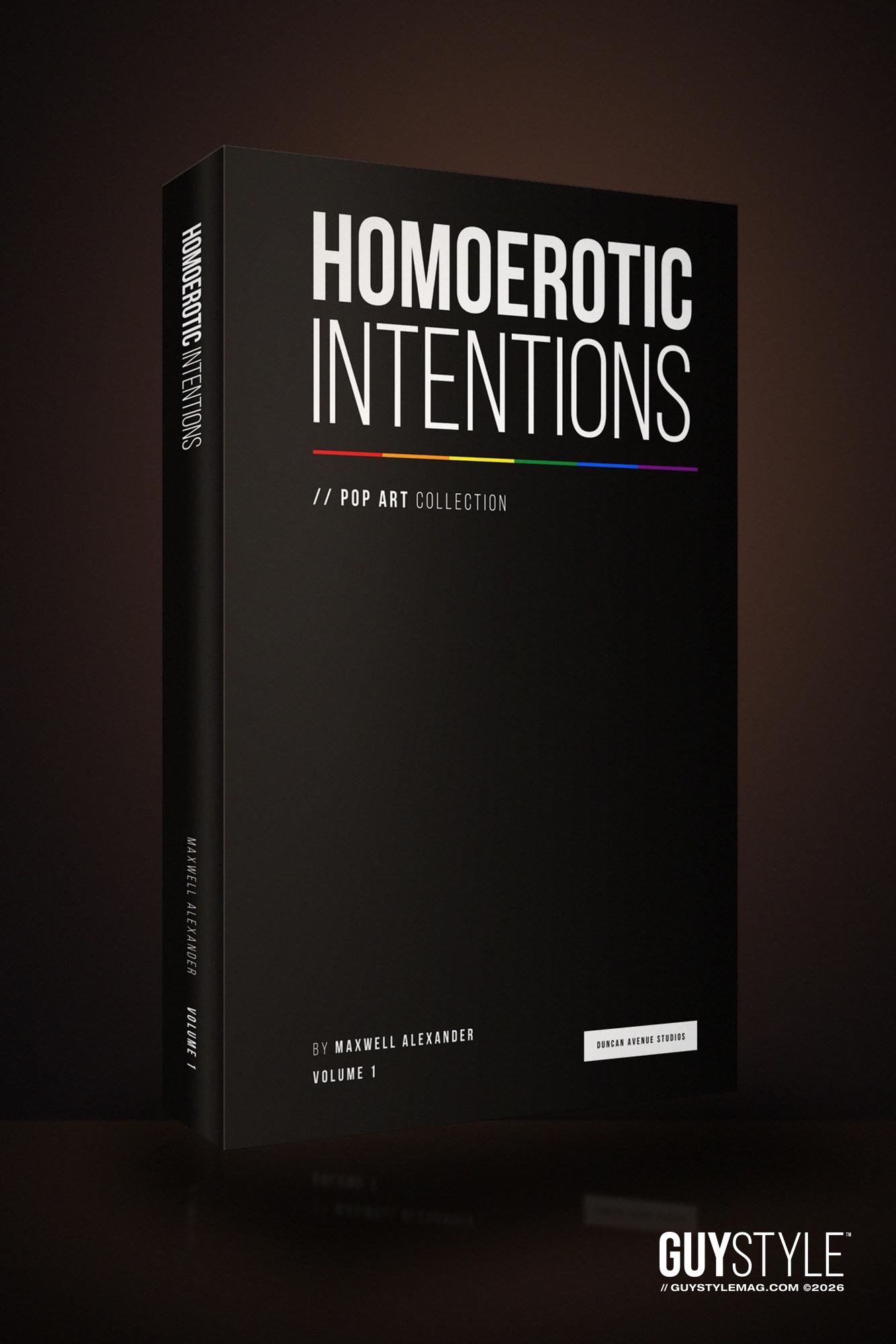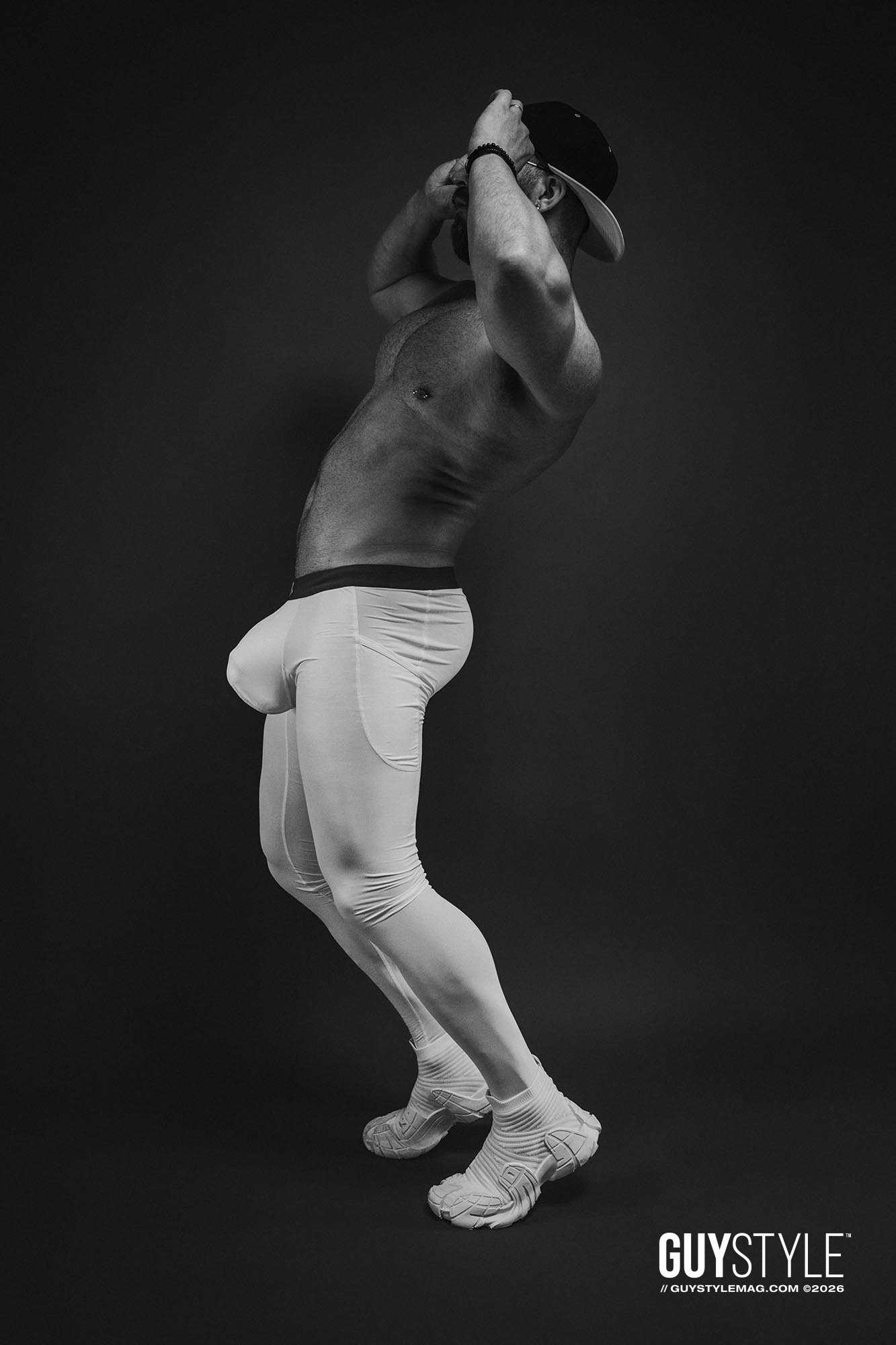
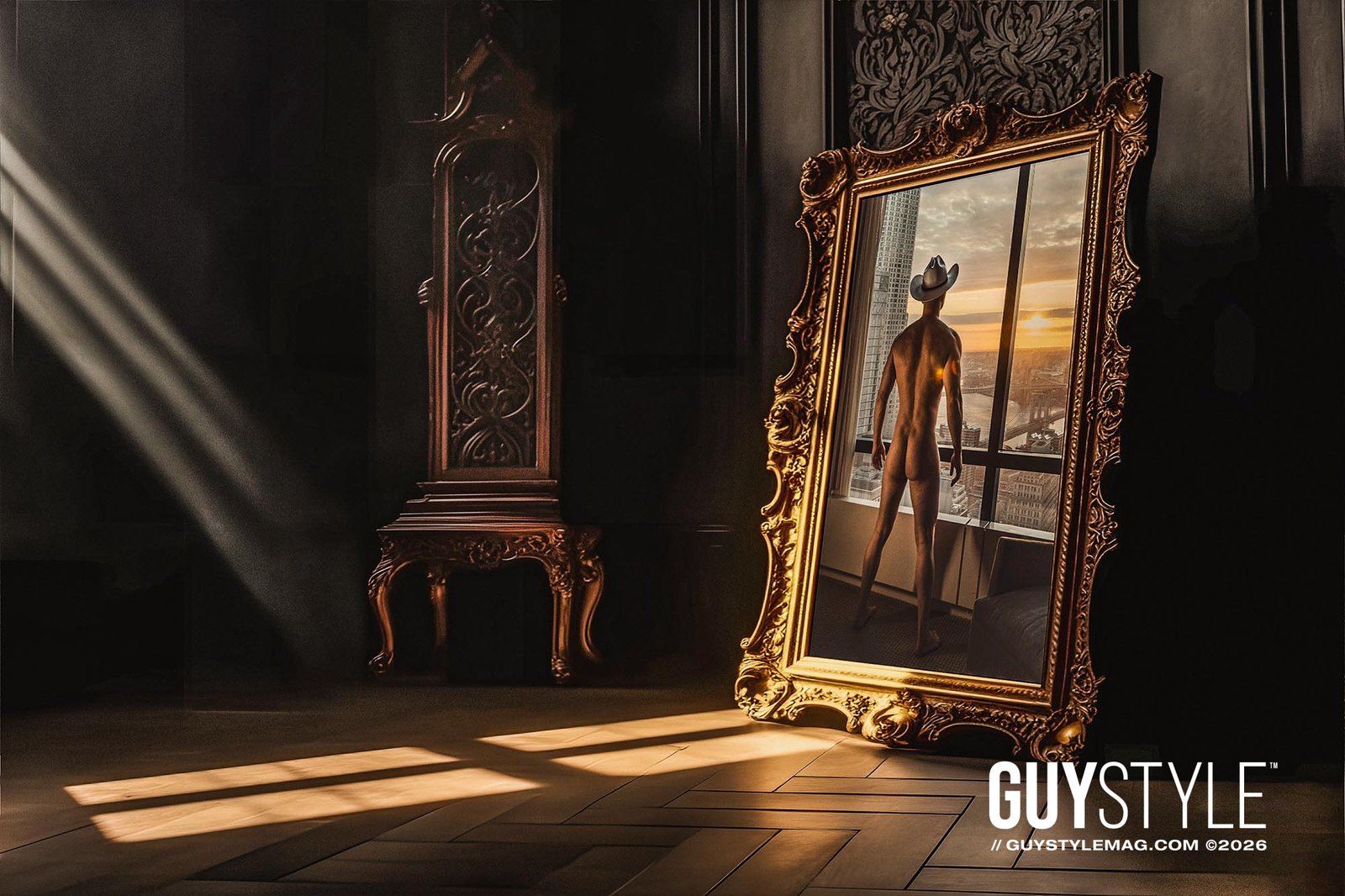
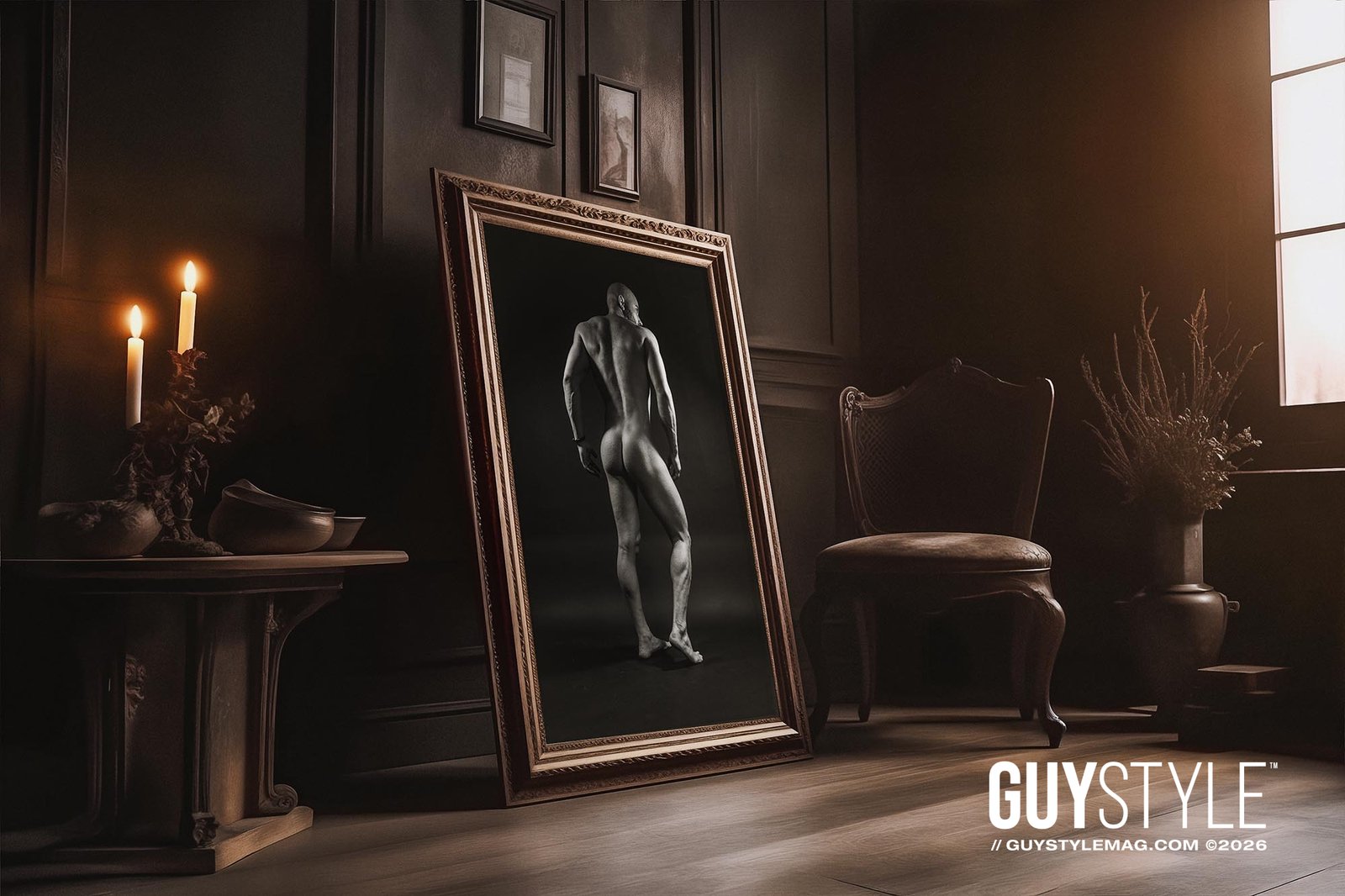
New York, NY — Somewhere in Chelsea, a man pours his first coffee under homoerotic wall art: a hand-signed photograph of a male nude. Upstate, in a cabin rented to gay couples for the weekend, a Cocky Cowboy canvas hangs above the bed where the landlord once would have hung a barn print. This essay is about those rooms: the living rooms, guest suites, vacation rentals and, soon, the bathhouses where homoerotic art and gay erotic wall art become part of the interior and part of the cure. It is written for gay men, for the collectors who live with this work, and for the interior designers and hosts who want to build spaces where queer people can finally see themselves on the wall. Pay attention to one idea above all. A new economy is forming around pleasure, health and honest design, and I have a name for it: the Pleasure Economy.
The Pleasure Economy: Homoerotic Art, Queer Wellness Interiors and the Future of Hospitality for Gay Men – by Maxwell Alexander, MA (FIT), BFA (SVA) – NYC Queer Artist-Activist, Certified Fitness Trainer, Bodybuilding and Sports Nutrition Coach, Published Fitness Model, Bodybuilder and Hospitality Entrepreneur – Photography by Maxwell Alexander
From Designing Feelings to Designing Desire
In my Experiential Hospitality 101 series for Hudson Valley Style Magazine, the latest episode, Designing Feelings: Natural Objects and the Emotional Architecture of Experiential Hospitality, made a simple claim. A designer cannot dictate what a guest feels, but a designer can create the conditions in which certain feelings become more available. Stone, driftwood and dried botanicals lower the noise of a room and let the nervous system settle.
That essay was written for everyone. This one is written for grown men who love men. Here the material in question is the male body itself, photographed, printed, signed and hung on the wall. The feeling it makes available has a precise name in psychology and a much older name in art: recognition. A gay man walks into a room and sees desire like his own treated as beautiful, valuable and worth framing in gold. For many of us, that experience is rarer than it should be, and its absence costs more than we admit.
Queer Space Has a History
Architecture has been slow to admit that sexuality shapes space. Queer scholars did the work anyway. In Queer Space: Architecture and Same-Sex Desire (1997), the architecture critic Aaron Betsky traced how gay men built interiors of excess, mirror and theater, spaces made to hold a desire the street refused. A year earlier, the architect Joel Sanders edited Stud: Architectures of Masculinity, which showed how gyms, locker rooms and bachelor pads script how men may look at other men.
The most generous recent survey is Queer Spaces: An Atlas of LGBTQIA+ Places and Stories (RIBA, 2022), edited by the designer Adam Nathaniel Furman and the architectural historian Joshua Mardell. They suggest that a queer space might be one where you can express yourself without fear or shame, and their atlas makes room for places built for queer sex, bathhouses included, alongside bookshops, homes and ruins. In other words, queer space was never only a bar on Christopher Street. It was always also a bedroom, a sauna and a wall.
Queering the Home, One Wall at a Time
The scholar who brings this conversation straight into interior design is Olivier Vallerand, an architect, historian and head of the interior design program at the École de design of the Université de Montréal. His book Unplanned Visitors: Queering the Ethics and Aesthetics of Domestic Space (McGill-Queen’s University Press, 2020) won the IDEC Book Award and ASID’s Joel Polsky Prize. Vallerand shows how the home, the most supposedly private and heterosexual of spaces, constantly blurs into the public, and how queer artists and architects have used that blur to question who a house is built for.
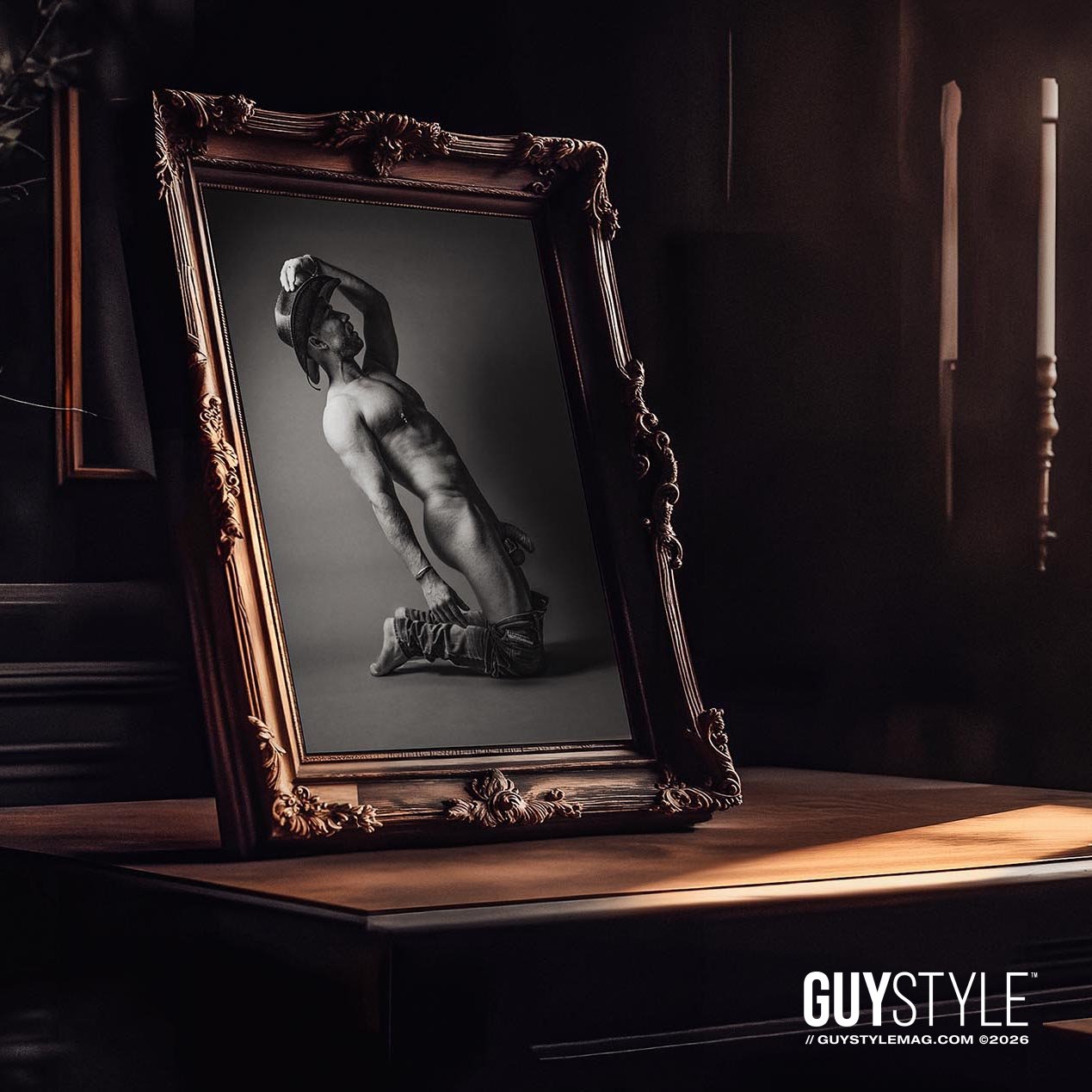
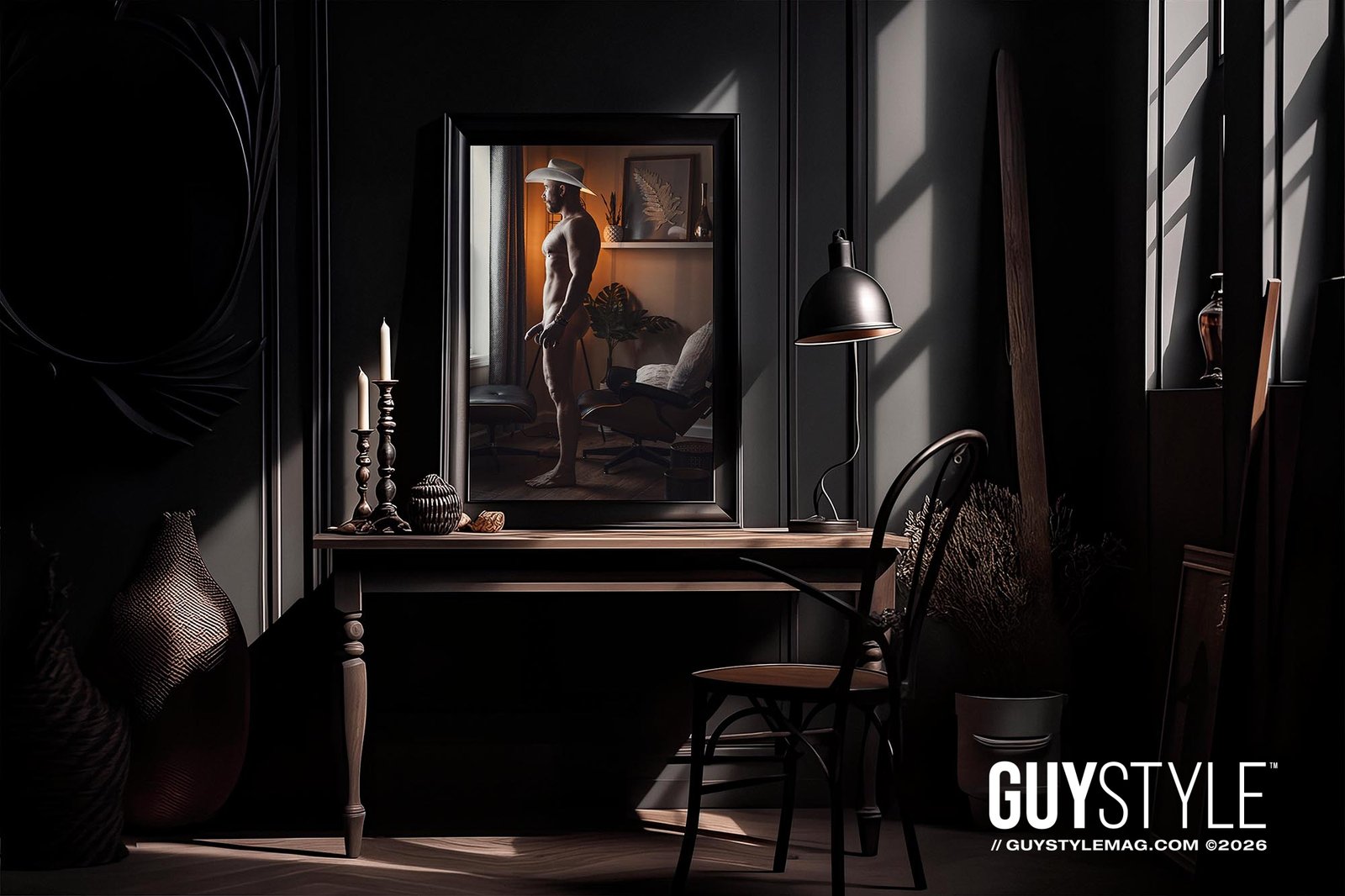
I take his point and hang it on a nail. When a gay man chooses homoerotic wall art for his living room, he edits the script of domestic space. The wedding portrait over the fireplace was always a statement about who belongs. So is a male nude in a gold frame. The difference is that one statement has been treated as normal and the other as scandal, and that double standard deserves a long look in good light.
The Mental Health Case for Seeing Yourself on the Wall
Here the argument moves from aesthetics to health. The psychiatric epidemiologist Ilan H. Meyer gave us the minority stress model in 2003: lesbian, gay and bisexual people carry extra, chronic stress produced by stigma, and that stress shows up in mental health. At Yale, the psychologist John Pachankis has spent his career turning that insight into treatment. His team describes how stigma produces internalized shame, social isolation and identity concealment, which raise the risk of depression and anxiety among gay and bisexual men.
Pachankis also named a stressor every gay man knows from the apps. In a 2020 study in the Journal of Personality and Social Psychology, his team found that stress from inside the gay community itself, its focus on sex, status, competition and exclusion, predicted gay and bisexual men’s mental health over and above the classic minority stressors. That finding matters for this essay.
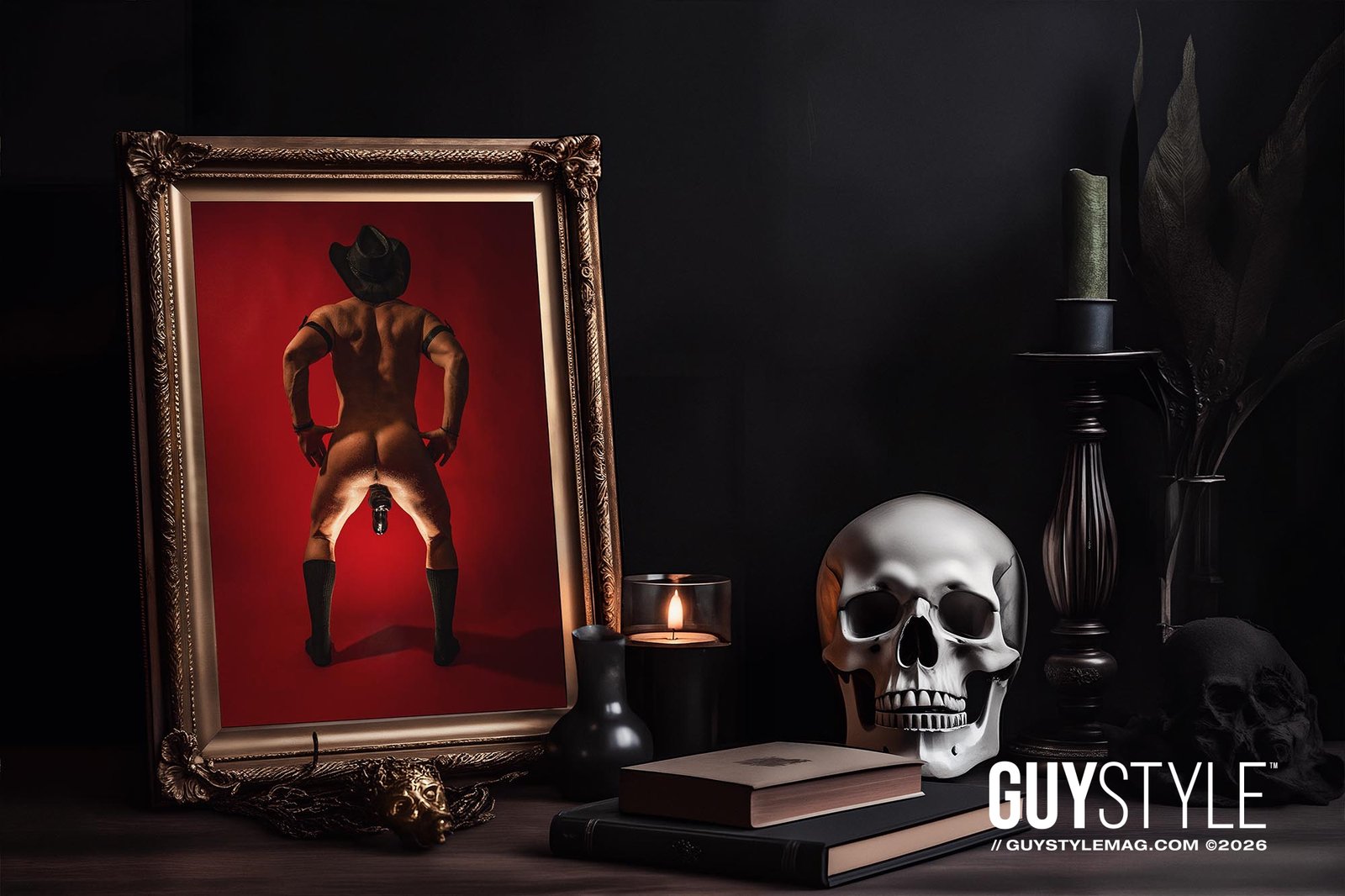
Homoerotic art can wound as easily as it heals if it sells a single ideal body and invites comparison. My work aims the other way. I photograph my own body as a practice of self-acceptance and training in public, and I want the man looking at the print to feel invited, never measured. A wall that says “you belong here, and so does your desire” is a small, daily piece of affirmative care.
Homoerotic Art Is a Liberation Technology
Earlier this year I wrote on GSM that homoerotic art is a liberation technology. “History did not invent queer people. History invented shame.” Homoerotic art has never been decoration; it has always been a political act. I stand by every word, and this essay is the interior design chapter of that argument.
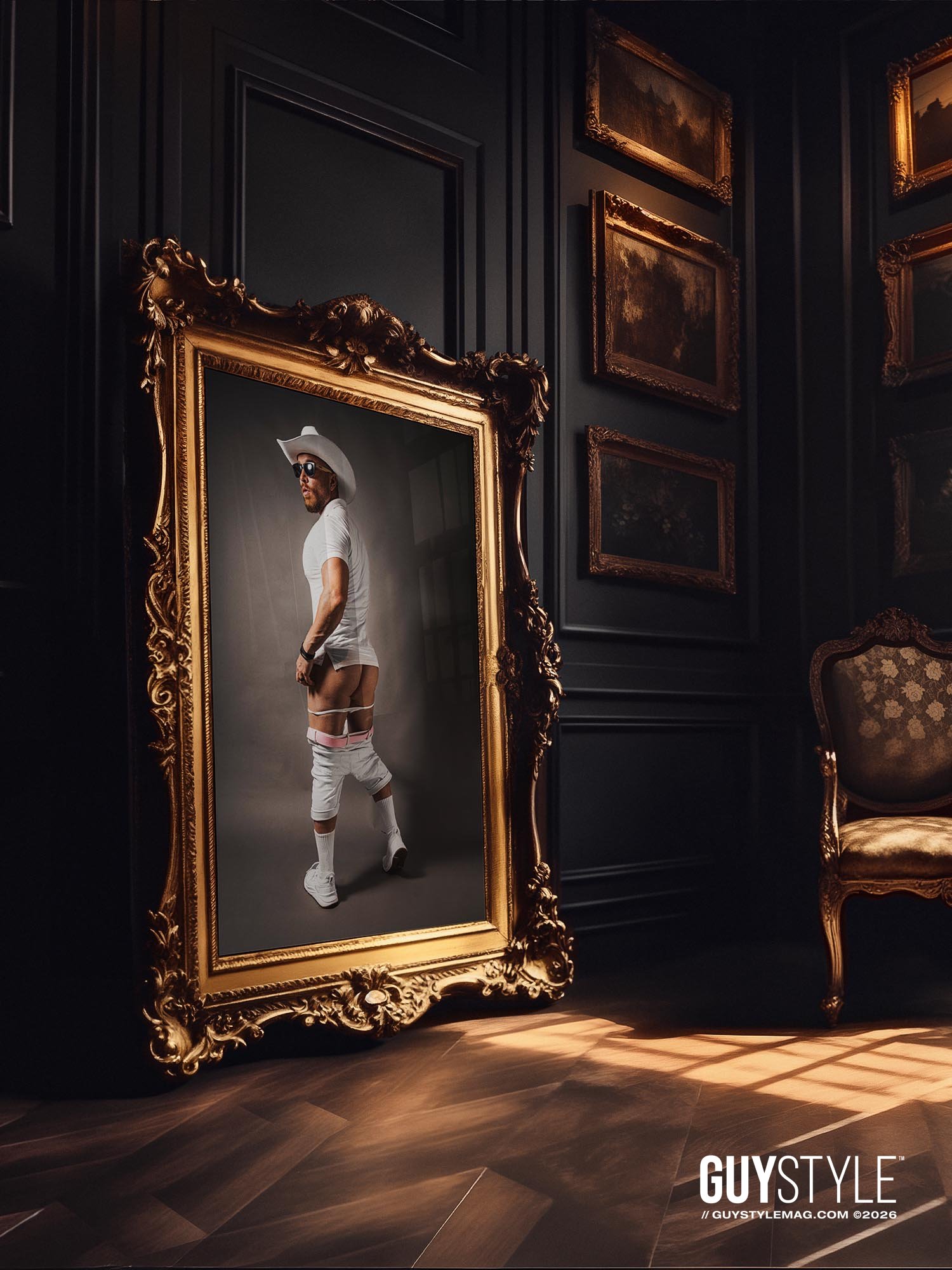
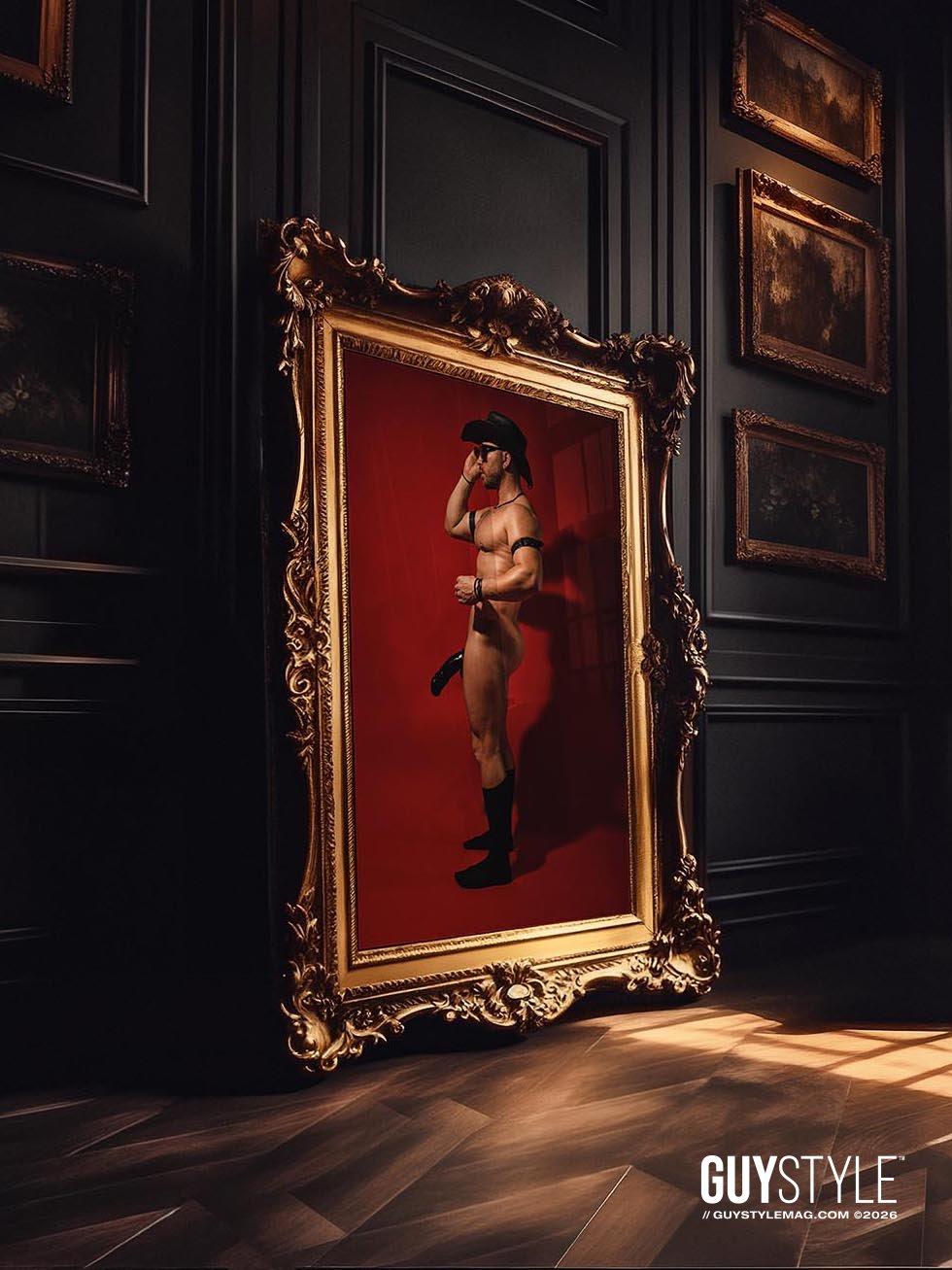
Theory is cheap, so here is the field data. Collectors have bought thousands of dollars’ worth of my homoerotic prints. Gay men have hung my sculptural, very literal studies of the phallus and the testicles on their walls, the work I explored in Celebrating the Phallus: Reclaiming Power in Queer Art. Some have told me they decorated their vacation rentals with it.
Those rentals were designed for adult gay men and located in towns with long histories of LGBTQ+ welcome. Nobody commissioned a focus group. The market simply showed up, wallet in hand, and asked for rooms where it could breathe. My earlier essays Postcard Uprisings and MY TURN describe what happens when corporate platforms try to shove that market back into the closet.
The Bathhouse as a Wellness Interior
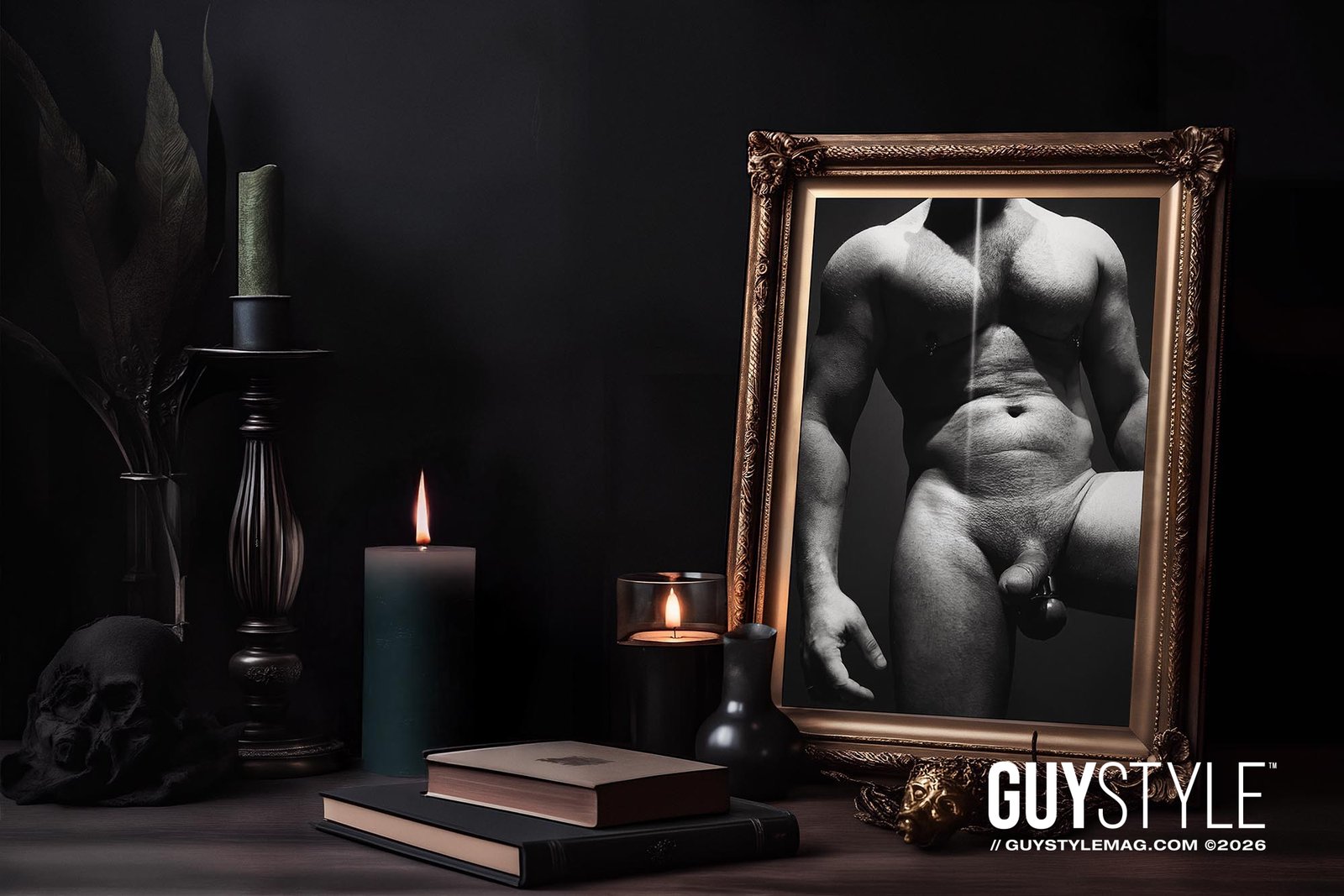
Years ago I asked on GSM what happened to gay saunas and bathhouses, and on HVSM I followed the evolution of gay saunas from urban bathhouses to private wellness retreats in the Hudson Valley and Catskills. The historian Allan Bérubé had already told the deeper story in “The History of Gay Bathhouses,” reprinted in the Journal of Homosexuality in 2003: the baths were social institutions, safe havens and community spaces at a time when the law hunted gay men. George Chauncey’s Gay New York (1994) shows how central the baths were to this city’s gay world long before Stonewall.
Now New York may get them back. In August 2026, State Senator Erik Bottcher and Assemblymember Tony Simone introduced the Public Health Modernization Act (S10673 and A11663). It would direct the State Department of Health to repeal the 1985 rule that effectively banned adult saunas and replace it with licensing and safety standards.
As of this writing, the bill sits in the Senate Rules Committee, so the old rule still stands. Minneapolis lifted its own ban earlier this year, and the former CDC official Demetre Daskalakis has noted that a regulated bathhouse could offer HIV and STI testing and access to prevention medication on site.
Picture that space designed with intention: steam, stone, warm light, prevention and testing at the front desk, and homoerotic art on the walls. Michel Foucault called such places heterotopias, real spaces that hold a different order of life, and he named the sauna and the hammam among them, places you enter through ritual. A bathhouse built today would be the purest example of a queer wellness interior, a place where the body, health and art finally share one room.
Sex in Public, Utopia in Private
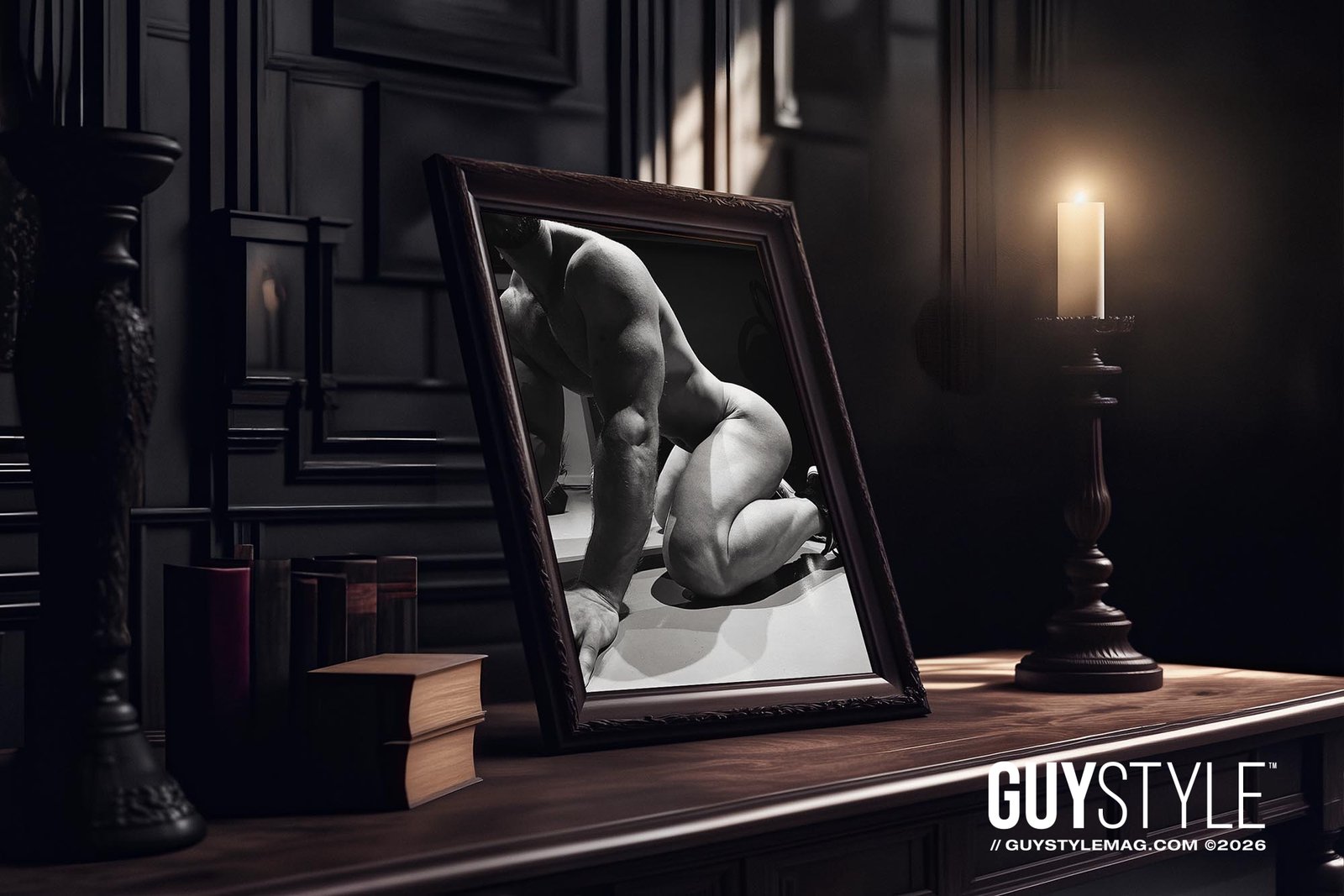
Queer theory has defended these spaces for decades. In “Thinking Sex” (1984), Gayle Rubin showed how society ranks sexual acts into good and bad and punishes the bottom of the list. Lauren Berlant and Michael Warner’s “Sex in Public” (1998) argued that sexual culture builds public life and community, far beyond the bedroom. Samuel R. Delany’s Times Square Red, Times Square Blue (1999) mourned the porn theaters of 42nd Street as places of contact across class and race, erased by redevelopment. José Esteban Muñoz, in Cruising Utopia (2009), wrote that queerness is a horizon we glimpse and keep moving toward.
Read together, these scholars make one point I care about as a hospitality entrepreneur: spaces for sexual culture are social infrastructure. Cities that erase them lose a part of their public health and their soul. Interiors that welcome them gain a clientele that has been underserved for a century.
The Pleasure Economy, Defined
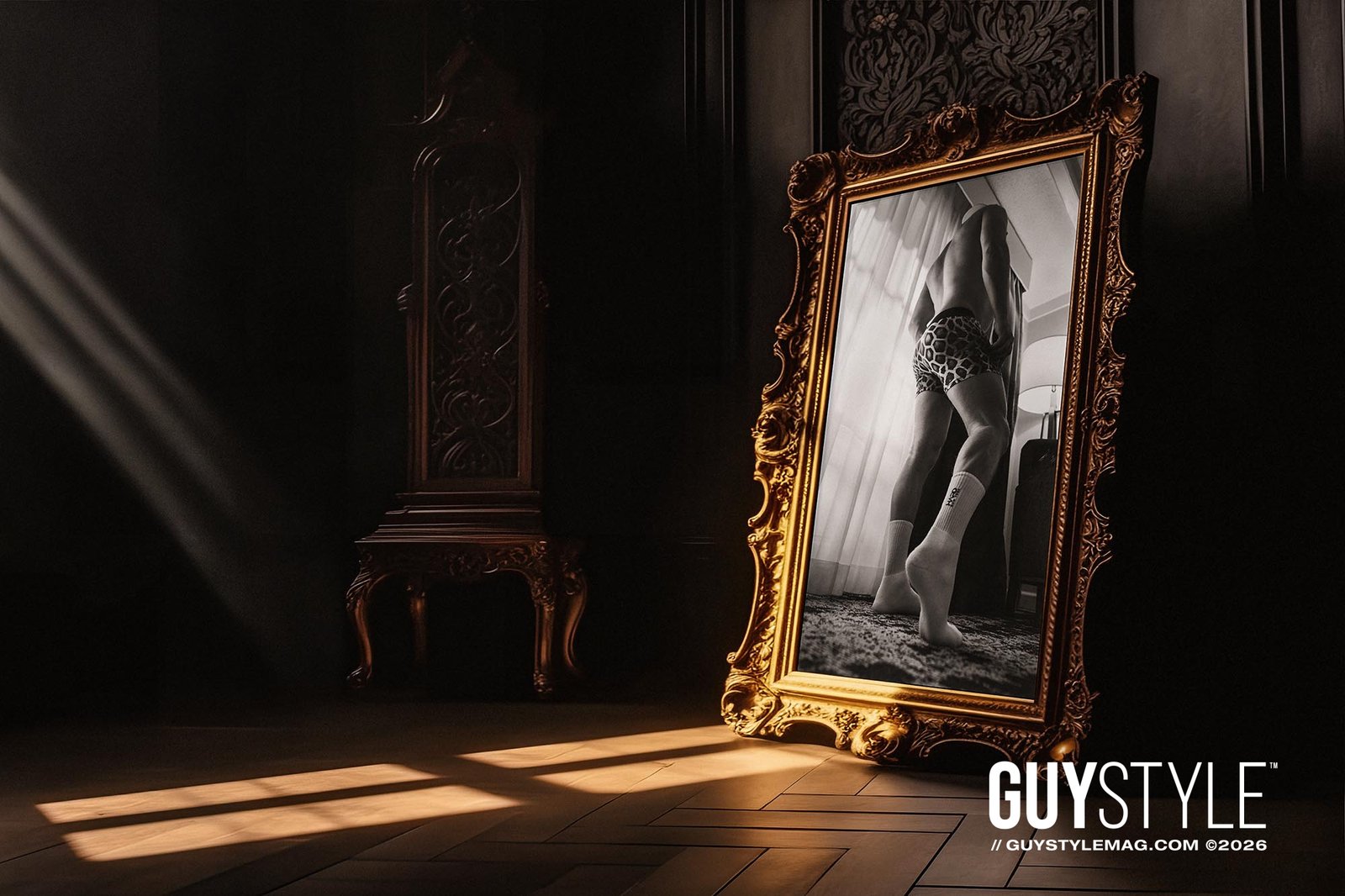
I define the Pleasure Economy as the market of goods, spaces and services that treat sexual well-being and erotic joy as part of health and quality of life, and that serve people openly instead of hiding them behind shame. It includes erotic and homoerotic art, adult hospitality, sex-positive wellness venues, sexual health care and the creators and workers who make all of it possible.
adrienne maree brown gave the movement a cousin concept in Pleasure Activism: The Politics of Feeling Good (2019): pleasure as a measure of freedom. The money already agrees. Industry estimates put LGBTQ+ travel spending at roughly 357 billion dollars by the end of 2025, and Arival’s 2024 research found LGBTQ+ travelers spend about 23 percent more than other tourists. Legacy hospitality keeps chasing this guest with rainbow logos every June. Pride month is a campaign; the Pleasure Economy is a year-round address.
Sex Work and the Law: Time to Catch Up
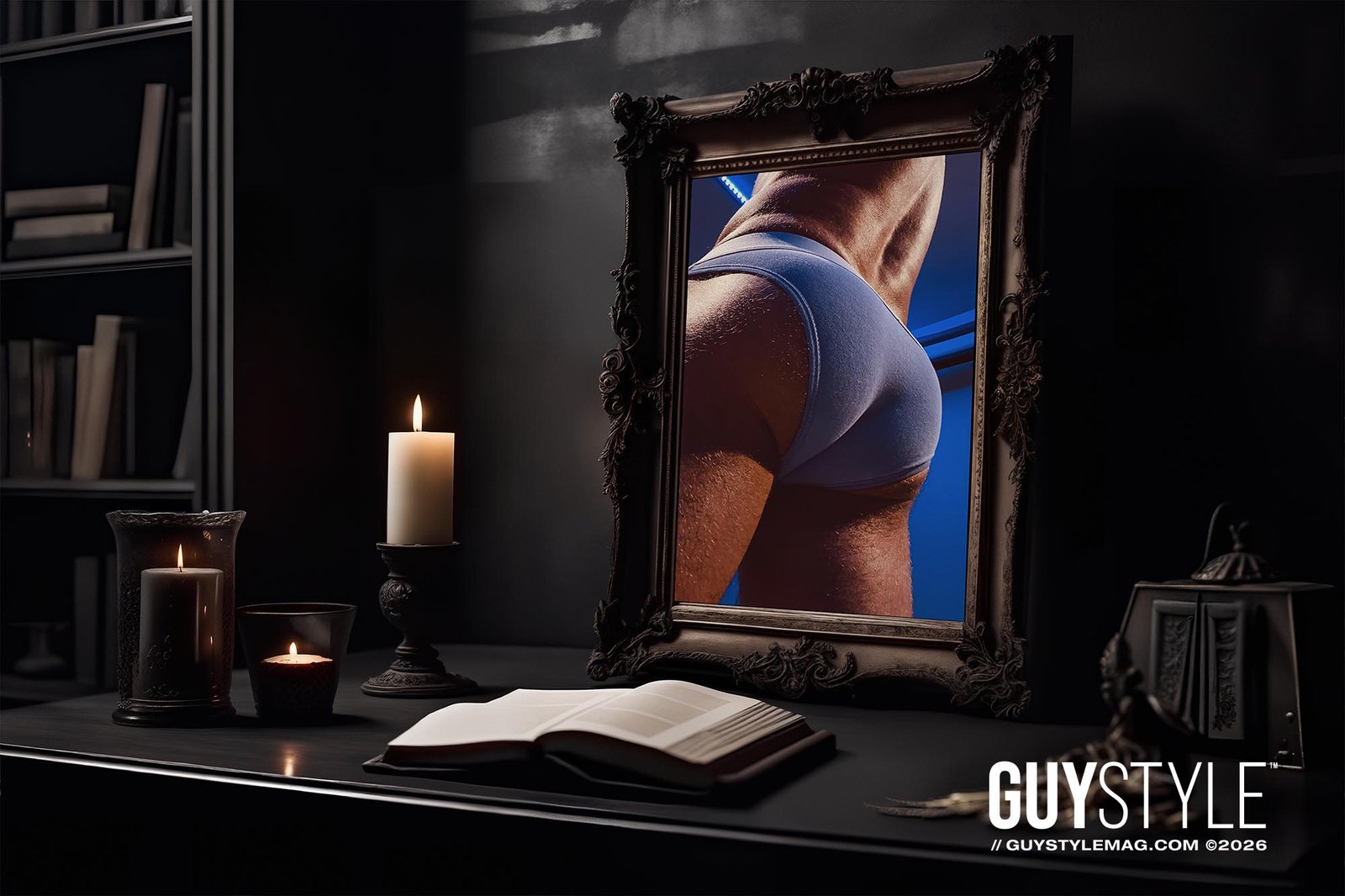
No Pleasure Economy is honest without the people who work in it. In Revolting Prostitutes (2018), Juno Mac and Molly Smith make the case for sex workers’ rights, decriminalization and labor protections, written from inside the work. Heather Berg’s Porn Work: Sex, Labor, and Late Capitalism (2021) treats adult performers as workers with strategies, careers and demands, which is exactly what they are.
The law lags far behind. In the United States, prostitution is illegal everywhere except Nevada, where it is allowed only in licensed brothels in a handful of rural counties. Las Vegas itself is excluded. Meanwhile, millions of adults buy, sell and create erotic content online every day. The country can keep pretending, or it can wake the hell up and write laws for the world people actually live in. I know which side of history the saloon doors swing toward.
Bodies Built for Pleasure: Medicine Joins the Conversation
The Pleasure Economy also lives in the clinic. Mental health care for men, hormone health, medical aesthetics, medically supervised weight loss and longevity care are changing how long and how well adults can enjoy their bodies, including their sex lives. Each of these is a medical service that belongs with licensed professionals, and none of it is a promise. What matters for design is the setting. A clinic or spa that treats sexuality as part of health, rather than as an embarrassing footnote, can feel like it was built for a grown man. Homoerotic wall art in its rooms tells a gay patient, before anyone says a word, that he is safe here.
Disclosure: I am a co-founder of Aláry Health Spa in Poughkeepsie and affiliated with Aláry Health, a telehealth practice for men’s health across New York State, with medical services provided by Guardian Medical Group NY PC. As a certified fitness trainer and bodybuilding and sports nutrition coach, I see this every day: when men feel better in their bodies, they open up about everything else.
People’s Hospitality Hangs the Art
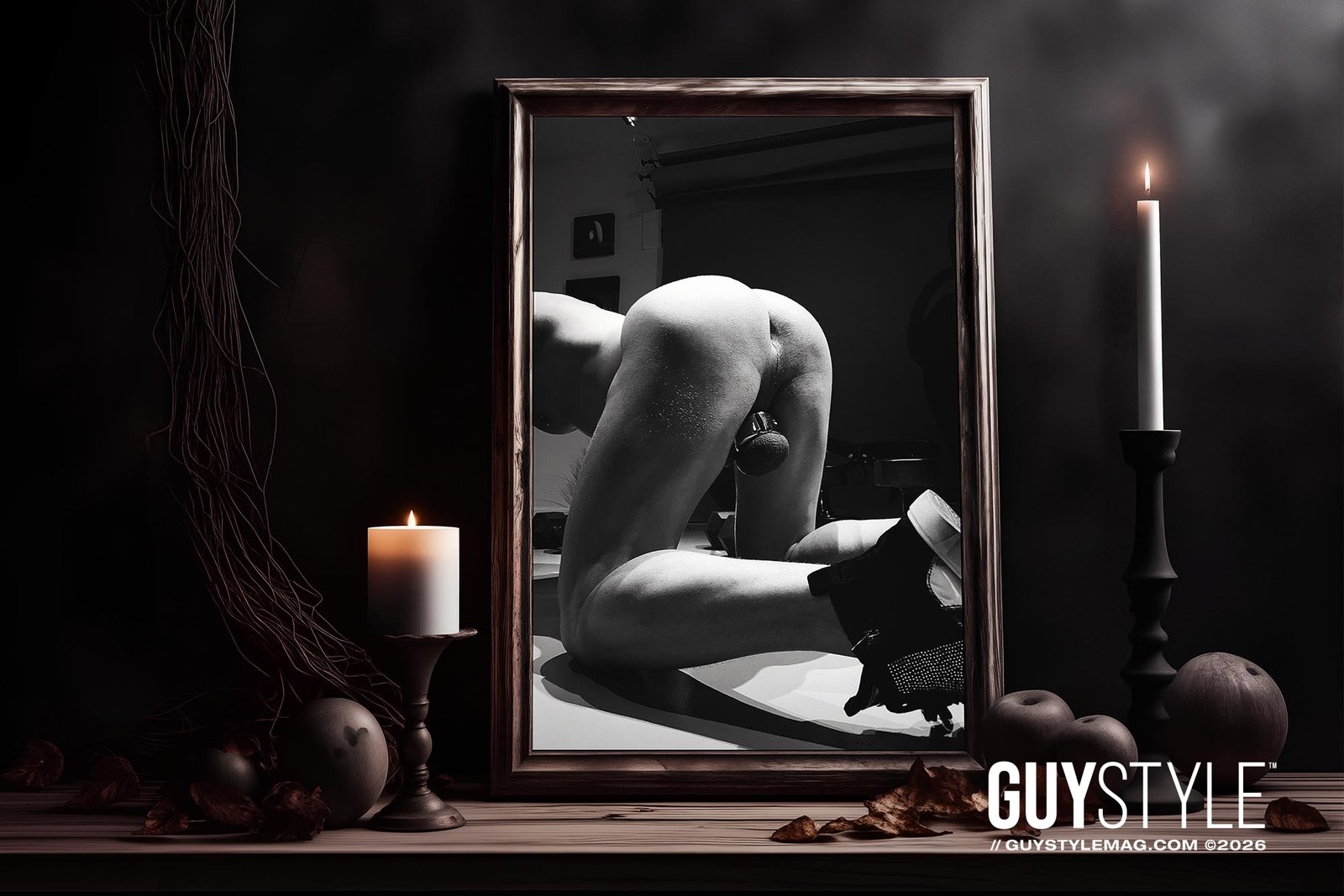
The People’s Hospitality Movement rests on four principles: People, Place, Planet, Presence. Independent hosts, small studios and local artists can do what corporate hospitality cannot. Legacy brands answer to shareholders who flinch at a bare shoulder. They will never be able to swallow an erect gay phallus on the wall, and that is precisely the opening. An independent host in Woodstock or the Catskills can design a suite for gay men with art that speaks to them, and the guests will find it, book it and come back.
That is where my practice sits. I am an artist, a photographer, a fitness professional and a hospitality entrepreneur, and I treat my own body as the research material. I carve from my own nature. Every print in the gallery below began as a question about desire, health and belonging, asked with a camera in a small New York studio.
A Room of One’s Own Desire
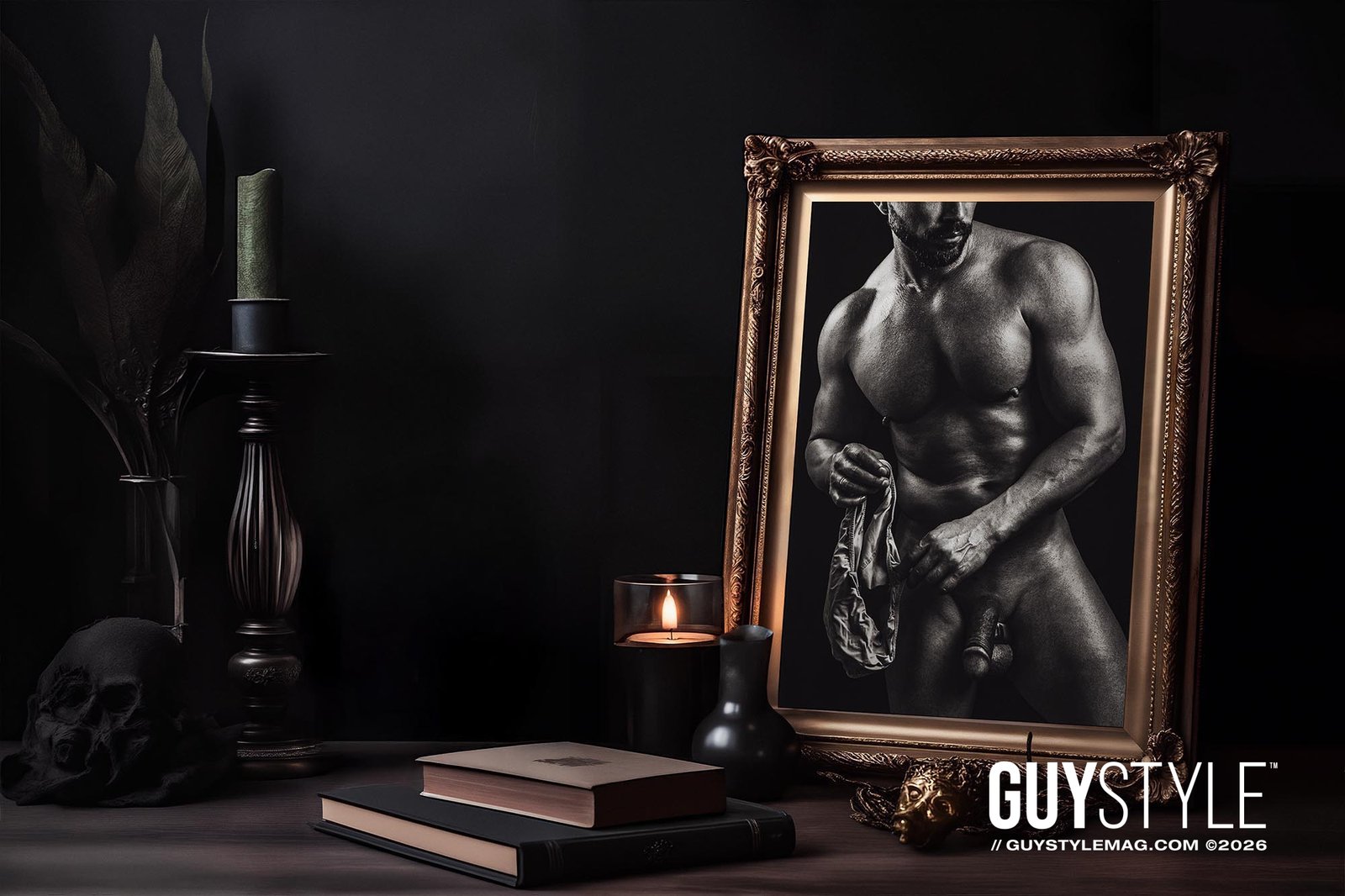
The designers of the next decade will be judged by whom their rooms welcome. Wellness interiors have learned to bring in stone, light and plants. The next step is to bring in people, all of them, desire included, and homoerotic wall art is one of the simplest ways to do it. For gay men, that can start with one framed photograph that says you are seen. Everything else, the spa, the bathhouse, the clinic, the vacation rental with the cowboy over the bed, grows from that wall.
Pleasure Economy FAQ
What is the Pleasure Economy?
The Pleasure Economy is a term coined by NYC queer artist Maxwell Alexander in 2026. It describes the market of goods, spaces and services that treat sexual well-being and erotic joy as part of health and quality of life, from homoerotic wall art and adult hospitality to sex-positive wellness venues, sexual health care and the creators and workers behind them.
Are gay bathhouses legal in New York?
Not yet. A 1985 New York State health rule effectively bans adult saunas where sex takes place. The Public Health Modernization Act (S10673 and A11663), introduced in August 2026, would repeal that rule and direct the State Department of Health to write licensing and safety standards. As of November 2026 the bill sits in the Senate Rules Committee.
How do you decorate with homoerotic wall art?
Treat it like any fine art. Give one strong piece a wall of its own, frame it well (gilded or dark wood frames suit black and white male nudes), light it softly, and hang it where you relax: a living room, bedroom, study or guest suite. Hand-signed homoerotic wall art prints by Maxwell Alexander are available in the GUY STYLE MAG (18+) Gallery.
Can homoerotic art support gay men’s mental health?
Art is no substitute for care. Research on minority stress shows that stigma, shame and identity concealment weigh on the mental health of gay and bisexual men, and affirming environments push the other way. A home, spa or rental that reflects a gay man’s desire without shame is one small, daily form of that affirmation.
Where is sex work legal in the United States?
Only in Nevada, and only in licensed brothels in certain rural counties. State law excludes the largest counties, including Clark County, home to Las Vegas. Prostitution is illegal in every other state.
Research and Theoretical Sources
- Bérubé, Allan. “The History of Gay Bathhouses.” Journal of Homosexuality 44, no. 3 (2003): 33–53. Also in My Desire for History: Essays in Gay, Community, and Labor History, edited by John D’Emilio and Estelle B. Freedman. University of North Carolina Press, 2011.
- Berg, Heather. Porn Work: Sex, Labor, and Late Capitalism. University of North Carolina Press, 2021.
- Berlant, Lauren, and Michael Warner. “Sex in Public.” Critical Inquiry 24, no. 2 (1998): 547–566.
- Betsky, Aaron. Queer Space: Architecture and Same-Sex Desire. William Morrow, 1997. About the author.
- brown, adrienne maree. Pleasure Activism: The Politics of Feeling Good. AK Press, 2019.
- Chauncey, George. Gay New York: Gender, Urban Culture, and the Making of the Gay Male World, 1890–1940. Basic Books, 1994.
- Delany, Samuel R. Times Square Red, Times Square Blue. New York University Press, 1999.
- Foucault, Michel. “Of Other Spaces.” Translated by Jay Miskowiec. Diacritics 16, no. 1 (1986): 22–27.
- Furman, Adam Nathaniel, and Joshua Mardell, eds. Queer Spaces: An Atlas of LGBTQIA+ Places and Stories. RIBA Publishing, 2022.
- Mac, Juno, and Molly Smith. Revolting Prostitutes: The Fight for Sex Workers’ Rights. Verso, 2018.
- Meyer, Ilan H. “Prejudice, Social Stress, and Mental Health in Lesbian, Gay, and Bisexual Populations: Conceptual Issues and Research Evidence.” Psychological Bulletin 129, no. 5 (2003): 674–697.
- Muñoz, José Esteban. Cruising Utopia: The Then and There of Queer Futurity. New York University Press, 2009.
- Pachankis, John E., Kirsty A. Clark, Charles L. Burton, Jaclyn M. White Hughto, Richard Bränström and Danya E. Keene. “Sex, Status, Competition, and Exclusion: Intraminority Stress From Within the Gay Community and Gay and Bisexual Men’s Mental Health.” Journal of Personality and Social Psychology 119, no. 3 (2020): 713–740.
- Rubin, Gayle. “Thinking Sex: Notes for a Radical Theory of the Politics of Sexuality.” In Pleasure and Danger, edited by Carole S. Vance. Routledge and Kegan Paul, 1984. About the author.
- Sanders, Joel, ed. Stud: Architectures of Masculinity. Princeton Architectural Press, 1996.
- Vallerand, Olivier. Unplanned Visitors: Queering the Ethics and Aesthetics of Domestic Space. McGill-Queen’s University Press, 2020.
- New York State Senate. S10673, Public Health Modernization Act, 2025–2026 Legislative Session. New York State Assembly companion bill A11663.
- Washington Blade via Watermark. “NYC Lawmakers Seek to Repeal Bathhouse Ban.” August 21, 2026.
- Queer Destinations. “LGBTQ+ Travel Remains a Growth Sector in 2025.” 2025.
- The Data Appeal Company. “LGBTQ+ travel: A £200 billion-a-year market,” citing Arival 2024 research.
- Wikipedia. “Prostitution in Nevada.”
Collect the Work
Every piece of homoerotic wall art in this essay is available at GUY STYLE MAG (18+) Gallery of Homoerotic Art as a hand-signed fine art print by Maxwell Alexander, made to order and shipped with a certificate of authenticity. Interior designers and hosts can ask about trade pricing and multi-room editions at hello@guystylemag.com.
- Collect: Discover and shop fine art photo prints by Maxwell Alexander in the GUY STYLE MAG (18+) Gallery.
- Subscribe and unlock: Join the club for the GUY STYLE MAG newsletter and get Unlimited Access to the uncensored galleries.
- Read the series: Discover more Experiential Hospitality 101 with Maxwell Alexander in Hudson Valley Style Magazine.
– Maxwell Alexander, MA (FIT), BFA (SVA)