
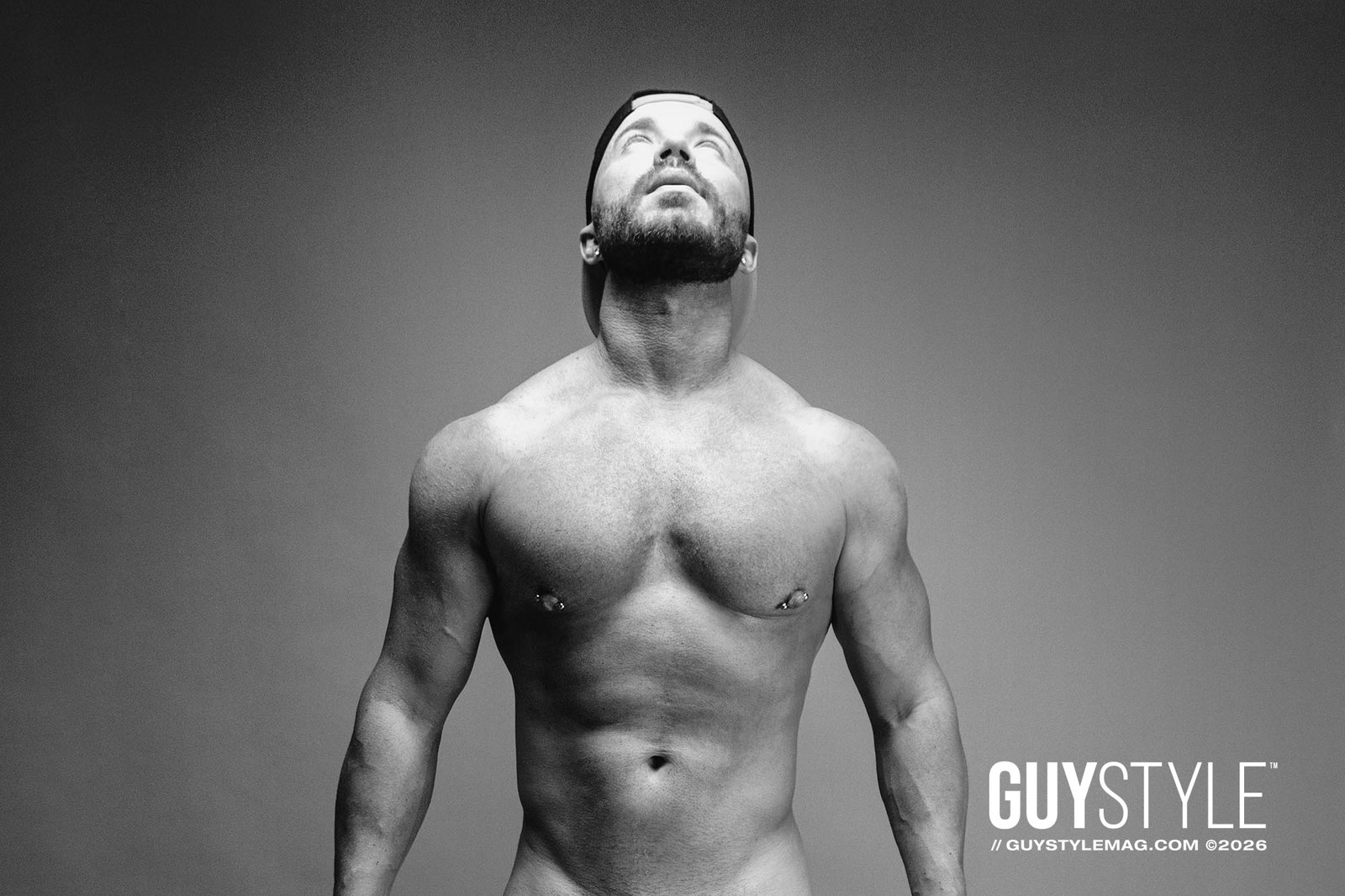
The naked male body belongs to fine art because the body itself is expressive. Photography can turn a shift of light across the chest, the tension in a thigh, the curve of an ass, or the directness of a gaze into something sensual, introspective, funny, vulnerable, or unapologetically erotic.
GUY STYLE MAG – The Nude Men Magazine: Inside Maxwell Alexander’s Living Museum of Homoerotic Art – By GSM Editors
GUY STYLE MAG approaches the nude male form from inside queer life. As a nude men magazine and naked men magazine shaped by homoerotic art and modern masculinity, it gives male sexuality room to exist openly within fine art. Editor-in-Chief, photographer, artist, and model Maxwell Alexander works on both sides of the camera, making the publication feel less like conventional men’s media and more like a living museum built from queer experience.
Nude Men Magazine as a Fine Art Publication
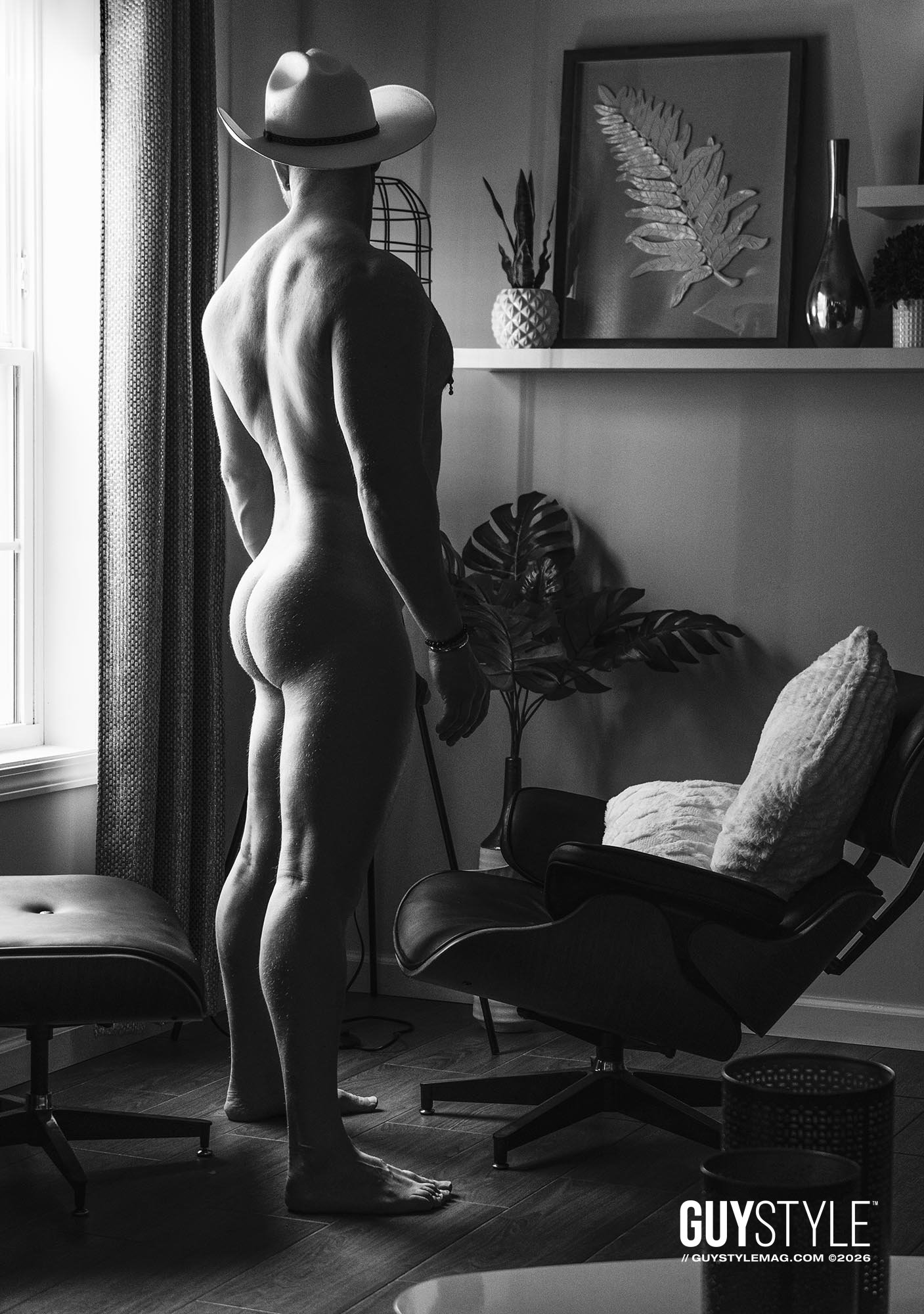
The phrase nude men magazine is beautifully direct, which suits the work. GUY STYLE MAG treats naked men as artistic subjects whose sexuality remains visible, giving the male form room to be sensual, intelligent, humorous, confrontational, or deeply personal without translating it into safer language.
Alexander’s photography begins with physical presence. Skin catches light, body hair creates texture, muscle changes the geometry of a pose, and the cock or ass can carry as much compositional weight as a face or hand. Those ideas also run through his homoerotic self-portraiture, where the body becomes both subject and autobiography.
That approach connects naturally with the history of queer photography. The Metropolitan Museum of Art’s collection of George Platt Lynes male nude photography preserves work from the 1930s, when Lynes photographed male bodies alongside his celebrated fashion practice. Fashion, desire, and the male nude were already sharing the frame long before contemporary culture learned how fashionable that combination could be.
A Naked Men Magazine Built From Inside the Frame
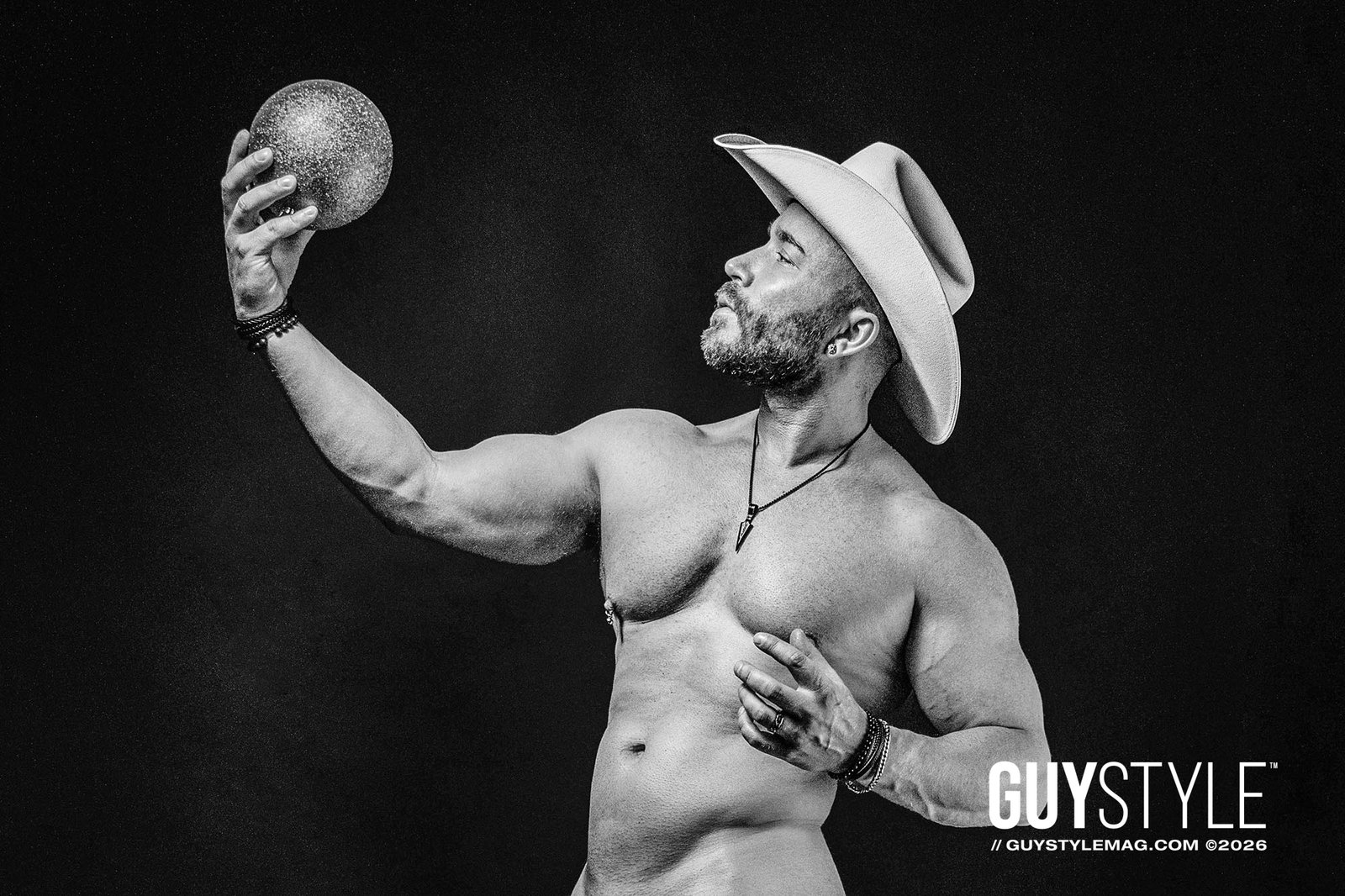
Alexander’s role as both photographer and model changes the usual distance between artist and subject. In self-portraiture, the person directing the image is also the person exposing himself to the camera, which gives the work an intimacy that cannot be manufactured from the outside.
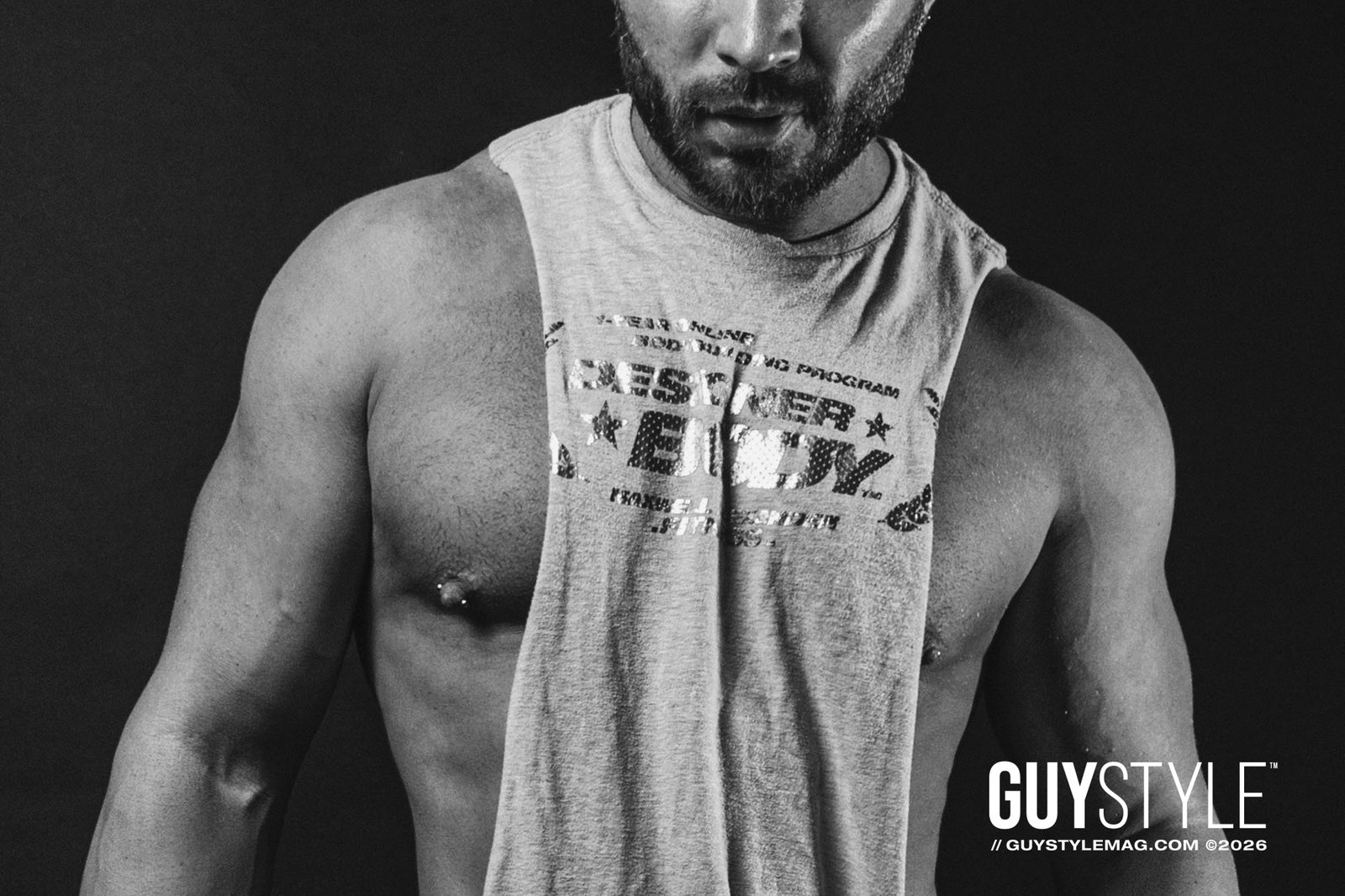
Bodybuilding becomes part of that visual language. Training changes the body’s proportions, while photography studies what those proportions do under light. GUY STYLE MAG extends that conversation through its writing on bodybuilding, the male form, and masculinity, where muscle becomes aesthetic material alongside physical achievement.
The result feels closer to an evolving artist’s archive than a conventional men’s publication. Alexander photographs himself, works with other male subjects, writes around the images, and uses the magazine as exhibition space, which makes the editorial platform part of the artwork itself.
Homoerotic Art and the Queer Gaze
Homoerotic art gains power when queer desire controls the camera. The male body can be erotic without pretending the attraction is incidental, and the photographer can acknowledge desire as part of the creative process instead of politely hiding it behind theory.
The Getty Museum’s Queer Lens: A History of Photography traces photography’s relationship with queer identity and homoerotic imagery across generations. That history matters because it shows how often the camera became a place where queer people could see themselves with greater honesty than the surrounding culture allowed.
GUY STYLE MAG continues that conversation through contemporary queer authorship. Its male boudoir photography treats attraction, intimacy, and physical beauty as part of the image itself, giving the gay gaze room to be present without explanation or apology.
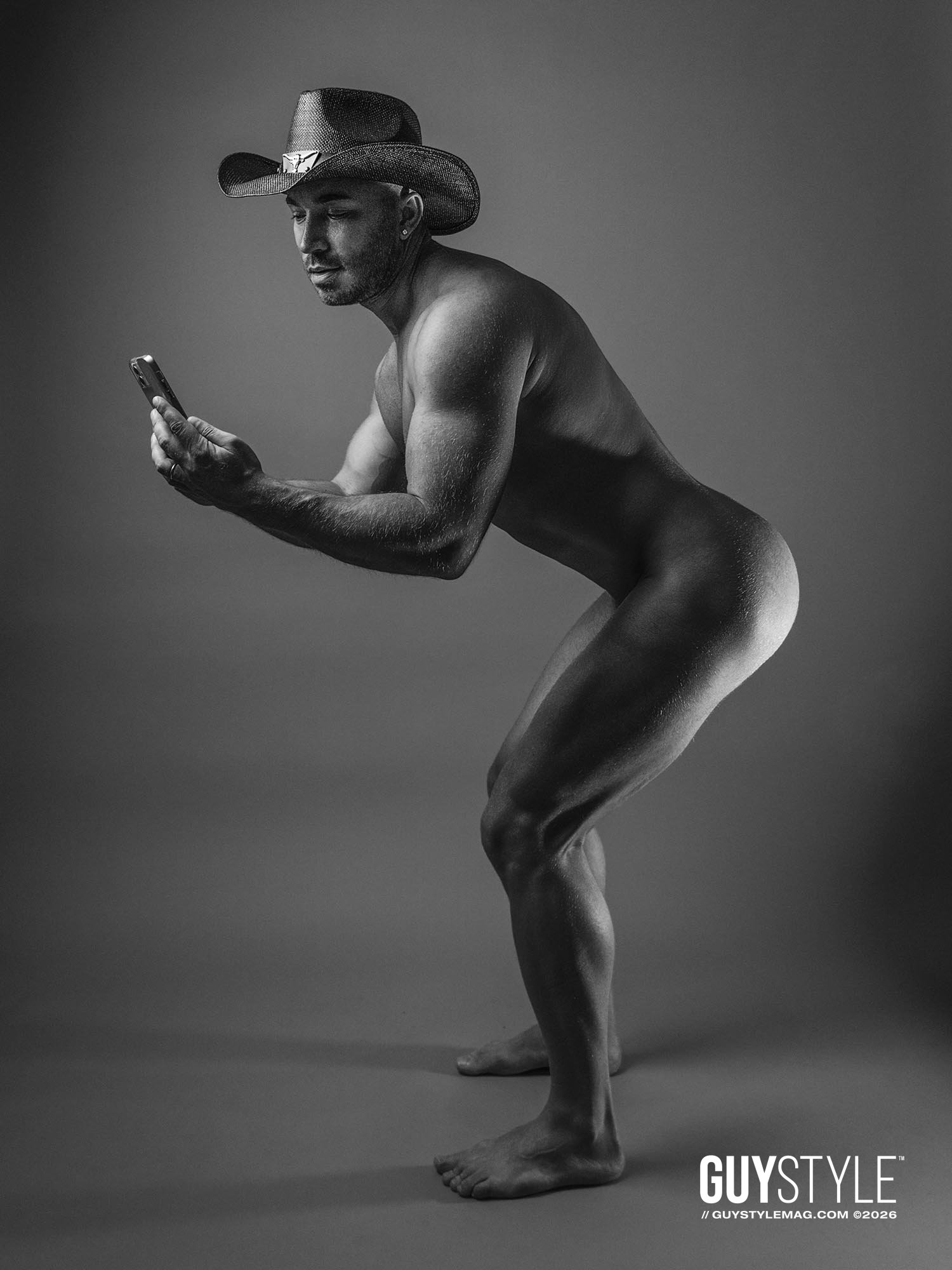
Male Boudoir, Naked Men and Modern Masculinity
Male boudoir makes masculinity intimate. A naked man standing before the camera can look powerful and vulnerable at the same time, with posture, eye contact, and physical openness revealing more than the familiar masculine pose of looking tough for absolutely no reason.
Alexander’s work gives sexuality an important place within that emotional range. Modern masculinity can include erotic confidence and softness at once, which connects with GUY STYLE MAG’s wider exploration of modern gay masculinity and self-expression.
Nudity also changes how a portrait is read. Clothing can signal social role or status, while a naked body brings attention back to physical presence and expression. Queer boudoir uses that simplicity to create portraits where masculinity feels personal instead of staged for somebody else’s expectations.
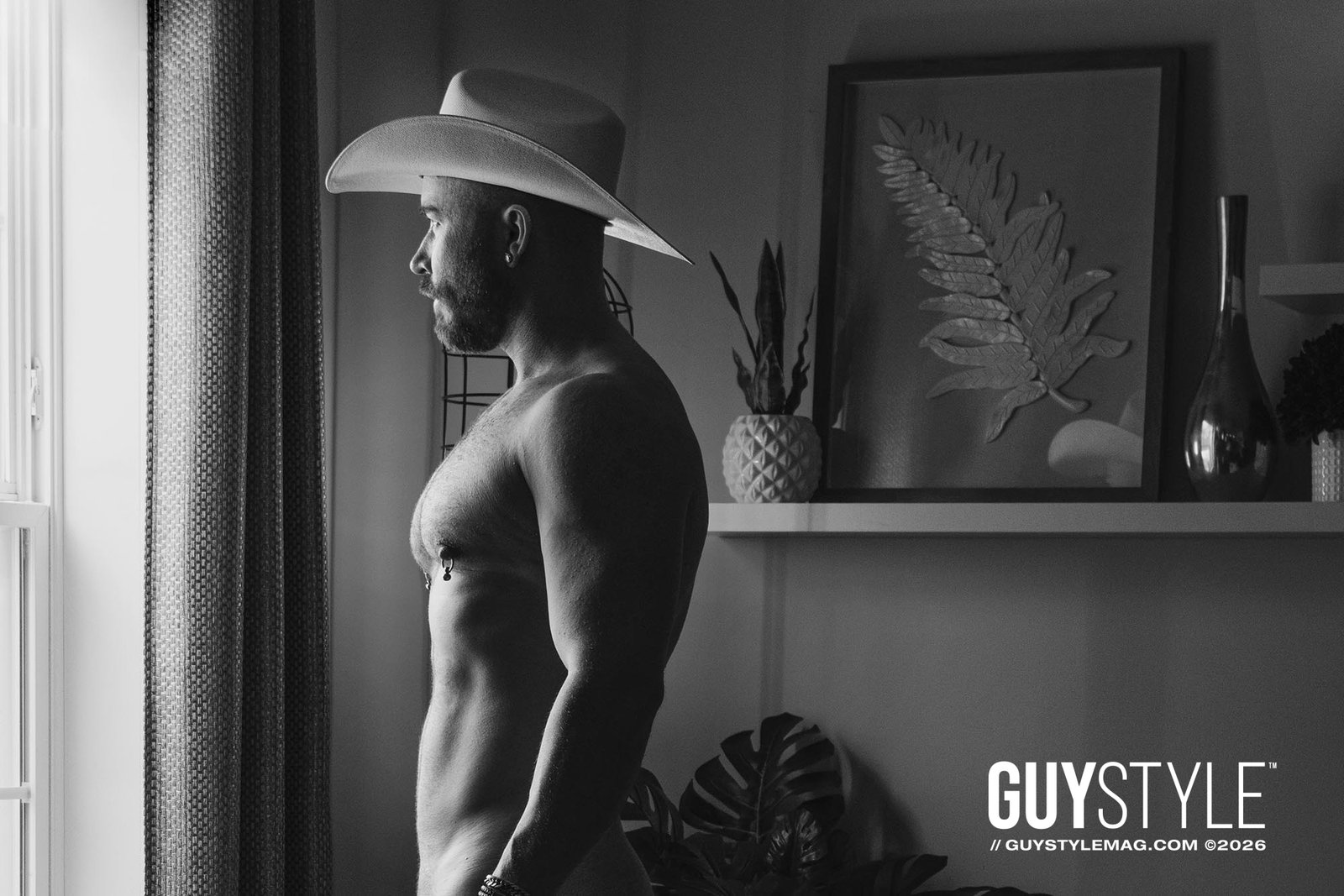
The Male Nude, Censorship and Queer Art Activism
Male nude photography also carries a history of control. The Metropolitan Museum of Art documents the destruction of work by Guglielmo Plüshow and Wilhelm von Gloeden under Fascist rule in Italy, while American physique photography later faced legal restrictions before a 1962 Supreme Court decision involving male nude publications. The Met’s archive of historic male nude photography preserves part of that visual history.
That context gives queer art activism real urgency. Publishing homoerotic art keeps queer desire visible on queer terms, while independent media gives artists the freedom to decide what their work means without waiting for an institution to make it respectable.
GUY STYLE MAG works as both publication and exhibition environment for Alexander’s practice. A nude self-portrait can sit beside an essay about masculinity or bodily autonomy because the image and the idea come from the same lived experience.
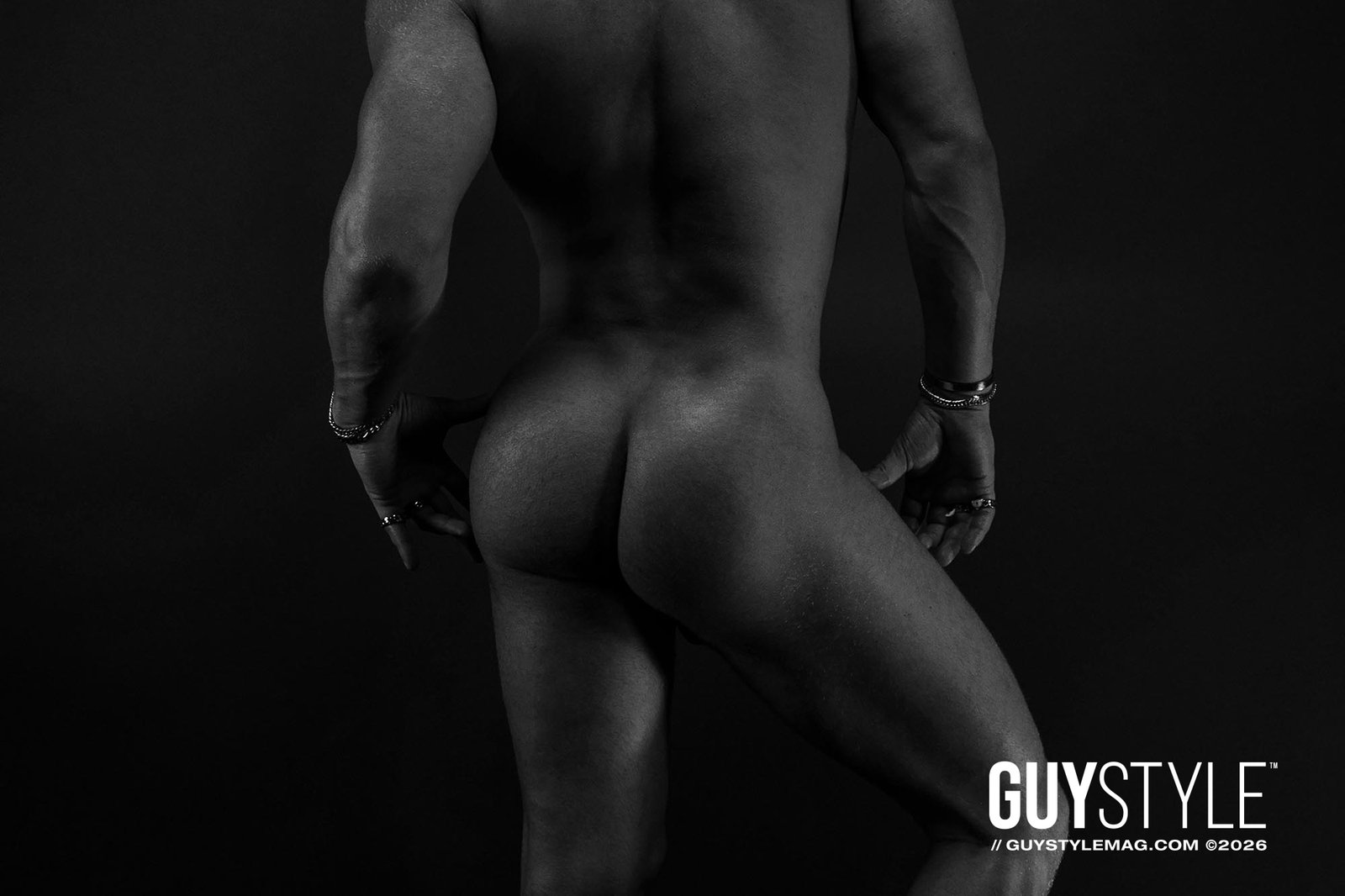
Nude Male Art, Mental Health and Self-Expression
Body image can become emotionally complicated for gay men, especially when masculinity and desirability feel constantly measured. Fitness culture can intensify that pressure, while aging or changes in the body can make self-perception even more fragile.
Queer boudoir offers another way to look. The photographed man decides how he wants to appear, whether the image feels erotic, tender, muscular, playful, or exposed, and that control can turn the camera into a tool for self-recognition instead of judgment.
Creative expression also belongs naturally within mental health advocacy. Photography can give difficult emotions a visible form, while the experience of making art around the body can encourage curiosity toward oneself instead of another round of punishment disguised as self-improvement.
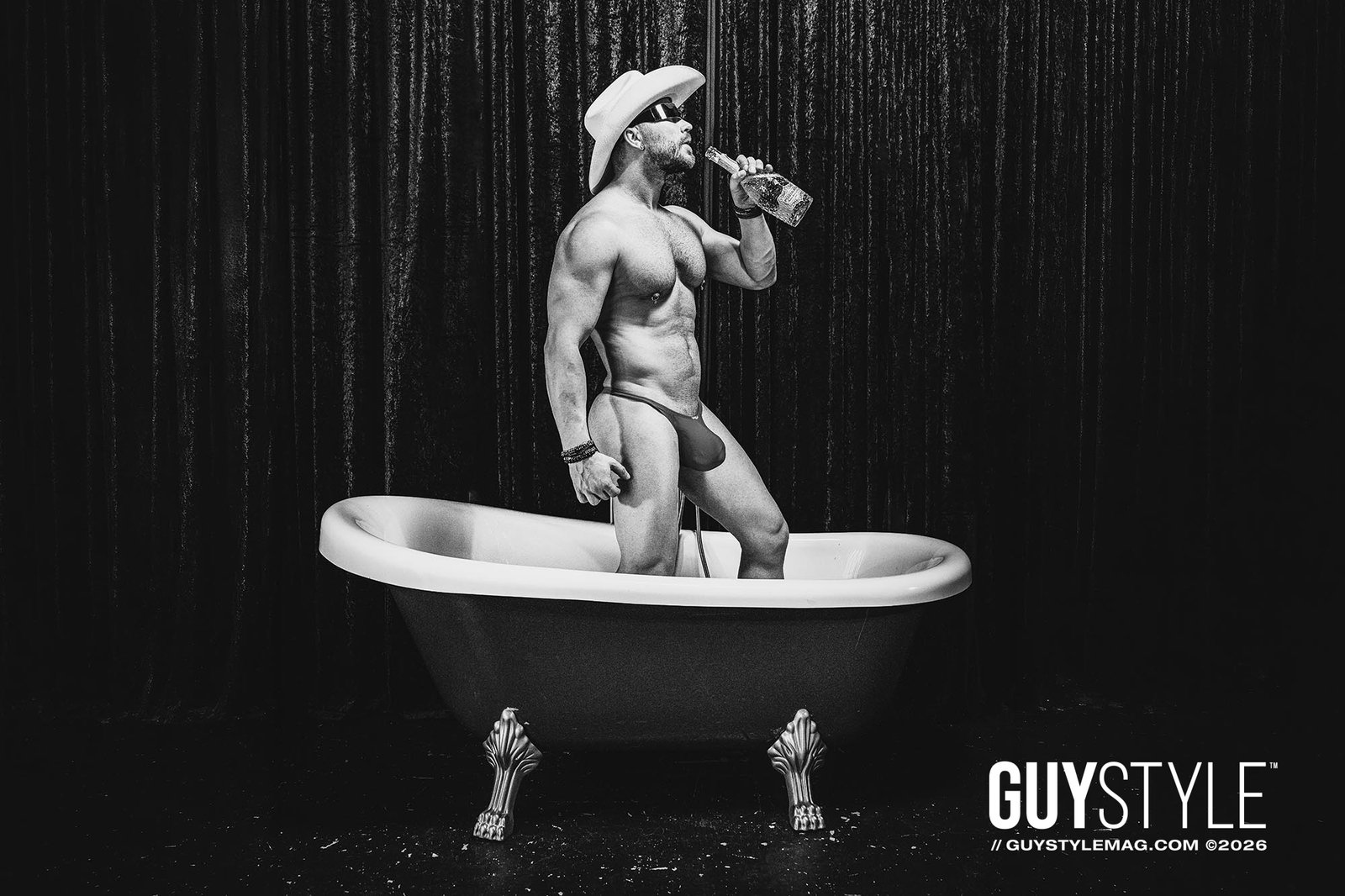
From Bulge Fashion to the Fully Nude Male Form
GUY STYLE MAG’s interest in the body naturally moves through fashion. Underwear and fitted clothing shape the way anatomy appears, while bulge fashion makes that relationship explicit by treating the crotch as part of the male silhouette instead of an inconvenient detail everyone has agreed to ignore.
Nude photography takes that relationship further by removing the garment and allowing the body to carry the composition on its own. Fashion frames the physique; the nude portrait reveals how much expression was already present underneath it.
Alexander’s photography moves easily between those worlds. A fashion photograph can become erotic through posture or fit, while a naked portrait can feel sculptural through light and proportion, which keeps the boundary between style and fine art pleasantly unstable.
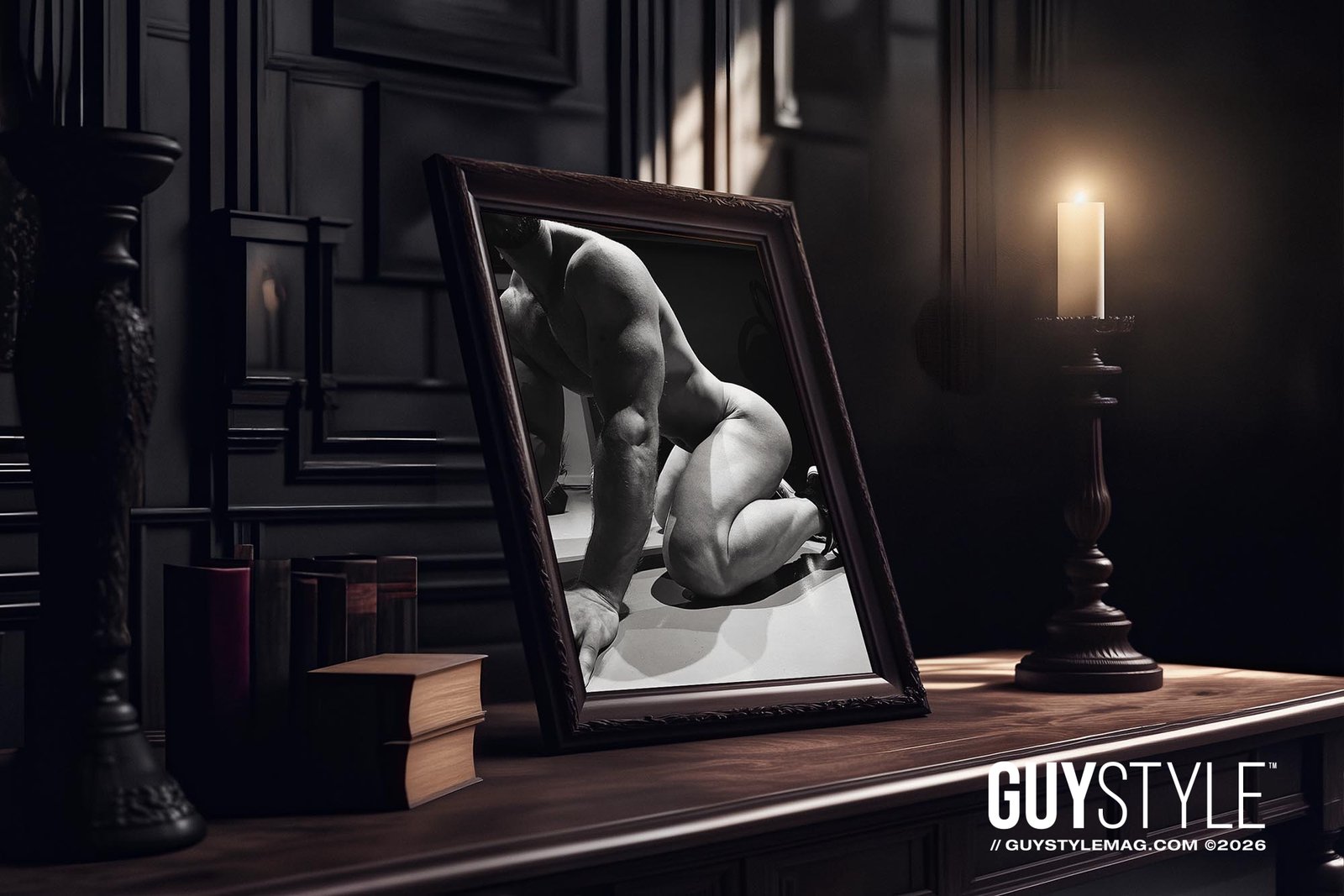
Maxwell Alexander’s Living Museum of Homoerotic Art
As Editor-in-Chief, photographer, model, and artist, Maxwell Alexander has shaped GUY STYLE MAG into a personal archive of queer male experience. Calling it a naked men magazine or nude men magazine describes its visual identity clearly, while homoerotic fine art gives that identity its deeper purpose.
“GUY STYLE MAG is my living museum of homoerotic art,” Alexander explains. “I can make the body, photograph the body, inhabit the body, write about what that experience means, and give the work its own exhibition space. The magazine becomes part of the art itself.”
That philosophy gives GUY STYLE MAG its own territory within queer publishing. The nude male body remains at the center, while the work around it examines how desire, masculinity, self-expression, bodily autonomy, and mental health shape the experience of living inside that body.


