The Cowboy Hat Has My Name on It
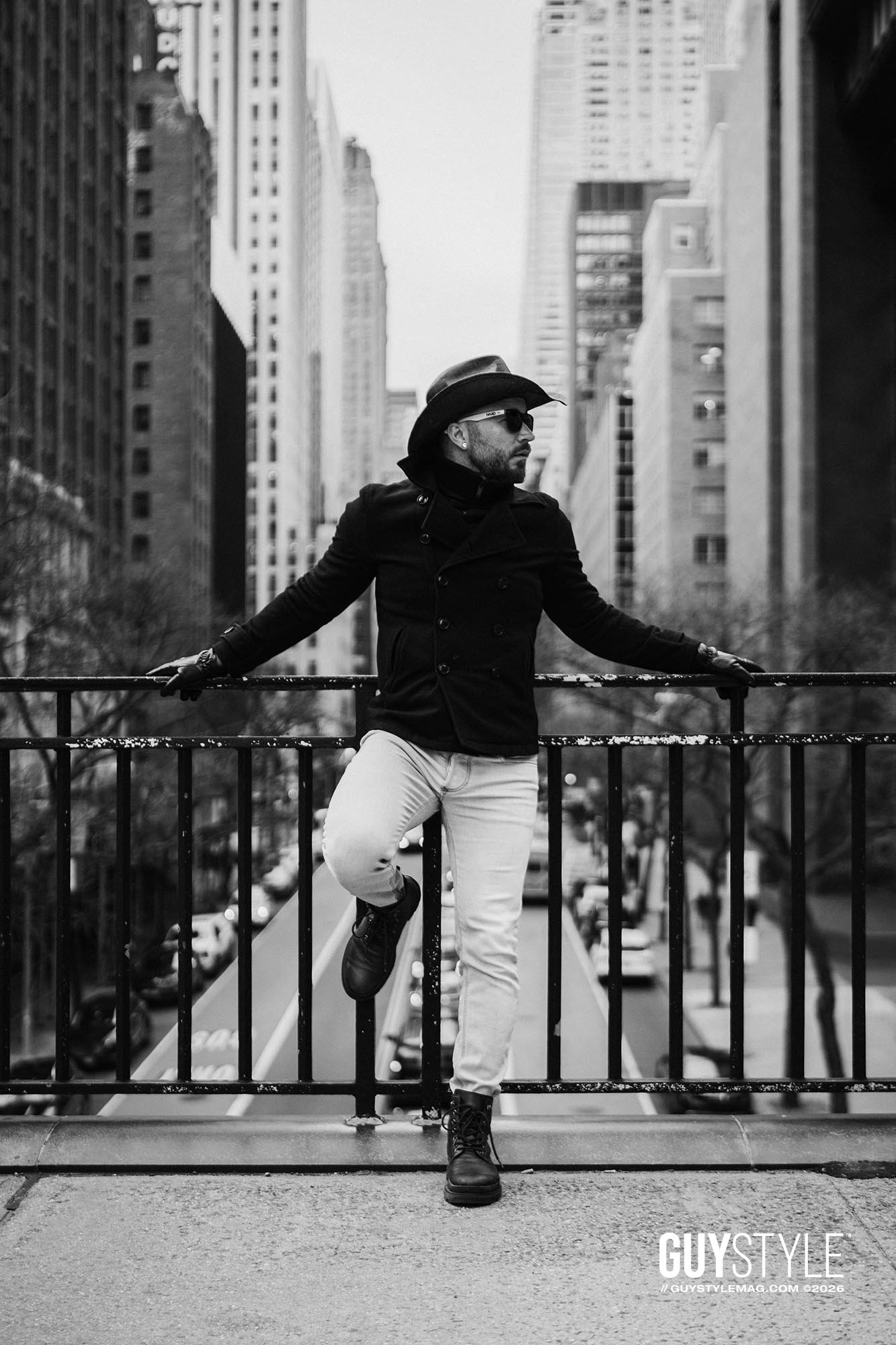
By the time I reach Midtown, the cowboy hat requires no introduction. It has lived on my head through enough chapters of my life to feel closer to anatomy than accessory. Beneath it, a fitted black coat follows the torso, pale skinny jeans bring the legs into sharp relief, leather gloves finish the hands, and heavy boots give every step a satisfying amount of punctuation. Manhattan supplies scale without changing the man wearing the clothes. The hat belongs on East 42nd Street as naturally as it belongs beside a Catskills trail, because personal style becomes convincing when geography loses the authority to edit it. Send me to Mars and I will still pack the damn hat. The lower gravity may even improve the strut.
The Cowboy Philosopher in Manhattan: Gay Men’s Fashion, Bulge Style and the Male Body in Black and White – Fashion – Men’s Fashion – Men’s Style – Gay Fashion – Bulge – Crotch – Fashion Photography – Story by Maxwell Alexander, MA (FIT)/BFA (SVA) – Photography by Duncan Avenue Studios
Black and White Makes the Body Tell the Truth
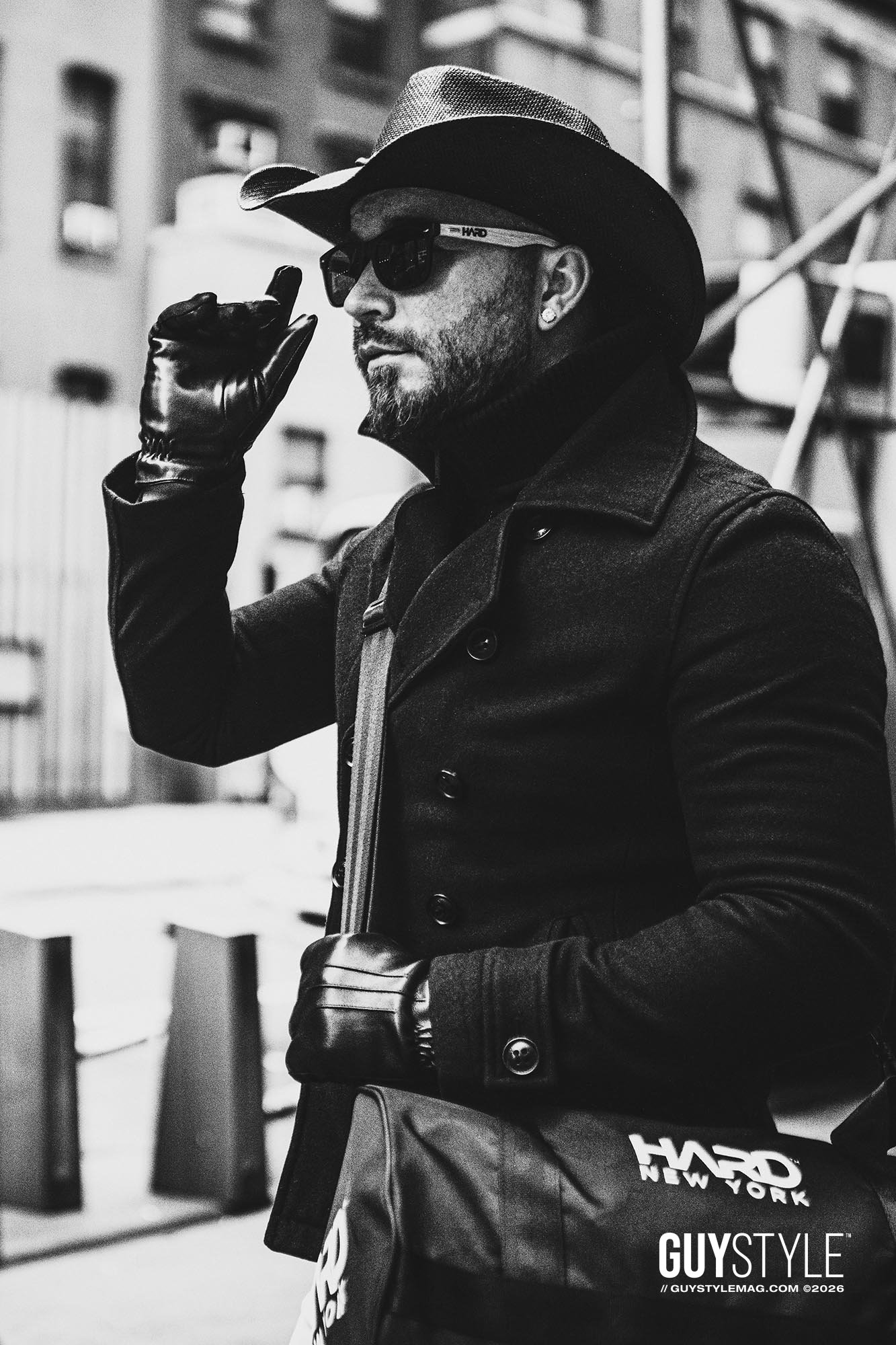
Monochrome sharpens my attention to the relationship between clothing and flesh. Black wool settles around the shoulders while pale denim maps the legs with almost indecent efficiency. Leather catches late-fall light at the knuckles. The brim creates a dark interruption across the face, and Manhattan rises behind it in gray planes of stone and glass. My years at SVA taught me to distrust visual accidents; FIT deepened my fascination with the way a body changes designed space simply by occupying it. Those instincts meet here in fashion photography. A shoulder needs the right distance from a building edge. A boot needs pavement beneath it. A crotch needs absolutely no apology for existing at the visual center of a pair of jeans.
Bodybuilding Changed the Cut Before the Tailor Arrived
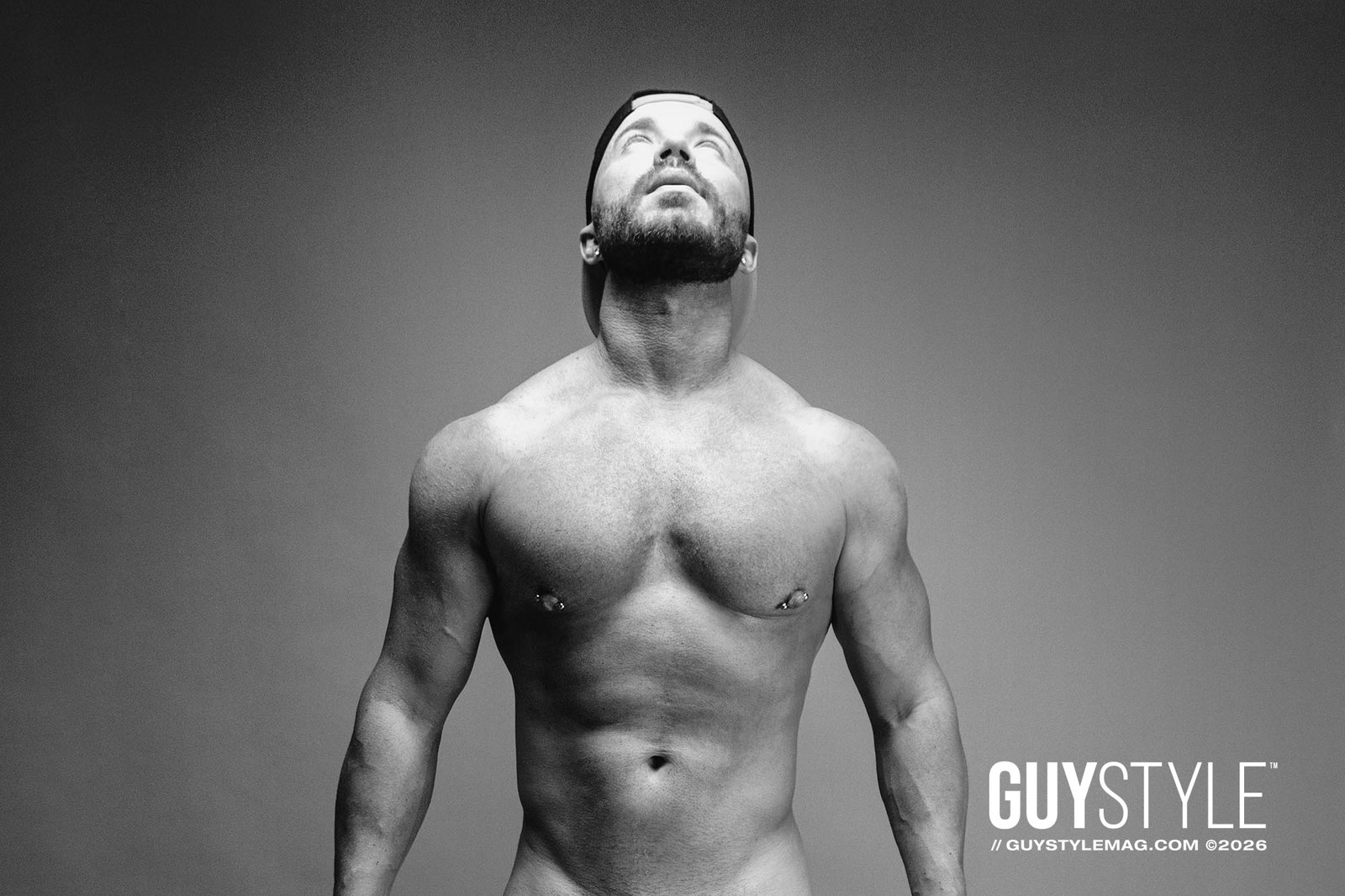
Years of bodybuilding rewrote the relationship between my body and my wardrobe. Muscle changes clothing before a seam is altered. A developed chest pushes forward against a coat; broader shoulders create their own architecture; thighs give narrow denim a very different life from the one it had folded on a shelf. Training also changed my eye. I became sensitive to fractions of proportion because the body itself develops through fractions accumulated over time. Photography lets me study that work from outside myself. The camera catches the result in motion, and I recognize decisions made years earlier in the gym appearing now as line and volume inside a fashion photograph. Building the body became another way of drawing.
The Crotch Is Part of the Outfit
Gay men hardly require a seminar to notice what fitted jeans do to a handsome male pelvis. Fashion criticism, however, has often developed a remarkably selective eyesight once the gaze reaches the zipper. My fascination with bulge fashion begins with proportion. The crotch sits at the center of the body and influences the entire male silhouette, especially when slim denim follows an athletic frame. Here the pale jeans let that anatomy register cleanly beneath the coat, adding erotic tension to an otherwise severe composition. I enjoy the intelligence of that contrast. Tailoring may frame the torso beautifully, yet the eye eventually travels south. Mine certainly does. Pretending otherwise would make for very dishonest gay fashion criticism.
A Bulge Changes the Geometry
Bulge fashion becomes compelling when the package participates in the silhouette with the same authority as a chest or ass. The effect has less to do with exposure than placement. Denim stretches across the pelvis; the waist narrows above it; muscular thighs continue the line below. Suddenly the male figure has a visual center of gravity, and the clothes acquire a sensual intelligence that disappears when designers flatten anatomy into generic menswear geometry. I approach the crotch exactly as I approach every other part of the frame: through shape, tension and proportion. A beautiful bulge contributes to the composition. Gay men knew this long before fashion editors found polite terminology for it.
Masculinity Looks Better When It Enjoys Itself
My relationship with masculinity has always passed through the pleasure of constructing it myself. The cowboy hat carries confidence; the coat draws attention to the waist; leather gloves turn an ordinary movement of the hand into something sensual; bodybuilding gives the silhouette physical weight. Gayness adds another intelligence to the image because desire changes how a man studies another man and how he studies himself. I am comfortable being the observer and the observed. That exchange gives the photographs their heat. Masculinity feels richest to me when the man inhabiting it understands beauty, enjoys vanity and knows exactly why his jeans fit that way. Confidence photographs beautifully. So does a little mischief.
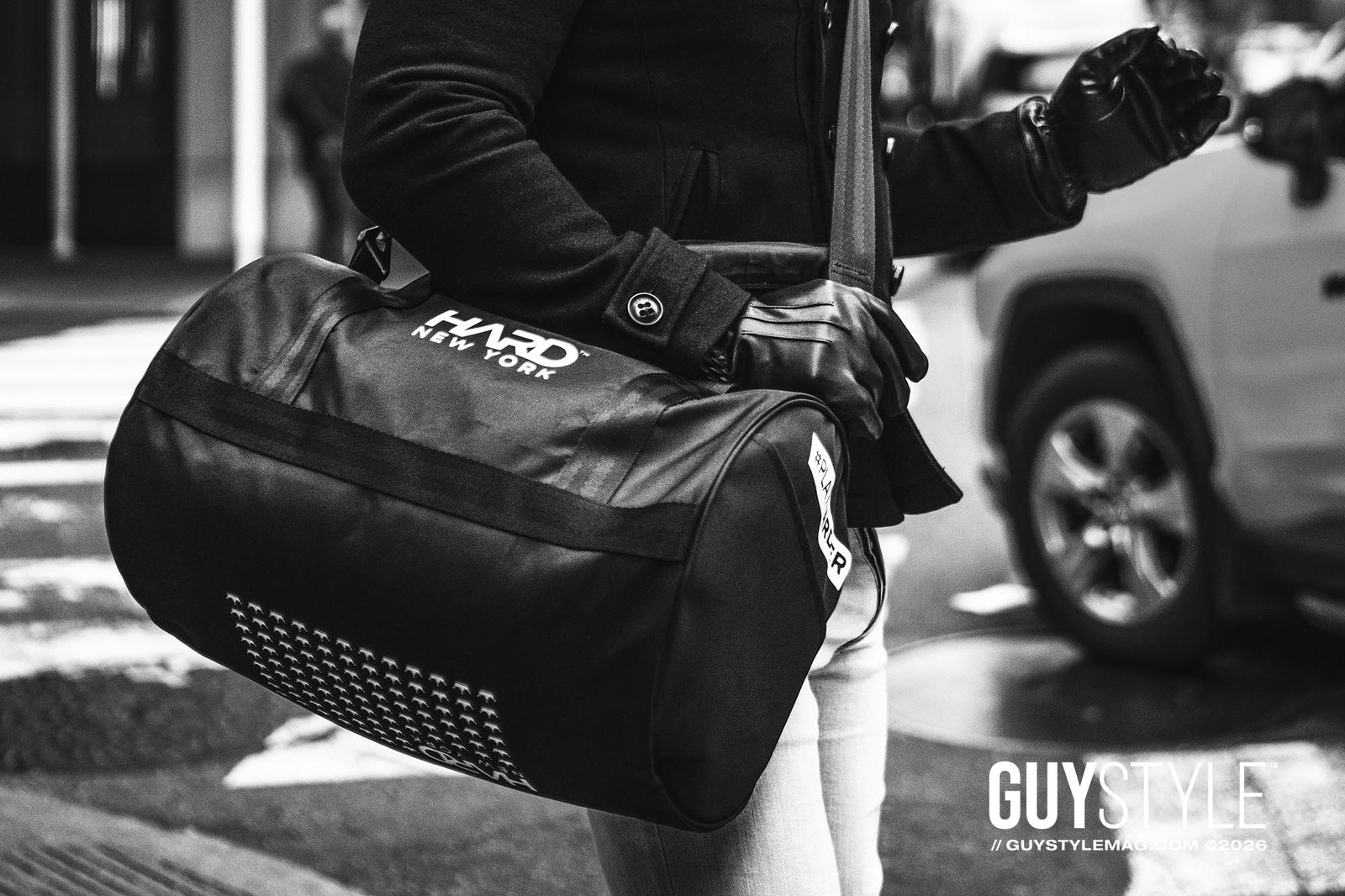
HARD NEW YORK Is a Legend
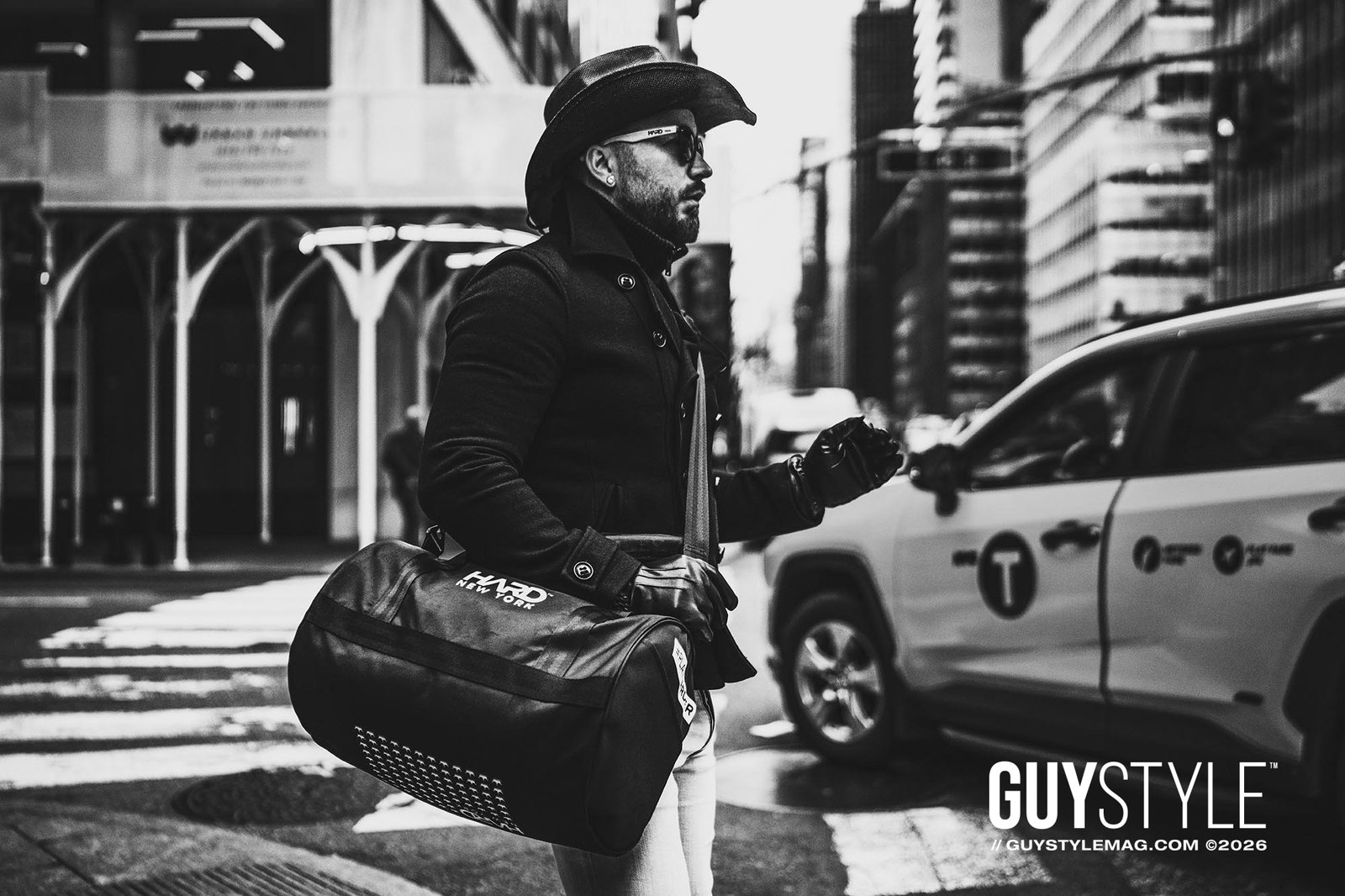
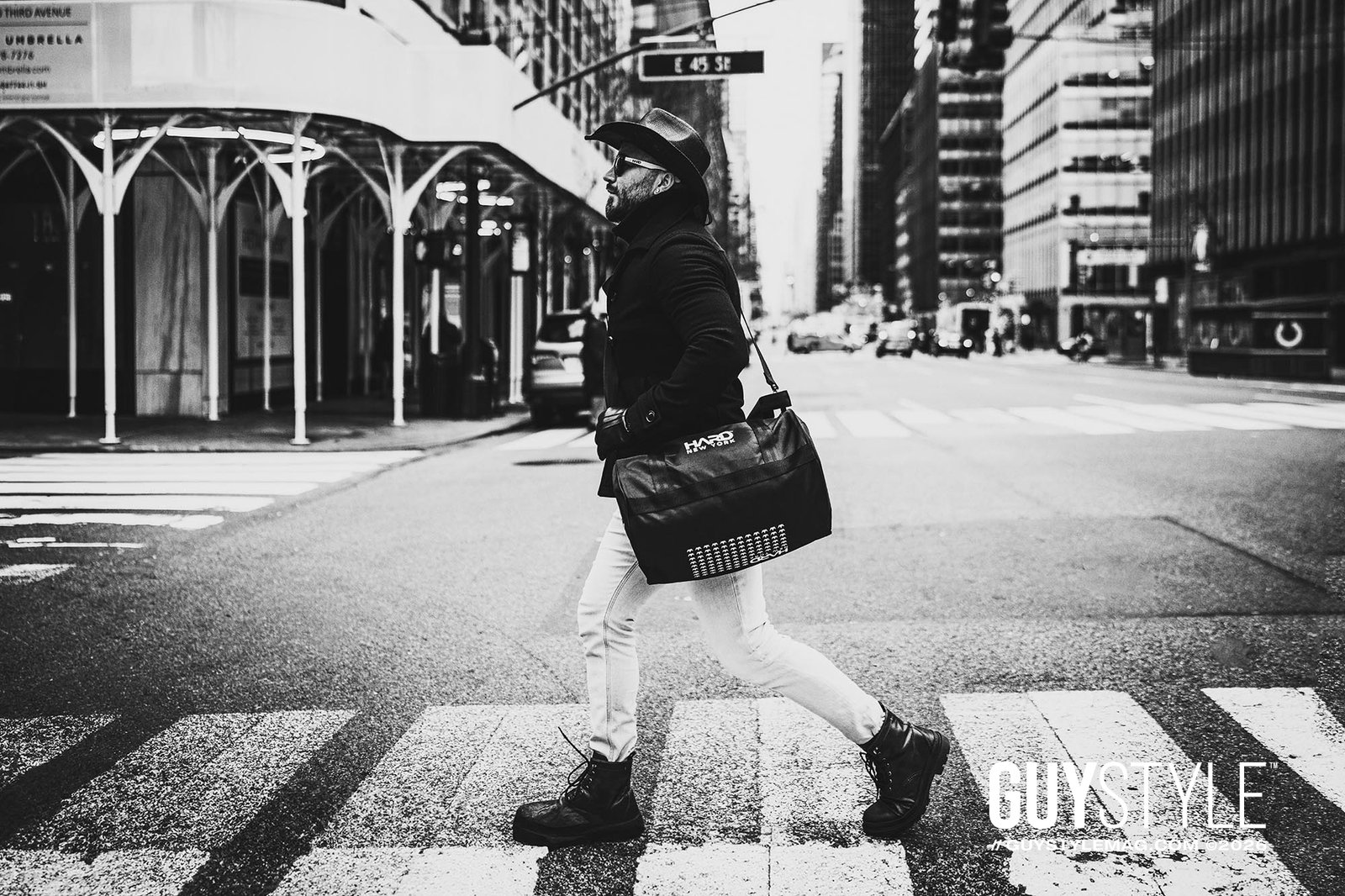
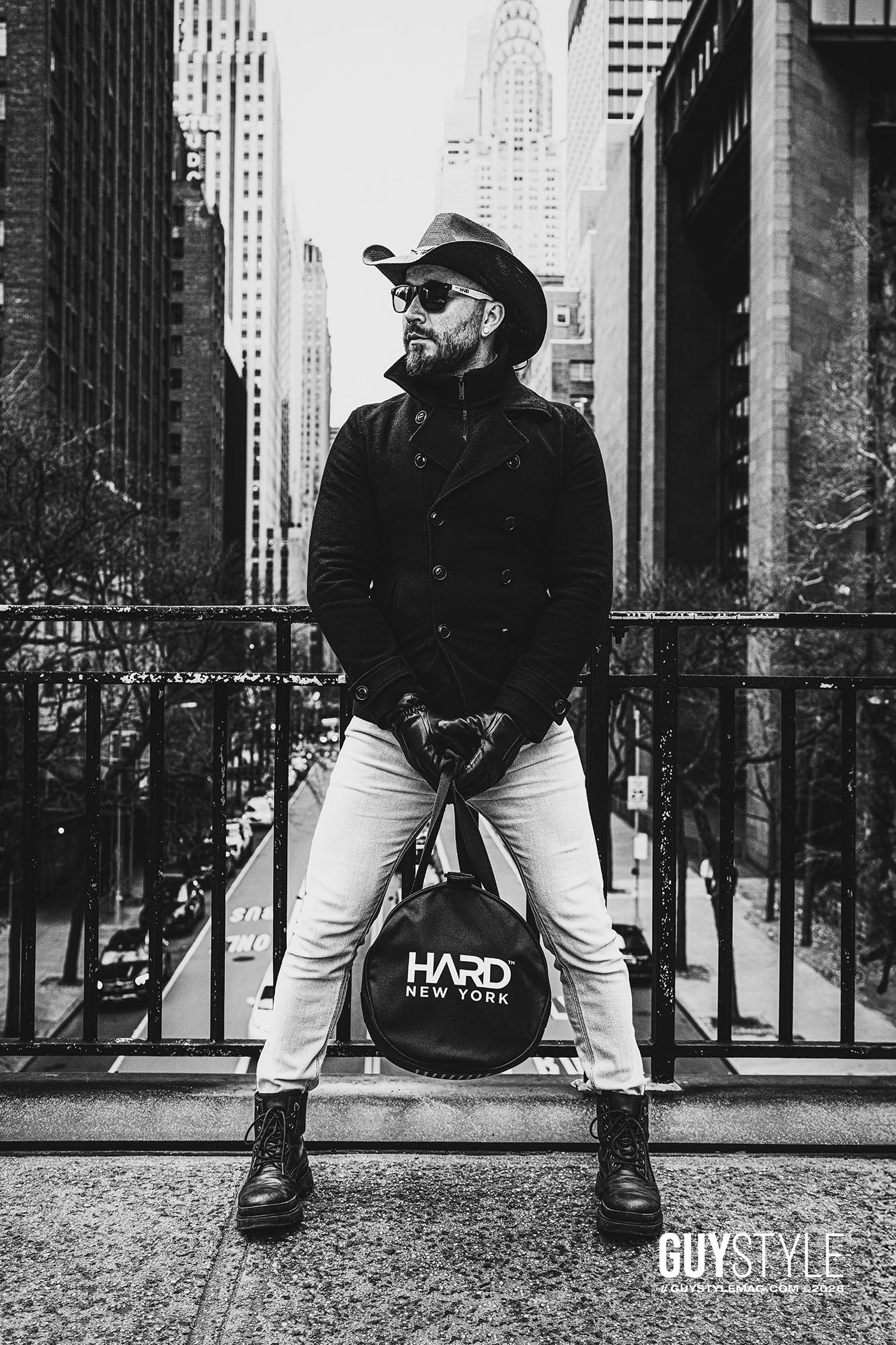
HARD NEW YORK enters these photographs with the authority of a legendary New York fashion brand that already knows its place in the frame. The white typography hits black material with immediate force, while the oversized bags play against the body like pieces of portable architecture. I created HARD NEW YORK with an instinct for masculine style that favored attitude, scale, sexuality and an unmistakably New York sense of humor, and those codes remain instantly readable here. The brand has its own mythology now. A HARD NEW YORK bag beside the cowboy hat feels less like styling than iconography: two visual signatures meeting inside the same photograph. Legends earn that kind of freedom. They arrive, occupy the image and leave everyone else to catch up.
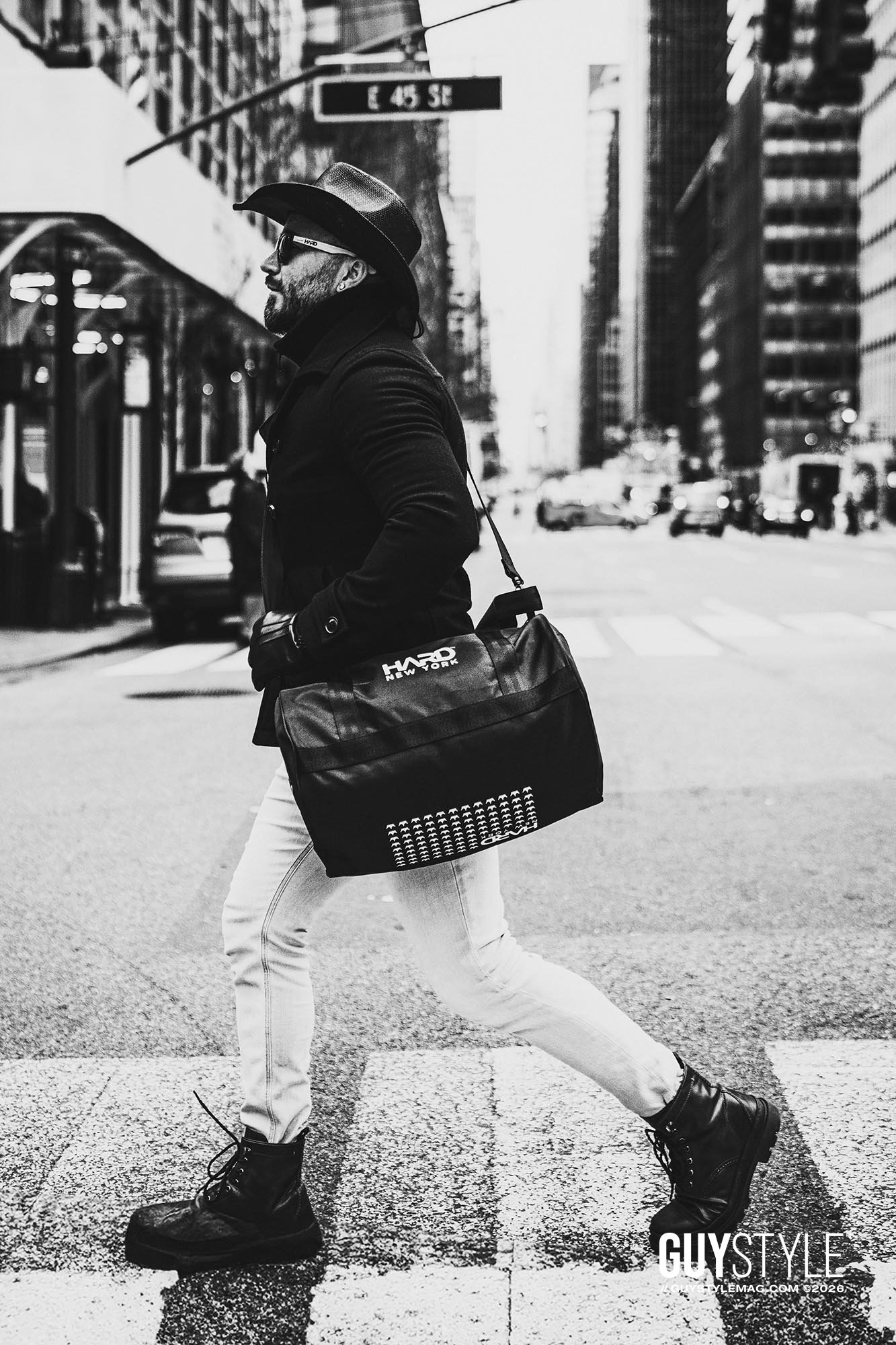
A Crosswalk Is Plenty of Runway
New York fashion photography becomes electric when the model has to negotiate an actual city. The crossing signal changes, traffic waits with varying levels of patience, a coat catches air, and a long stride stretches the entire body across white road markings. Duncan Avenue Studios photographed the movement where posing begins to merge with instinct. The cowboy hat keeps the silhouette unmistakable from a distance while the fitted jeans bring the athletic lower body into the composition with considerably less subtlety. The legendary HARD NEW YORK bag adds another unmistakable piece of New York visual culture to the frame. Nobody closed the street. Nobody built a set. Manhattan kept conducting business while a gay cowboy with a very visible bulge crossed in front of it.
Leather Makes the Hands More Dangerous
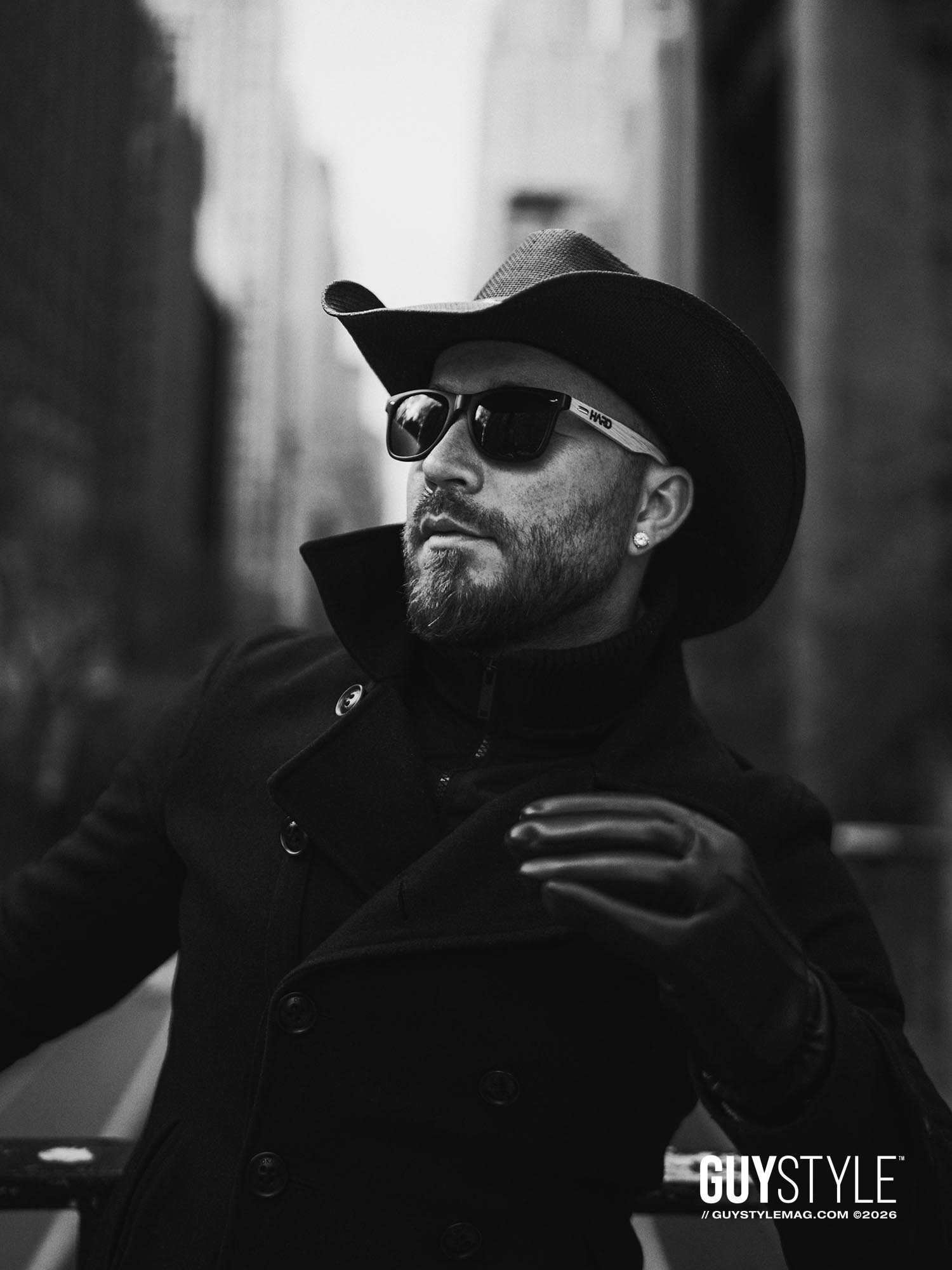
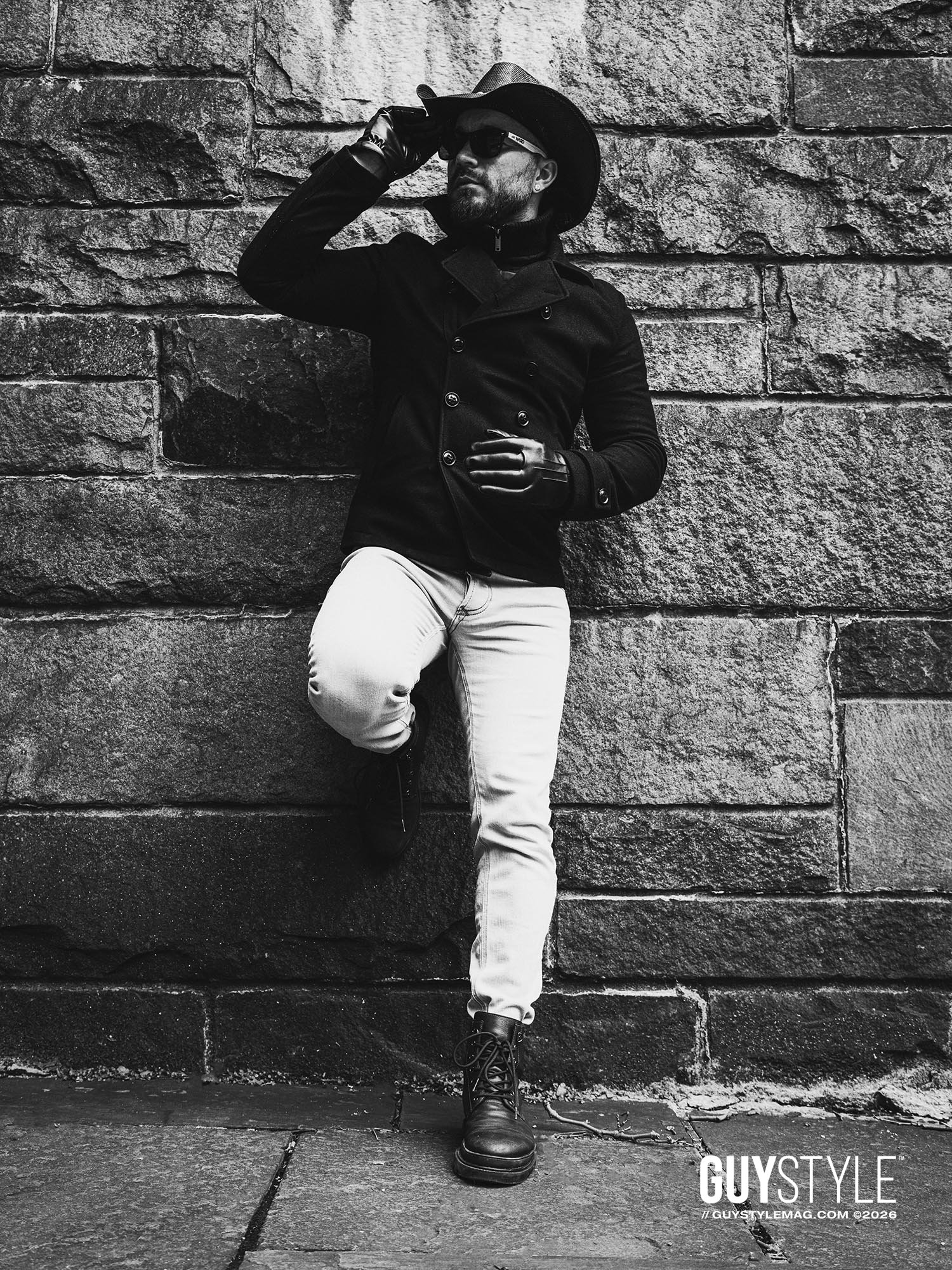
Black leather gloves change the emotional register of a hand. Touch becomes more deliberate. Adjusting sunglasses suddenly carries erotic precision; touching the hat brim acquires ceremony; gripping a legendary HARD NEW YORK bag gives the forearm another line to follow. Against the softness of wool and the faded surface of denim, polished leather introduces controlled shine. The material has deep roots in gay male visual culture, yet here its erotic language remains woven into everyday men’s style. That restraint makes the charge stronger. A man fully dressed can communicate desire through a wrist, a jaw or the pressure of gloved fingers around a strap. Skin has never held exclusive rights to seduction.
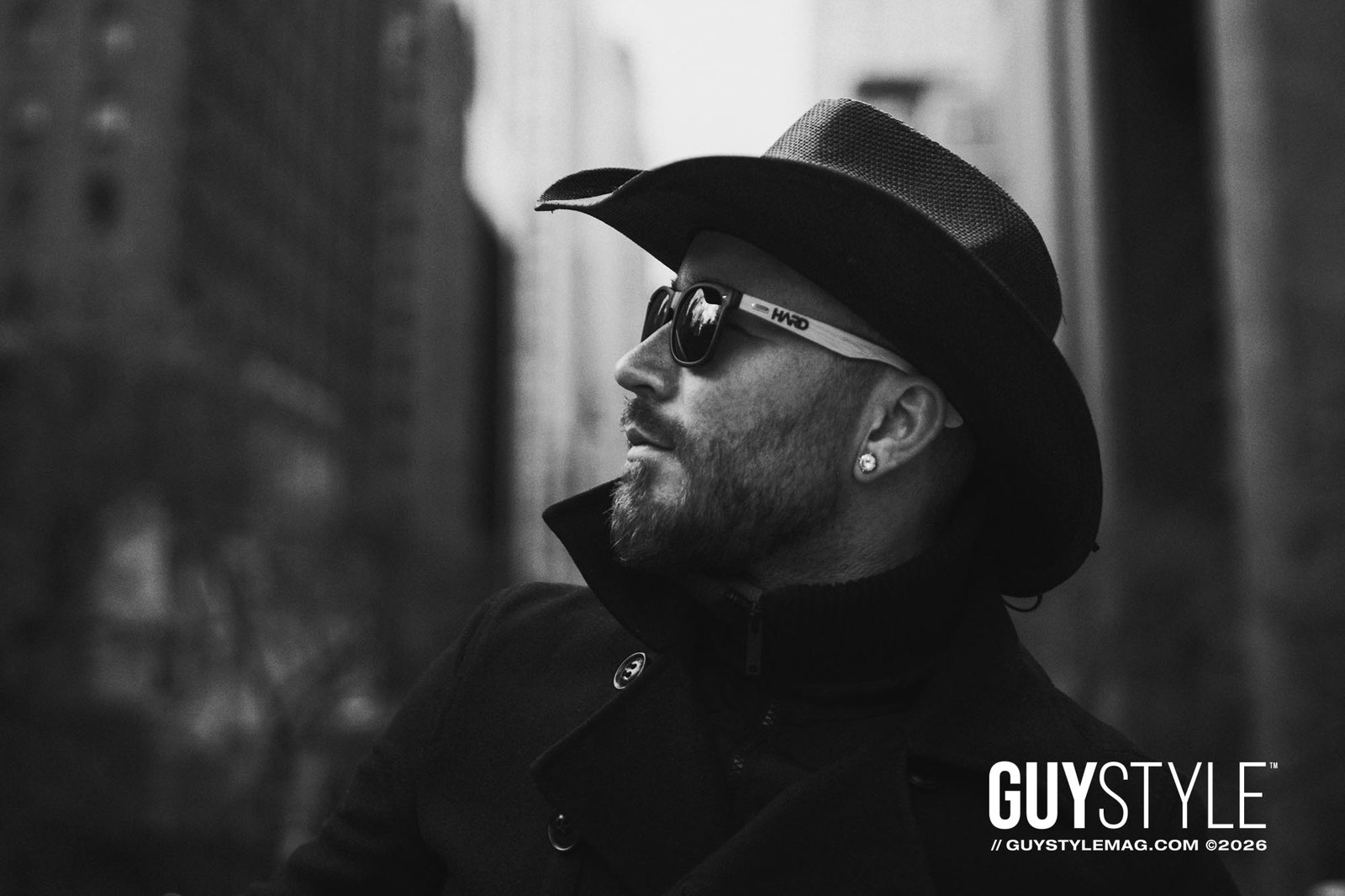
Sunglasses and the Gay Art of Looking
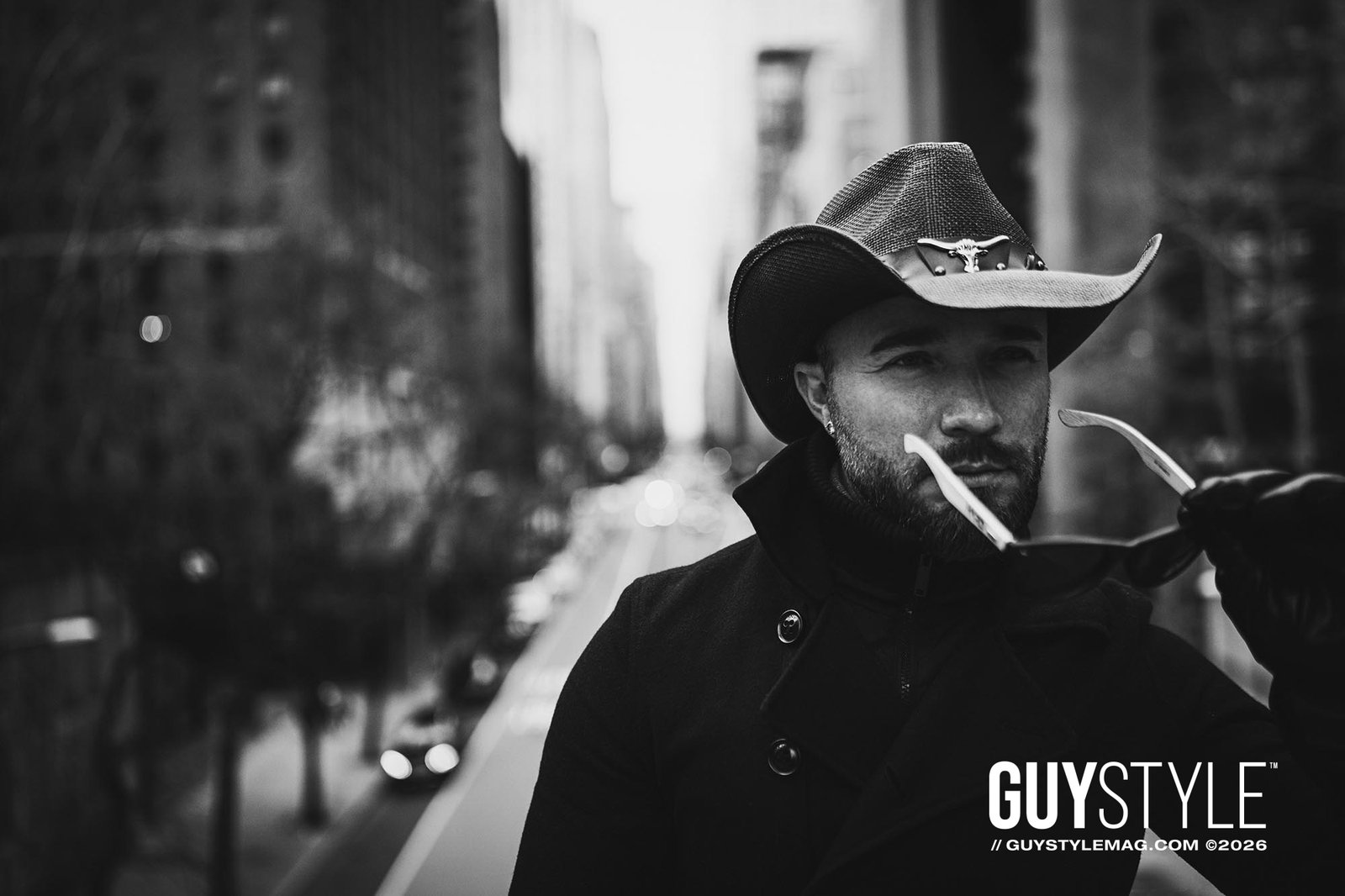
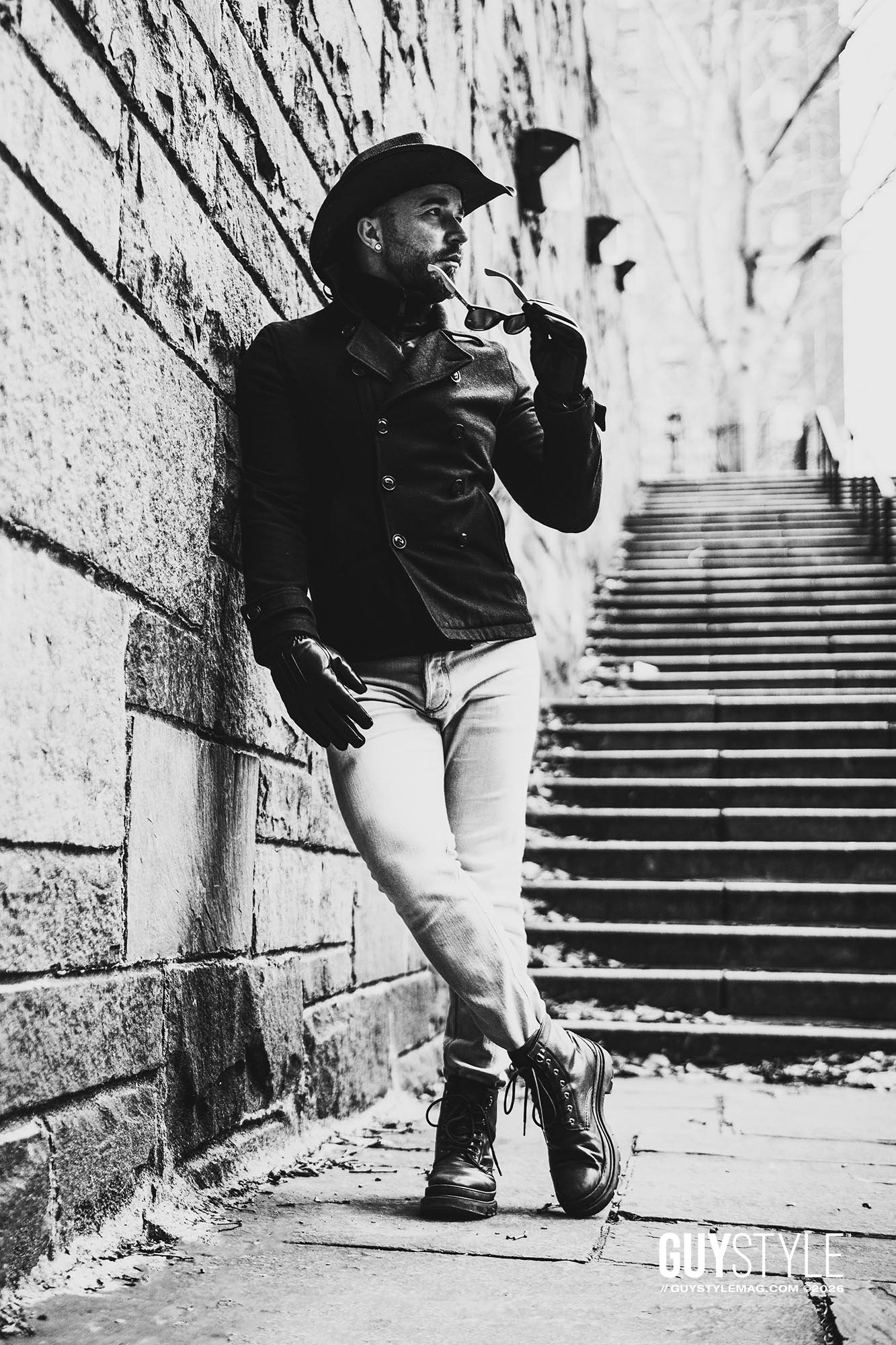
A pair of dark sunglasses creates delicious ambiguity in a portrait because the viewer loses access to the eyes while remaining fully exposed to the face. The jaw takes over. The beard becomes more graphic. The mouth starts doing emotional work that the eyes would normally share. For gay men, looking has its own cultural history; recognition often begins through tiny signals, sustained glances and the awareness of being watched back. These portraits play inside that tension. When the sunglasses move away from the face, intimacy changes temperature. The gaze becomes available, yet availability never guarantees possession. Desire thrives beautifully in that gap.
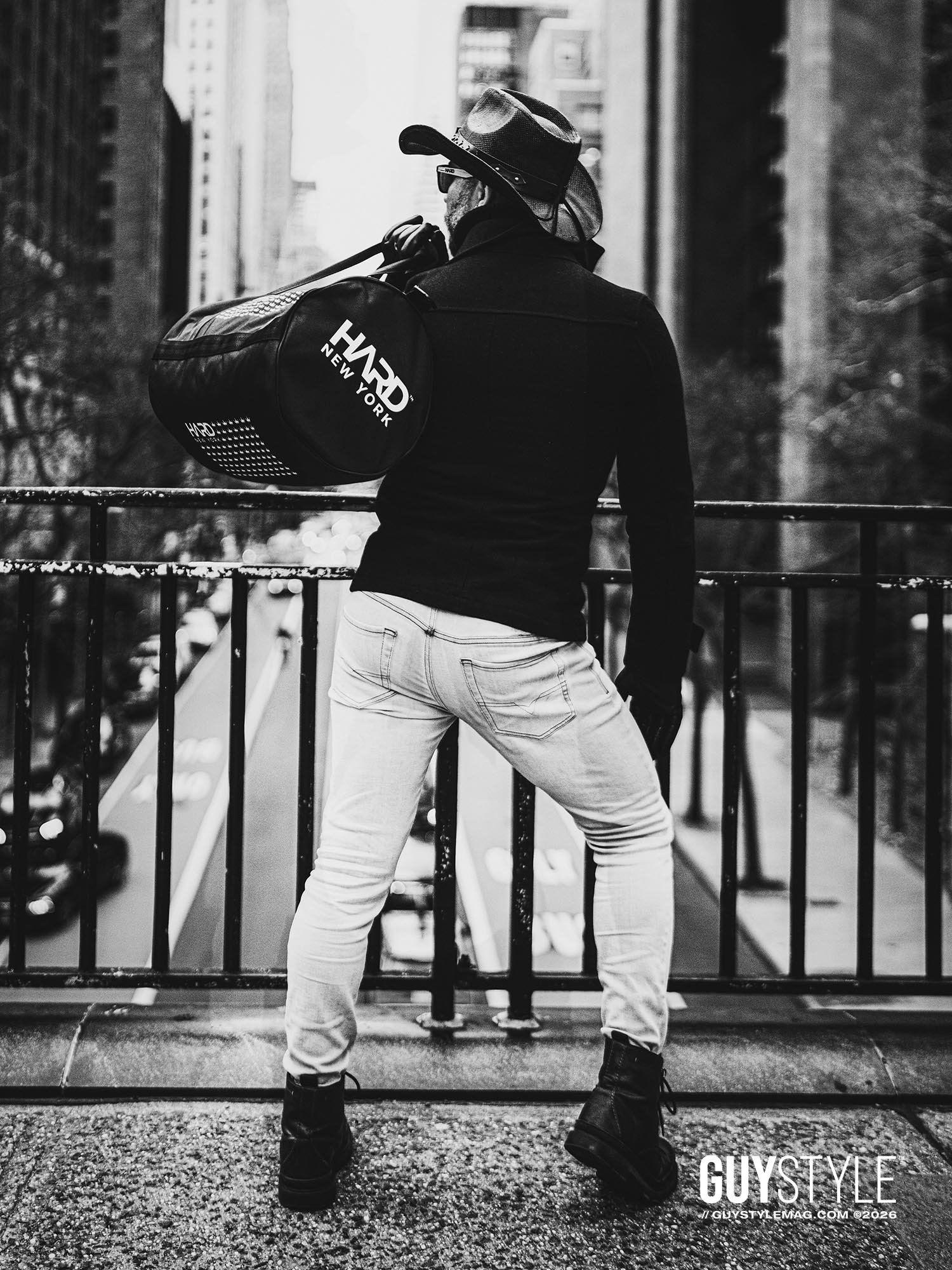
Tudor City Gives the Cowboy Stone to Lean Against
Tudor City offers another register of New York masculinity. Old masonry presses close to the body, stairs rise sharply behind it, iron railings divide the background, and the scale feels intimate after Midtown’s broad avenues. Against rough stone, the fitted coat becomes darker and more tailored while pale denim pulls the eye immediately toward the legs. The body settles into the architecture with less urgency. A boot lifts against the wall. The hip turns. The sunglasses hover near the mouth. These frames feel almost stolen from another New York, one where a handsome man could disappear up a staircase after giving you exactly enough eye contact to ruin the rest of your afternoon.
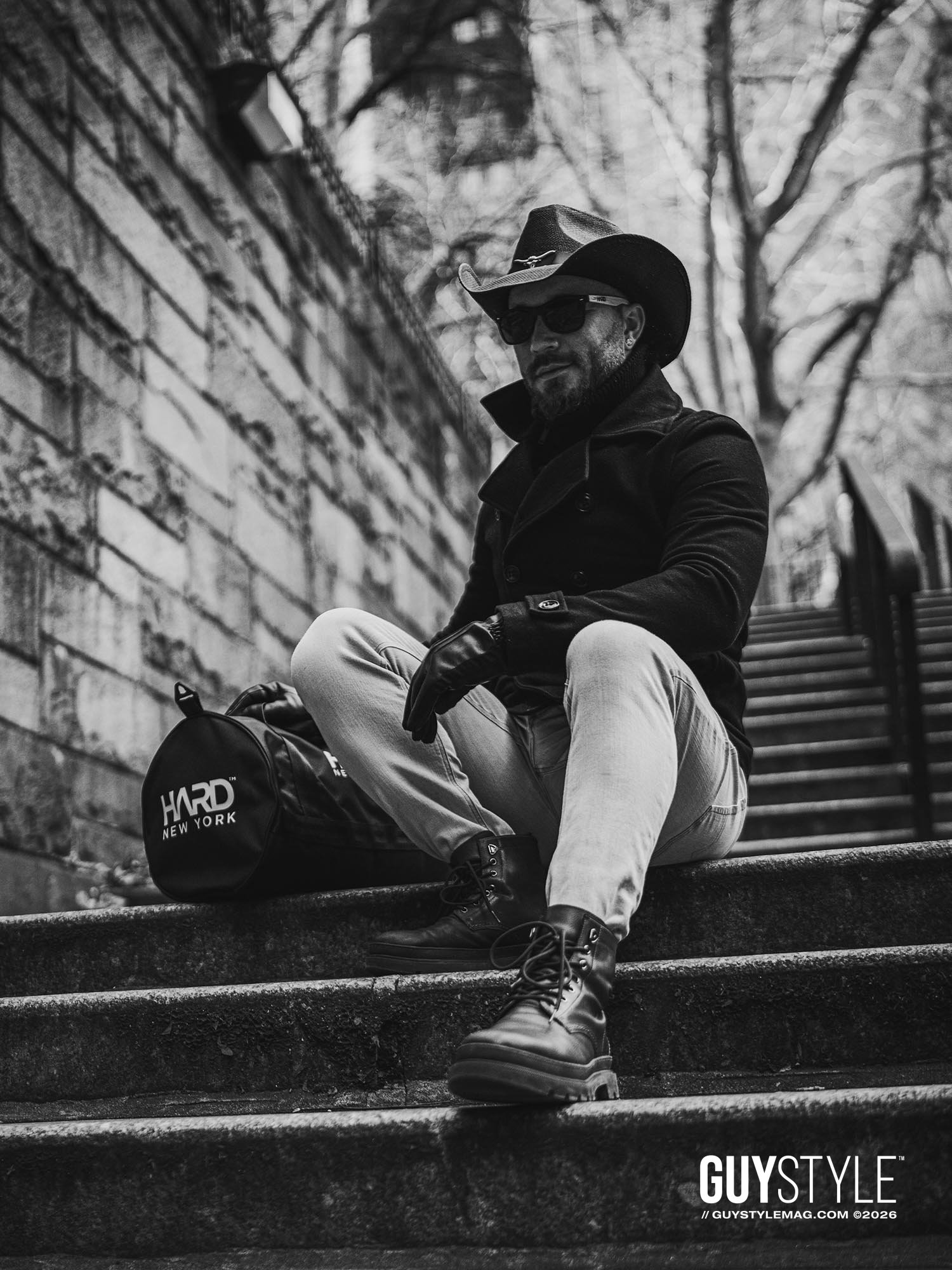
Homoeroticism Lives in the Inches
Homoerotic fashion photography rarely needs a naked body to establish desire. A few inches of fabric tension can accomplish remarkable things. The fitted waist, muscular thigh, crotch line and gloved hand establish an erotic rhythm precisely because the man remains dressed. Gay visual culture understands how anticipation lives in details. The body suggests its shape through clothing, and imagination completes what the camera leaves unresolved. I am fascinated by that territory because it keeps male beauty active instead of merely displayed. The viewer gets permission to look, yet the man in the frame keeps command of the encounter. That balance between invitation and control has always been sexy to me.
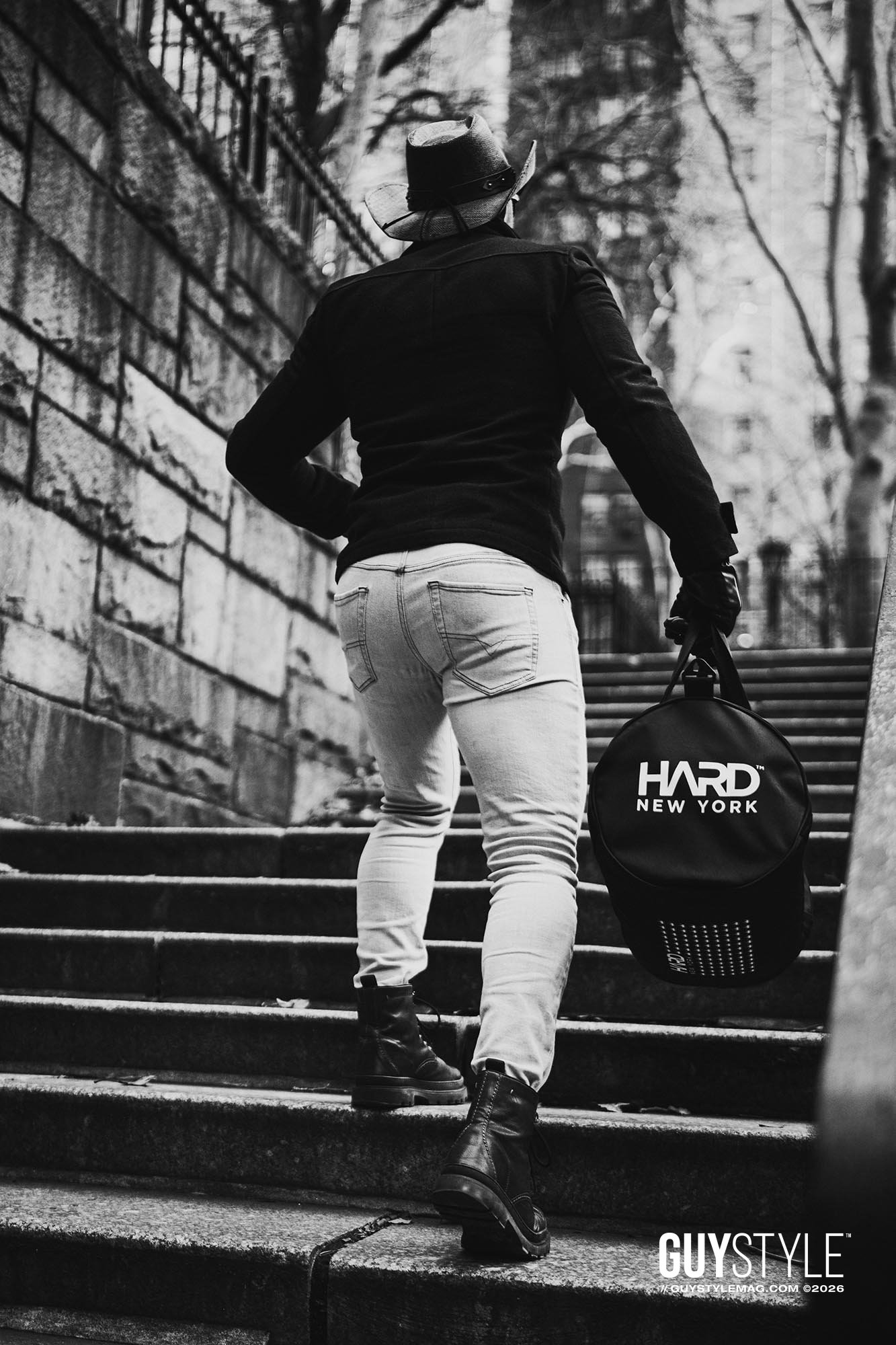
The Ass Gets Its Turn
A male fashion story built around an athletic silhouette eventually reaches the rear view, and bodybuilding has given me no reason to rush past it. Skinny jeans make the glutes part of the garment’s architecture, especially when the body turns away and the coat ends precisely above the hips. The cowboy hat remains visible from behind, so the character survives even after the face disappears. That view matters in gay men’s fashion because style has always included the pleasure of watching a man walk away. A strong ass changes the line of denim, changes posture and changes the final impression of the outfit. Fashion follows anatomy in both directions.
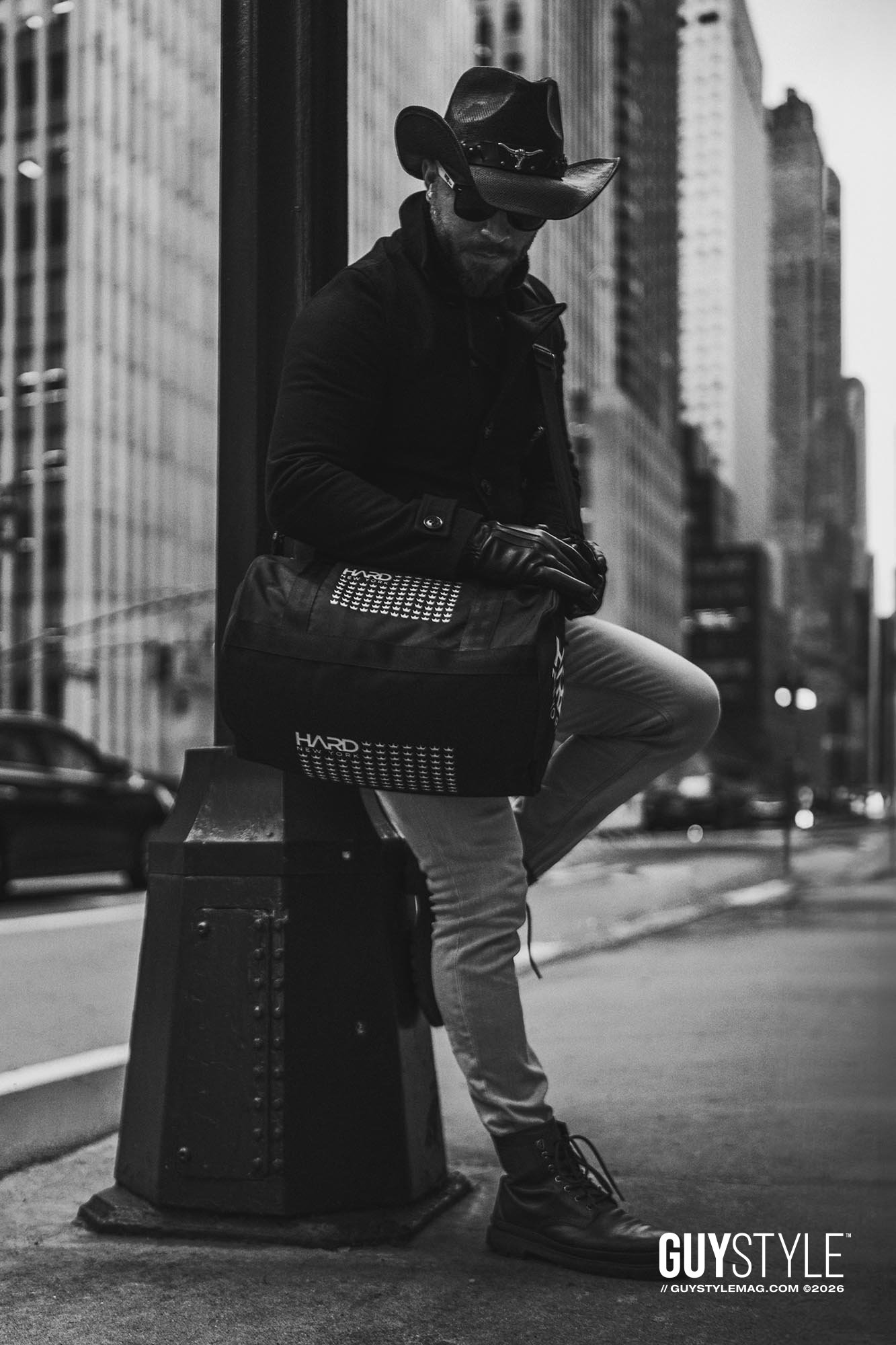
The Male Body Deserves a Complete Silhouette
Contemporary bulge fashion speaks to a larger appetite for menswear that acknowledges the body inside it. Gay men have pushed that visual conversation forward because we understand the pleasure of seeing masculinity presented with greater anatomical honesty. The crotch, thighs, waist and ass all influence how clothing reads, especially on an athletic physique. In these photographs, pale skinny jeans make that relationship beautifully obvious while the black upper silhouette retains its severity. Elegance and sexual presence share the same frame comfortably. A man may look cultivated from the hat downward and still give the viewer something especially rewarding around zipper level.
The Camera Keeps the Man I Was That Afternoon
Duncan Avenue Studios photographed a version of me that belongs permanently to this New York afternoon. I recognize my younger self somewhere inside the images, though age has given the pose another quality. At forty-three, being photographed feels less like asking the camera who I might become and more like enjoying the man who has arrived. The body carries years of training. The cowboy hat carries memory. New York remains the place where my visual education first became serious, and I still feel that old thrill when a photograph suddenly aligns with the image I had in my head. The coat sits correctly, the light hits the beard, the jeans make their contribution, and for the fraction of a second preserved by the shutter, everything looks exactly as it should.